The 60-Second Answer
Hair thinning at the temples during menopause often happens because falling estrogen affects the hair growth cycle and makes follicles more sensitive to androgens. Stress, low iron, thyroid problems, and tight hairstyles may also contribute. See a dermatologist, eat enough protein and iron, avoid tight styles, and ask whether topical minoxidil may help support healthy hair regrowth for you.
Why Menopause Causes Temple Hair Thinning
Declining estrogen can reduce the time hair remains in its active growing phase. More follicles may enter the resting and shedding phases, producing increased hair shedding several months later. Lower estrogen may also reduce sex hormone-binding globulin, increasing the relative influence of circulating androgens in susceptible women.
This metabolic shift can reveal genetically influenced female pattern hair loss. Affected hair follicles gradually produce shorter, finer, lighter strands, a process called miniaturization. Hair density falls even when follicles are still present.
Temple loss also has other possible causes. Tight braids, extensions, wigs, ponytails, chemical processing, and repeated edge styling can cause traction alopecia. Sudden shedding across the scalp may be telogen effluvium following illness, surgery, rapid weight loss, nutritional deficiency, medication changes, or severe psychological stress.
Hormone Receptors Alter The Hair Cycle
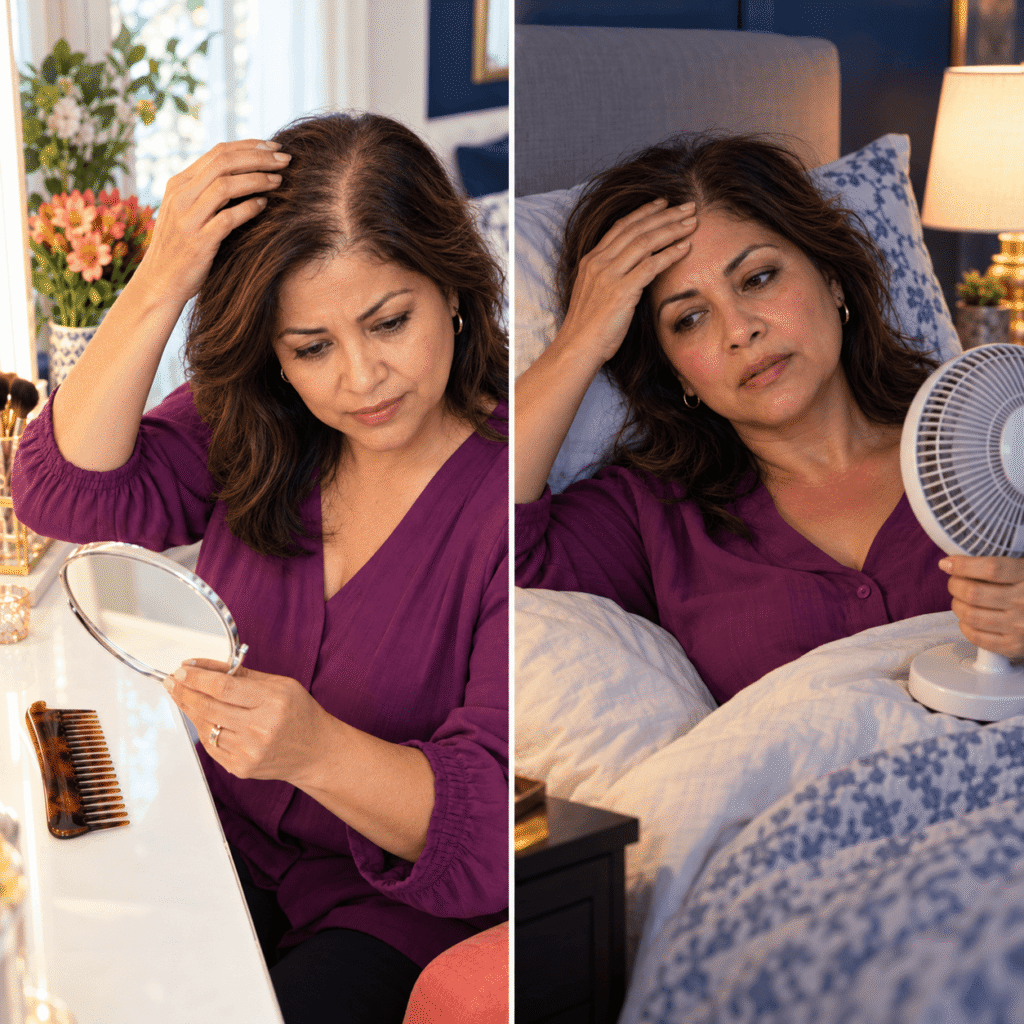
Estrogen receptors are present within the scalp and hair follicles. Estrogen appears to support the anagen, or growing, phase of the hair cycle, although human evidence remains incomplete. When estrogen and progesterone fluctuate during perimenopause and decline after menopause, hair growth may slow, hair thickness can decrease, and changes in hair texture may become noticeable.
Androgen-sensitive follicles can respond to dihydrotestosterone by shrinking. This does not necessarily mean a menopausal woman has abnormally high testosterone. Her hair follicle hormone receptors may simply be genetically sensitive to normal androgen levels.
Sleep disruption, hot flashes, restrictive dieting, and emotional strain may further affect nervous system regulation. These factors can trigger hair loss by pushing more growing hair into the resting phase, but stress is rarely the only explanation for progressive temple thinning.
Female Pattern Hair Loss Progresses Gradually
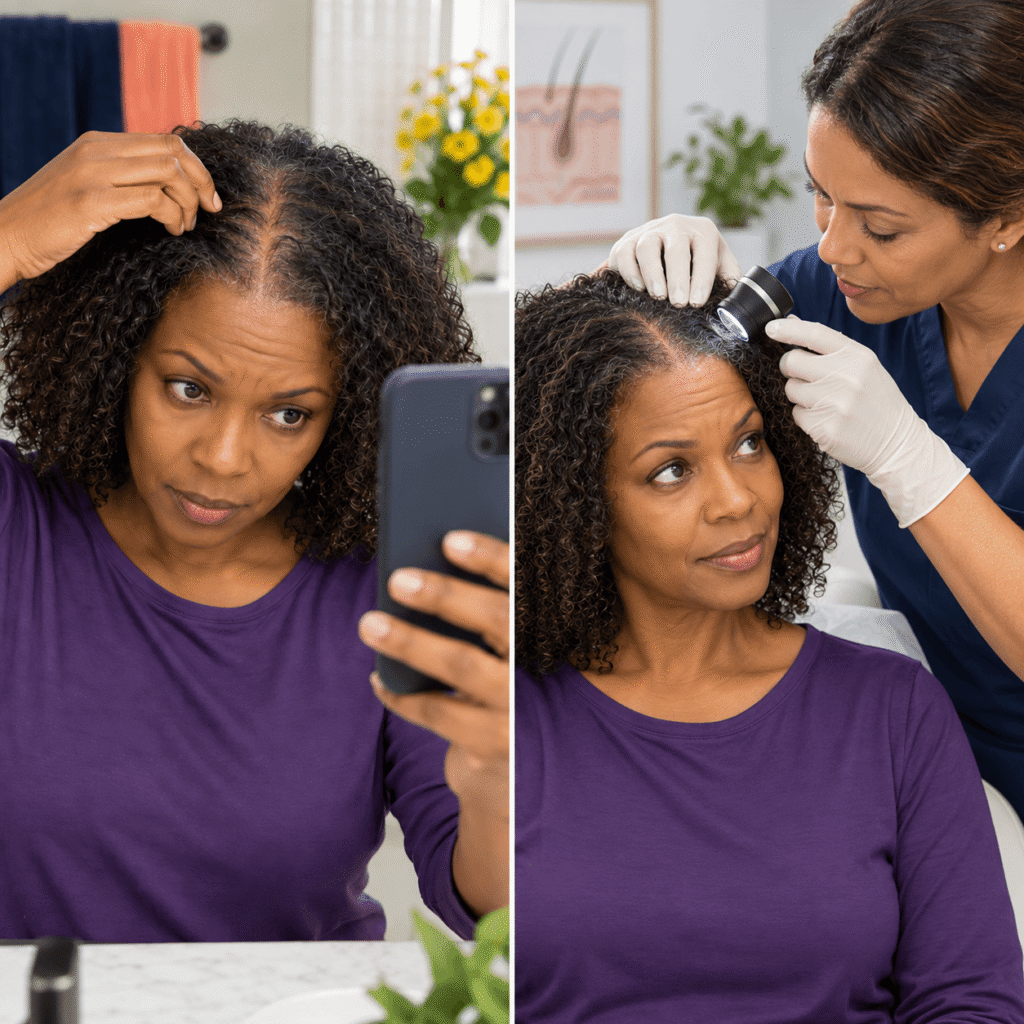
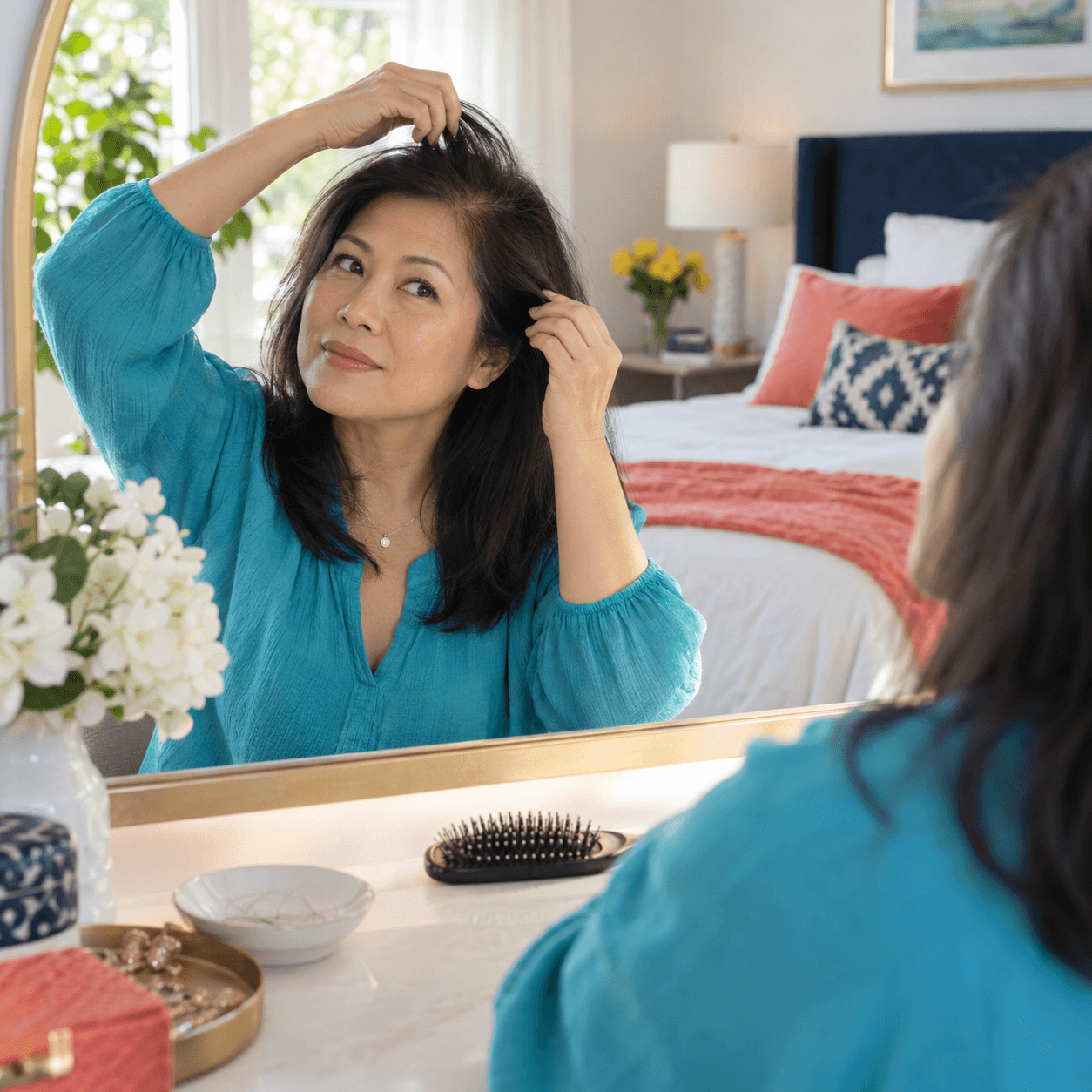
Female-pattern hair loss commonly produces a widening part and reduced density over the crown. The frontal hairline is often preserved, although some women develop thinning near the temples.
Hair miniaturization continues without treatment, so early evaluation provides the best opportunity to preserve follicles and achieve fuller hair. Menopause-related hair loss is not diagnosed by hormone symptoms alone. A dermatologist examines the pattern, scalp condition, hair-shaft diameter, and family history.
Perimenopause Can Increase Hair Shedding
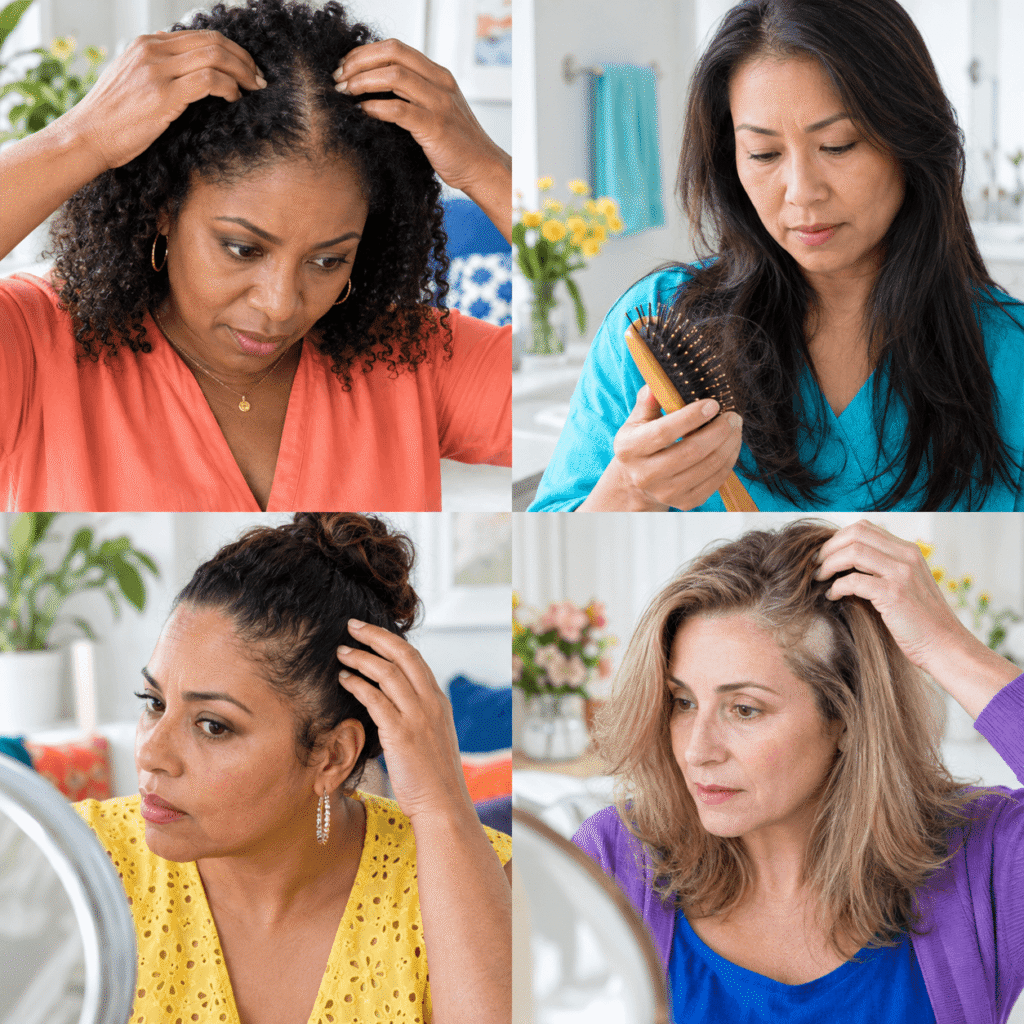
Women in perimenopause and menopause may experience overlapping types of hair loss. Hormonal fluctuation can coincide with heavy periods, low iron stores, sleep loss, dieting, or thyroid problems. These factors contribute to hair thinning and may occur alongside inherited female pattern hair loss.
Finding hair in the shower does not reveal the diagnosis. Telogen effluvium usually causes relatively sudden, diffuse shedding, while female pattern hair loss causes gradual thinning of hair. Both conditions can occur together.
Hair Loss Patterns Point To Different Causes
| Pattern Or Clue | Likely Explanation | Typical Timing | Helpful Evaluation |
|---|---|---|---|
| Widening part and finer crown hair | Female pattern hair loss | Gradual progression | Scalp examination and dermoscopy |
| Receding or broken temple hairs | Traction alopecia | Months to years | Hairstyle and hair care review |
| Diffuse handfuls of hair | Telogen effluvium | Often 2 to 3 months after a trigger | Illness, diet, medication and stress history |
| Smooth round bald patches | Alopecia areata | Sudden | Dermatologist assessment |
| Redness, scale, pain or shiny skin | Inflammatory or scarring alopecia | Variable | Prompt examination, sometimes biopsy |
A Dermatologist For Hair Loss Finds Triggers
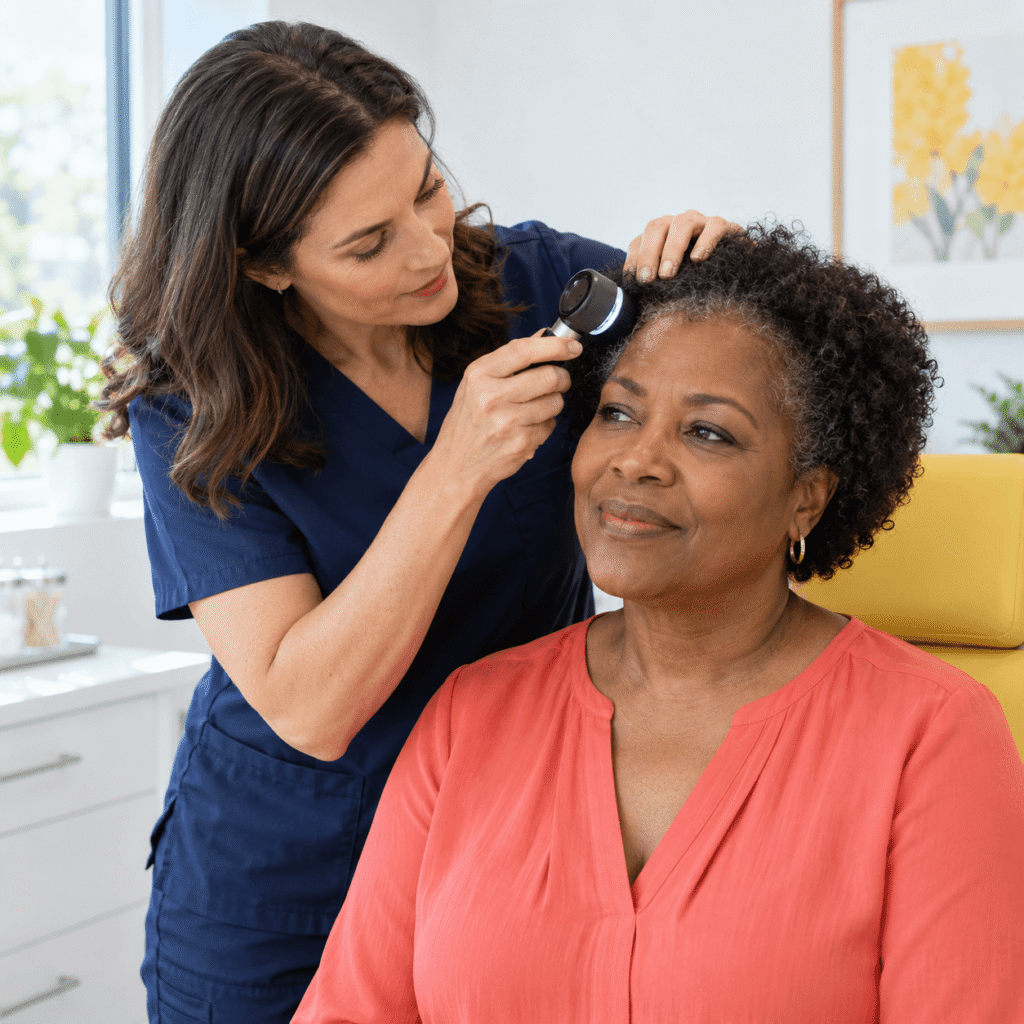
See a dermatologist for hair loss if thinning is sudden, patchy, painful, itchy, scaly, or rapidly worsening. Seek prompt care when the scalp looks shiny or scarred, eyebrows are thinning, or the frontal hairline is receding. Some scarring conditions become more common after menopause and may permanently destroy follicles without early treatment.
Testing should be individualized. Depending on your symptoms, a clinician may request a complete blood count, ferritin, thyroid-stimulating hormone, vitamin D, or other nutritional tests. Irregular cycles, new facial hair, severe acne, or voice changes may justify an androgen evaluation.
Biotin deficiency is uncommon. High-dose biotin supplements can distort thyroid, cardiac, and hormone laboratory results, so do not take them automatically for hair regrowth.
Minoxidil Supports Menopausal Hair Growth
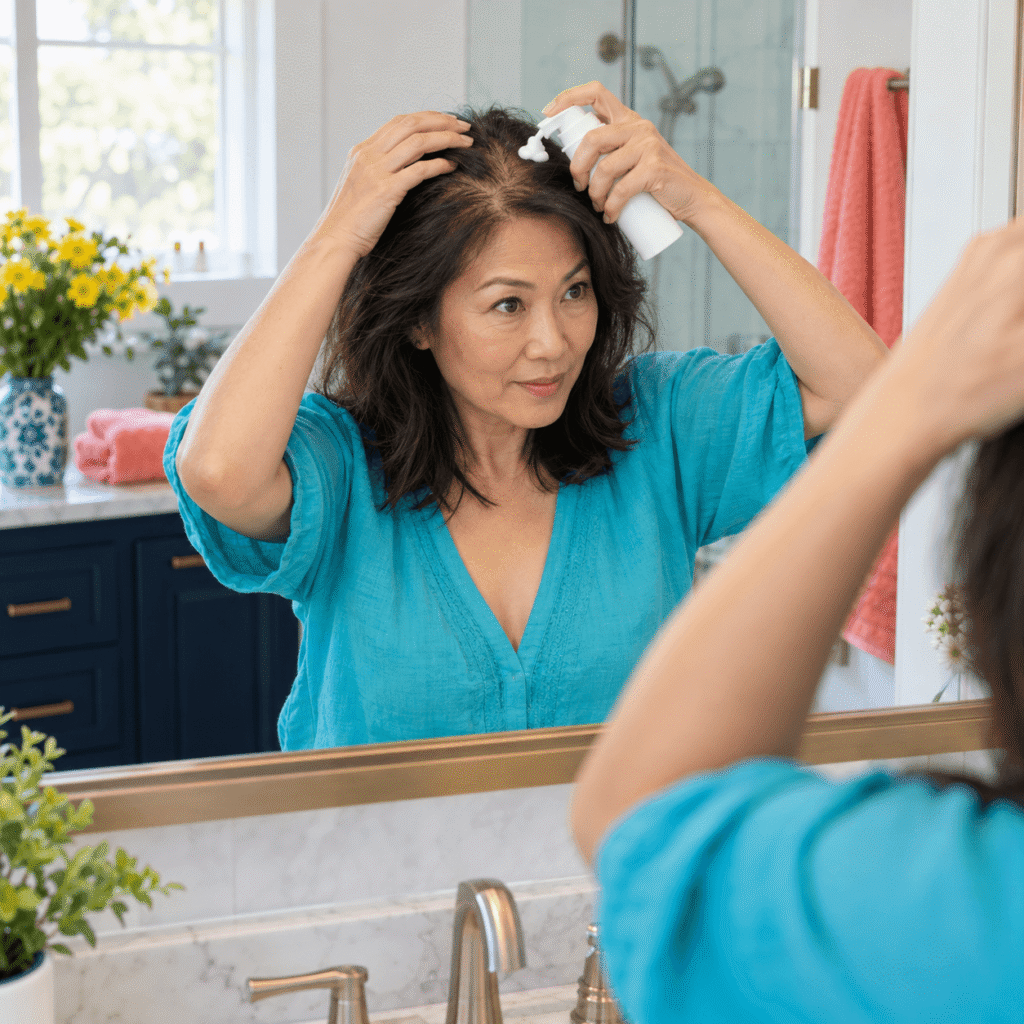
Topical minoxidil is the best-established treatment for female pattern hair loss. It can prolong the growing phase and enlarge miniaturized follicles. Common regimens include 5% foam once daily or 2% solution twice daily, following the product label and a clinician’s advice.
Temporary shedding can occur during the first several weeks. Visible improvement generally requires at least three to six months, and continued use is needed to maintain results. Scalp irritation and unwanted facial hair are possible. Ask a clinician before use if you have cardiovascular disease, take blood-pressure medication, or could become pregnant.
Menopausal hormone therapy is not an established stand-alone treatment for hair loss. It should be prescribed for appropriate menopause symptoms and individualized health goals, not solely for growing hair.
This Protocol Can Reduce Hair Loss

- Photograph your center part and temples monthly under identical lighting.
- Book an assessment if hair loss or thinning persists beyond eight weeks or is visibly progressing.
- Release tight braids, extensions, ponytails, wig adhesives, and edge styles immediately.
- If female pattern hair loss is confirmed, discuss 5% topical minoxidil once daily. Apply it to a dry scalp, wash your hands, and evaluate results after six months.
- Eat adequate protein and iron-rich foods. Avoid rapid weight loss and correct only laboratory-confirmed deficiencies.
- Use gentle shampoo, conditioner, low heat, and minimal chemical processing to protect hair quality. Cutting your hair can improve its appearance, but it cannot change follicle activity.
- Treat dandruff or scalp inflammation with professional guidance and review all medications with your clinician.
A 2025 Review Adds An Expert Angle
A useful expert angle is the “dual-diagnosis” approach described in current menopause research: do not label every case as hormonal hair loss. A 2025 review found that menopause can alter hair caliber, density, and cycling, while genetics, aging, nutrition, stress, illness, and hair practices may contribute simultaneously.
This explains why one generic supplement rarely stops menopausal hair loss. Each Wise Woman needs a pattern-based assessment that separates follicle miniaturization from shedding, breakage, traction, and scarring disease.
Frequently Asked Questions
Can Menopause Hair Loss Grow Back?
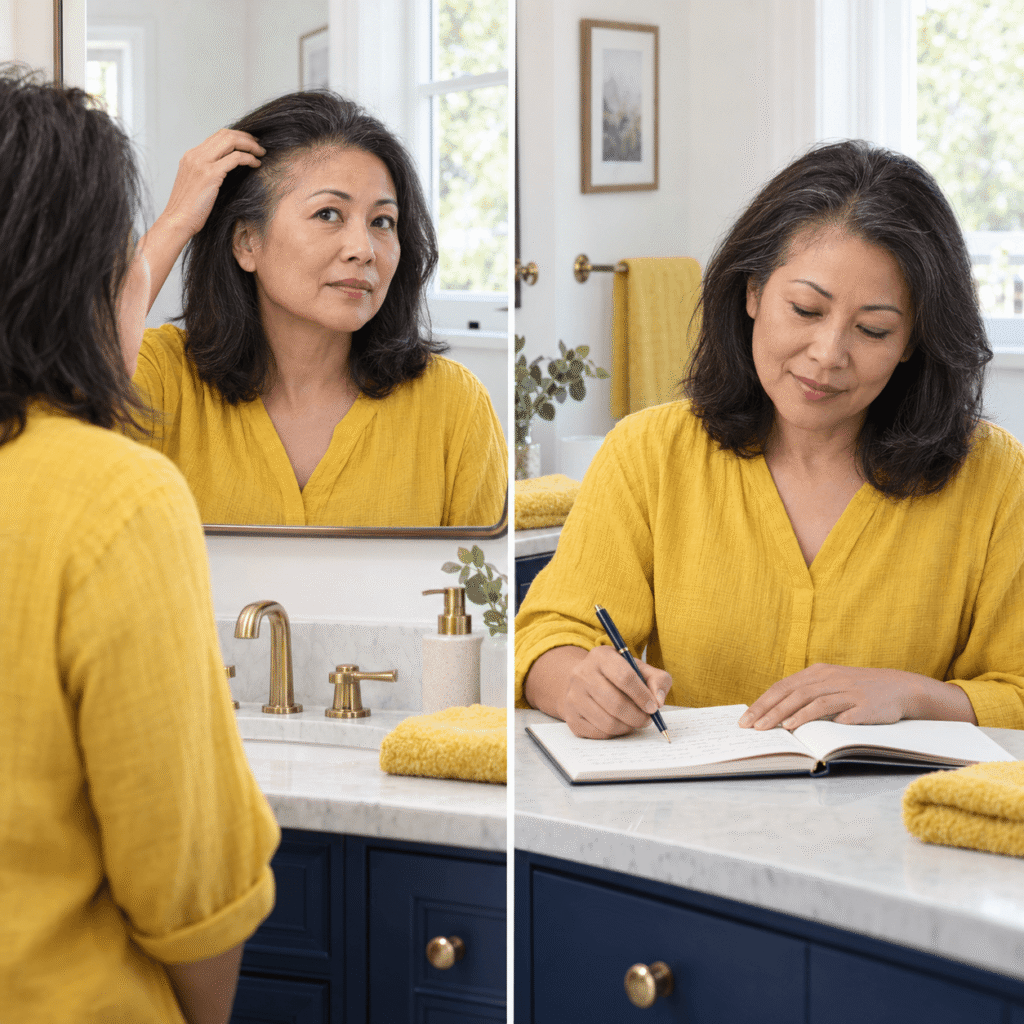
Hair loss from menopause may improve when active follicles are treated early. Telogen effluvium often recovers after its trigger resolves, while female pattern hair loss generally requires ongoing treatment. Scarred follicles cannot produce healthy hair growth again.
How Can I Stop Hair Loss During Menopause?
Learning how to stop hair loss during menopause begins with diagnosing the type of hair loss. Remove traction, correct confirmed deficiencies, eat sufficient protein, and discuss minoxidil when pattern loss is present. Avoid relying on shampoos or supplements that promise to prevent hair loss without clinical evidence.
Does Low Estrogen Cause Menopausal Hair Loss?

Low estrogen may shorten the growth phase and change the hormonal environment around scalp and hair follicles. However, declining estrogen is rarely the only factor that causes menopausal hair loss. Genetics, aging, illness, nutrition, thyroid disease, stress, and damaging hair care can contribute to hair loss.
What Helps Temple Hair Regrowth In Menopause?
Temple hair regrowth depends on whether the cause is traction, shedding, female pattern hair loss, or scarring alopecia. Stopping tight styles and starting appropriate treatment early may preserve active follicles. A receding, painful, inflamed, or shiny hairline needs prompt dermatology care.
References
- Gupta AK, et al. “Menopause and Hair Loss in Women: Exploring the Hormonal Transition.” Maturitas. 2025. PubMed record.
- British Association of Dermatologists. “Hair Loss, Female Pattern Androgenetic Alopecia.” Patient information leaflet. BAD guidance.
- Women’s Health Concern. “Menopausal Hair Loss: More Than a Bad Hair Day.” Reviewed November 2025. Clinical factsheet.
- National Health Service. “Symptoms of Menopause and Perimenopause.” Updated 2026. NHS guidance.
- DermNet New Zealand. “Female Pattern Hair Loss.” DermNet clinical overview.