The 60-Second Answer
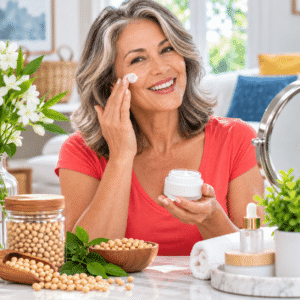
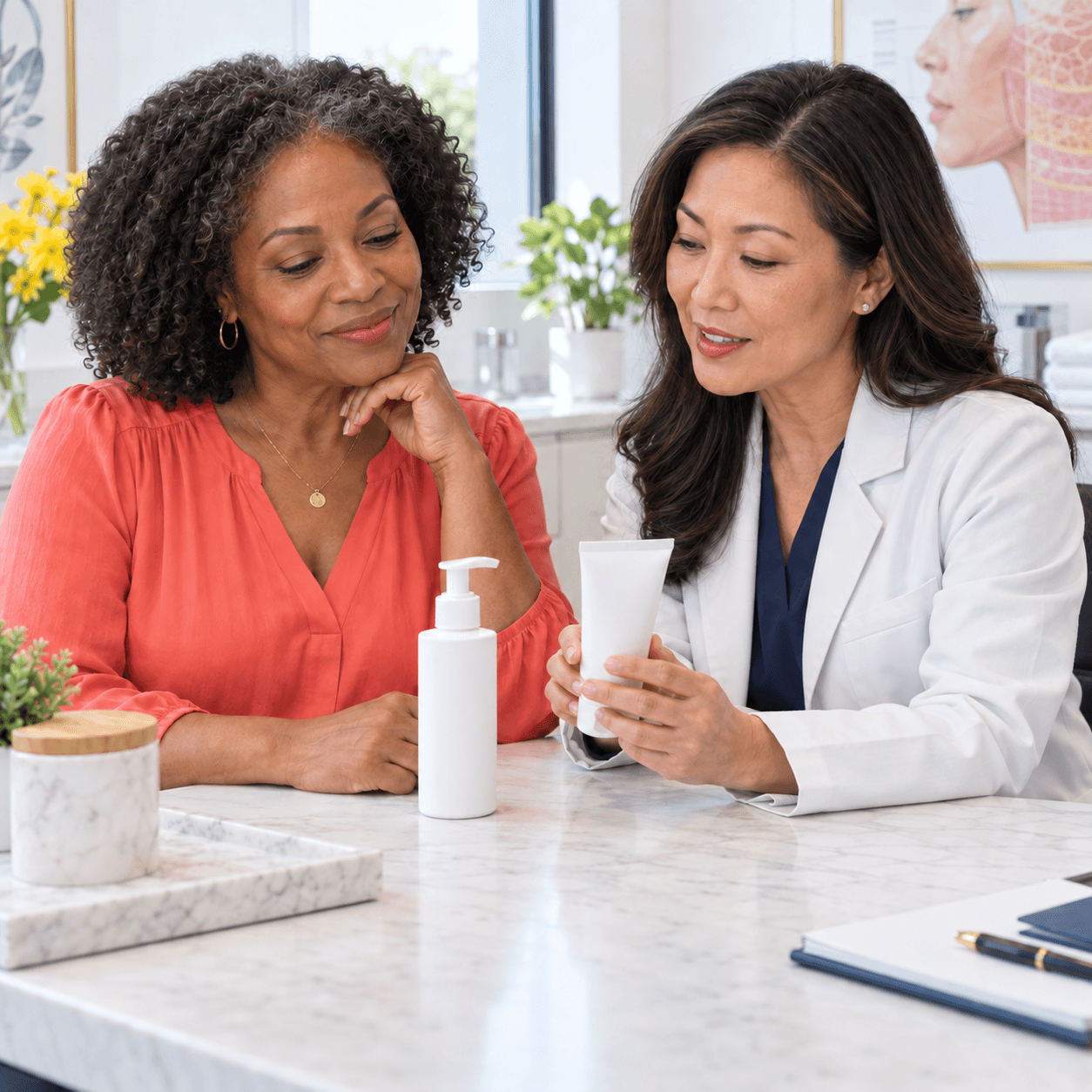
A good non-toxic moisturizer for thinning menopausal skin should be simple, rich, and fragrance-free. Choose a cream with ceramides to strengthen the skin barrier, glycerin and hyaluronic acid for hydration, and squalane or petrolatum to seal moisture in. Skip perfume and essential oils, which may irritate sensitive skin. Apply morning and evening, plus SPF 30 during the day for protection.
The Best Moisturizer Repairs Menopause Skin
Thinning, tight, or suddenly sensitive skin can make menopause feel as if the skincare rules changed overnight. They did. The best moisturizer for thinning menopausal skin is generally a fragrance-free cream containing three complementary groups of ingredients:
- Humectants, such as glycerin and hyaluronic acid, attract water.
- Emollients, such as squalane, soften rough skin texture.
- Occlusives and barrier lipids, including petrolatum, ceramides, cholesterol, and fatty acids, reduce water loss.
Look for a cream in a tube or pump, with a short ingredient list and no added fragrance. “Non-toxic” and “clean” are marketing terms without standardized medical definitions. A product is not automatically safer because it is natural, organic, or free from synthetic ingredients. Plant extracts and essential oils can irritate sensitive skin during menopause.
Hormonal Changes Weaken The Skin Barrier
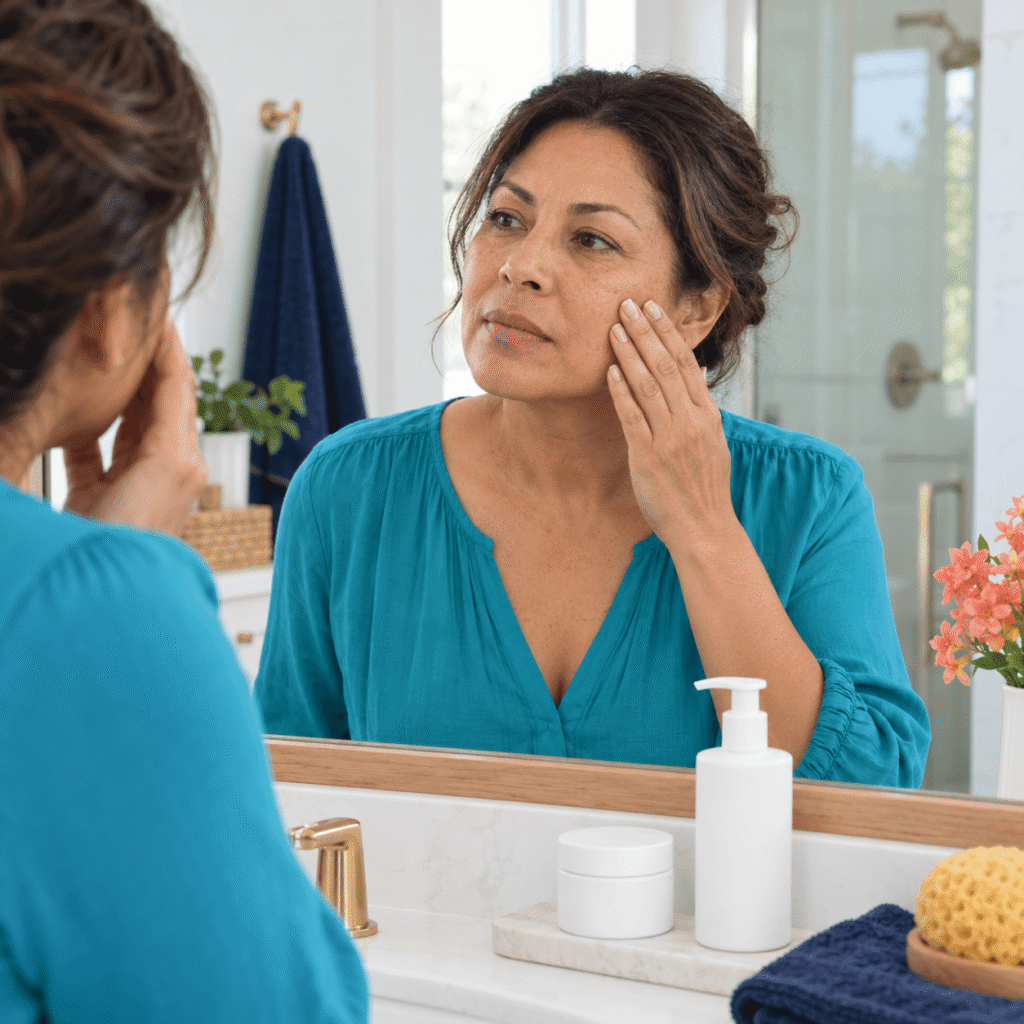
Estrogen during perimenopause and menopause interacts with hormone receptors in fibroblasts, keratinocytes, and other skin cells. As estrogen declines, the skin produces less collagen, sebum, and substances that help retain water. Collagen may decrease rapidly during the early postmenopausal years, contributing to thinning skin, reduced skin elasticity, fine lines, and a crepey appearance.[1,2]
Lower estrogen also affects epidermal renewal and barrier function. When the outer barrier becomes less effective, water escapes more readily through transepidermal water loss. Menopausal skin may consequently feel dry, itchy, drier after cleansing, or unusually reactive.
Progesterone’s independent effects are less clearly established. However, the wider hormonal and metabolic shift of menopause can influence sleep, stress, inflammation, and nervous system regulation, all of which may intensify itching or sensitive-skin symptoms.
A moisturizer cannot replace lost estrogen or rebuild deep facial structure. It can hydrate your skin, reinforce the surface barrier, and make fine lines and wrinkles appear softer.
Ceramides Restore Essential Barrier Lipids
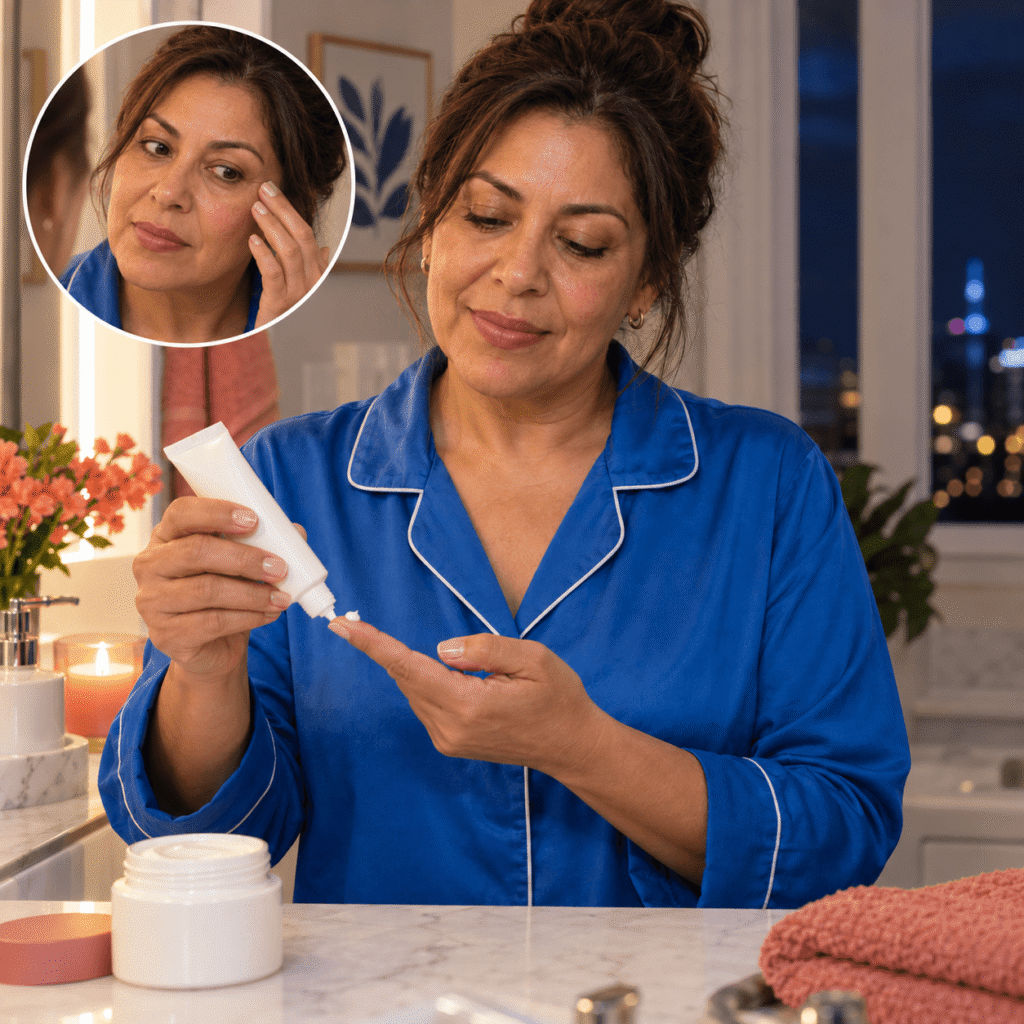
Ceramides form part of the lipid matrix surrounding surface skin cells. A useful analogy is bricks and mortar: cells are the bricks, while ceramides, cholesterol, and fatty acids form the mortar.
Products containing all three lipid types are especially appropriate for common skin concerns such as dryness, flaking, and irritation. These ingredients for menopausal skin help keep your skin supple without requiring perfume, botanical oils, or complicated formulas.
| Ingredient | Primary Function | Best Use | Main Caution |
|---|---|---|---|
| Ceramides | Replace barrier lipids | Dry, thin, sensitive skin | Few common concerns |
| Glycerin | Draws water into the outer layer | Daily hydration | Seal with cream in dry air |
| Hyaluronic acid | Temporarily plumps and hydrates | Damp face and neck | May feel tight without an occlusive |
| Petrolatum | Strongly reduces water loss | Very dry or flaky areas | Can feel heavy |
| Retinol | Supports collagen and skin renewal | Fine lines and uneven skin | May cause irritation and dryness |
Hyaluronic Acid Hydrates Crepey Skin
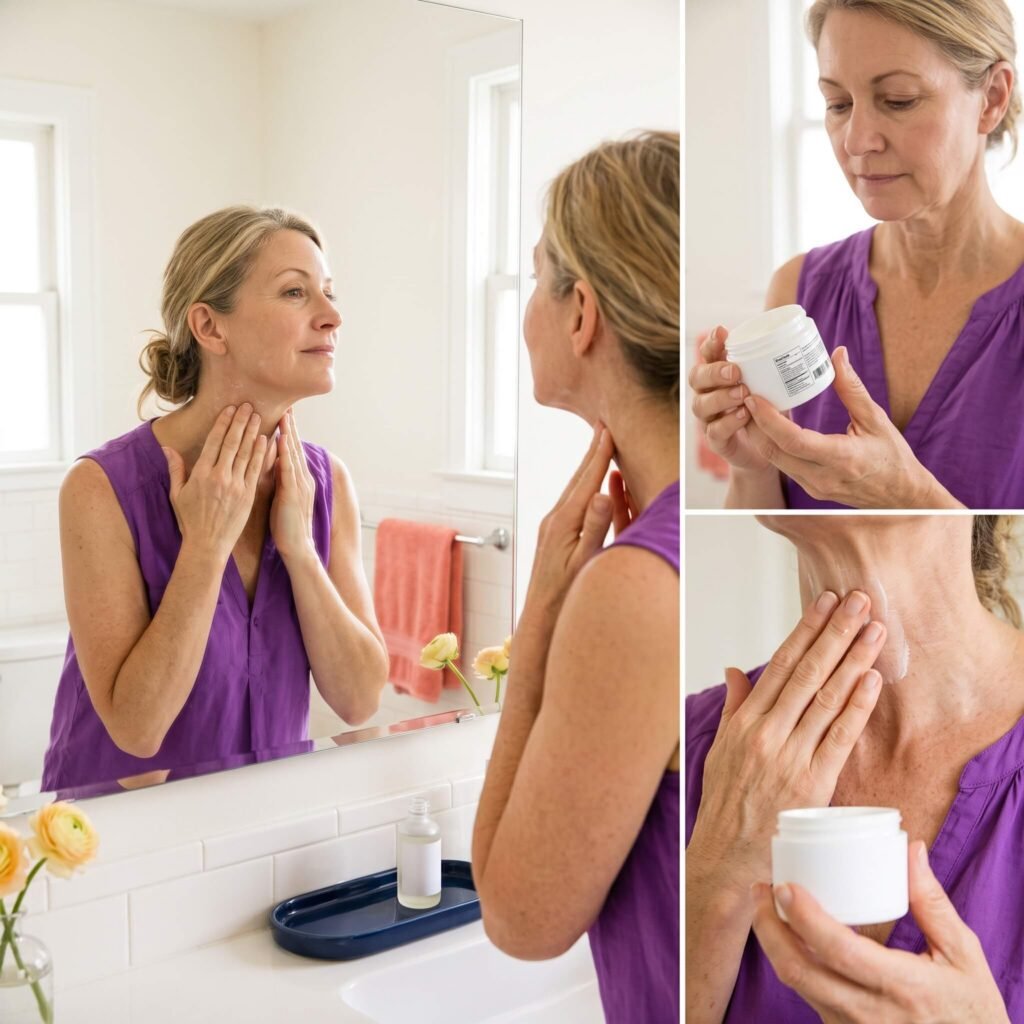
Hyaluronic acid is a humectant, not an exfoliating acid. Apply it to slightly damp skin and follow with a face cream so that the captured water does not evaporate.
For crepey neck skin, hyaluronic acid supplies hydration, while ceramides repair the barrier. They are complementary rather than competing ingredients. Neither can permanently tighten loose skin, but both may improve comfort and surface appearance.
Retinol Can Improve A Wrinkle Gradually
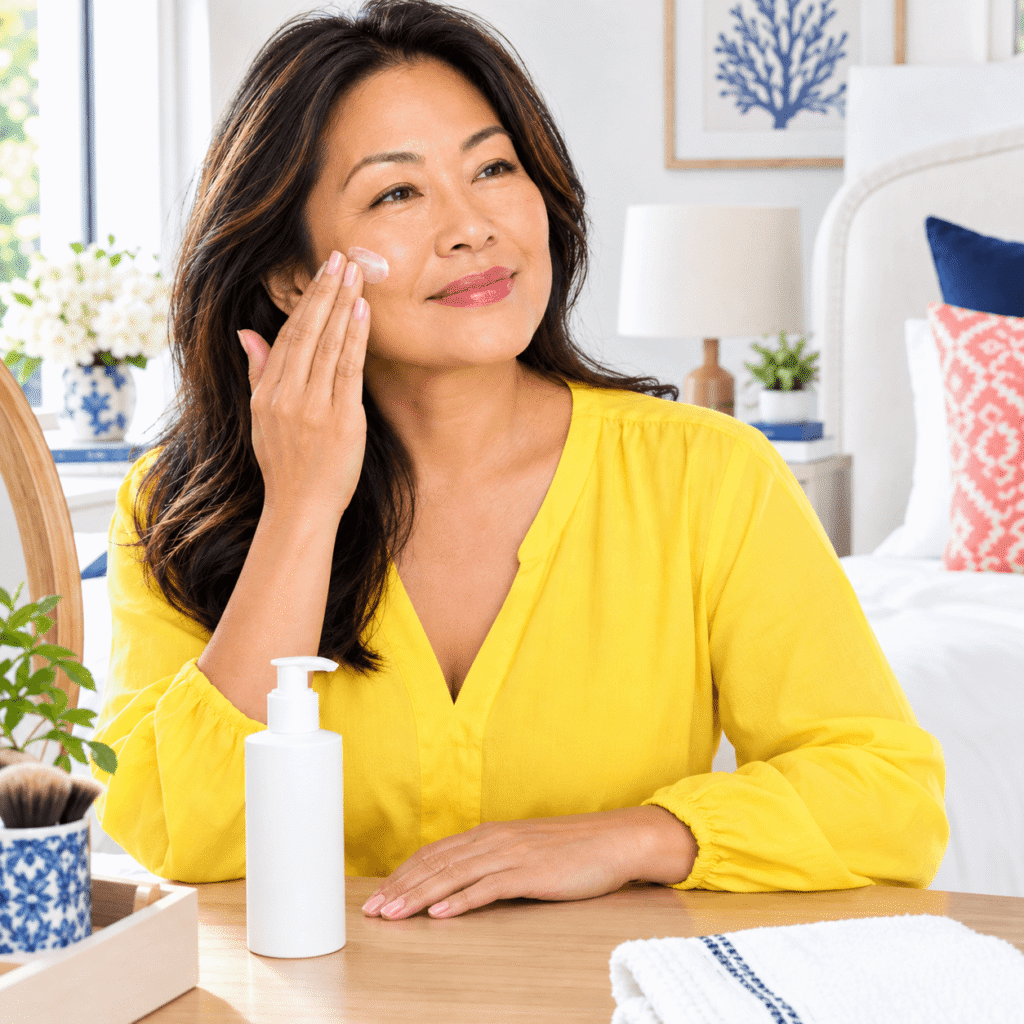
Retinol and prescription retinoids encourage cell turnover and support collagen formation, making them among the best-studied topical options for photoaged skin.[3] They can also aggravate sensitive skin during menopause.
Start with a low-strength retinol only once or twice weekly. Do not apply it to irritated skin or directly beside the eyes, nostrils, and mouth. Ask a dermatologist before using a retinoid if you have rosacea, eczema, or persistent inflammation.
Sunscreen Limits Further Collagen Damage

Daily broad-spectrum sunscreen is essential care for menopausal skin. Ultraviolet radiation accelerates collagen breakdown, pigmentation, uneven skin texture, and signs of skin aging.
Use SPF 30 or higher on the face, neck, chest, and hands. Sunscreen will not reverse hormonal skin changes, but it helps preserve the collagen and skin elasticity you still have.
A Two-Zone Routine Protects Thin Skin
An expert approach is to treat the face as two zones. Use active skincare ingredients such as retinol or vitamin C on resilient areas, but apply only moisturizer around the eyes, mouth, and neck until tolerance is clear.
This “barrier budget” distinguishes a thoughtful menopause skincare routine from generic anti-aging advice. Thin skin around your eyes may not tolerate the same products as the forehead or cheeks. Burning, persistent redness, and flaking are warning signs, not proof that a product is working.
This Skin Care Protocol Reduces Dryness
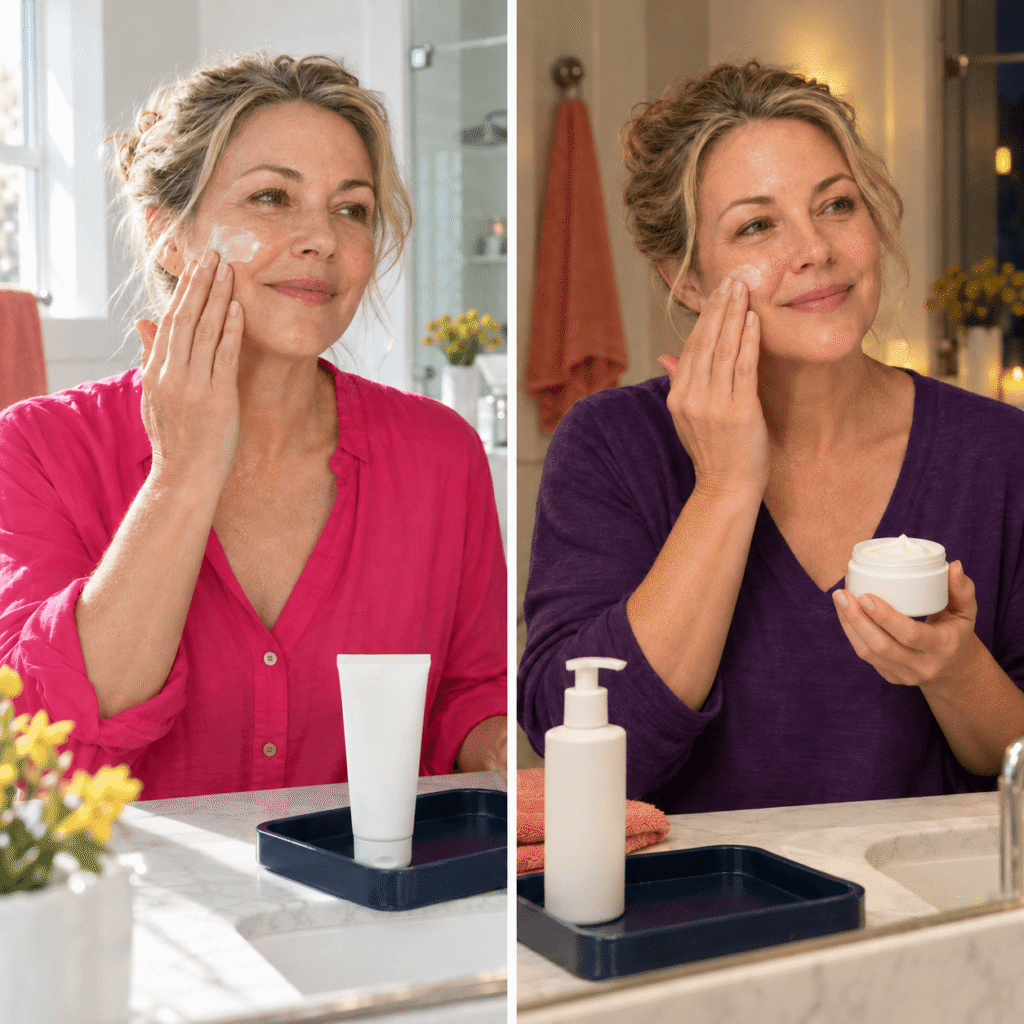
- Morning: Rinse with lukewarm water or use a fragrance-free, non-soap cleanser.
- Apply a glycerin or hyaluronic acid serum to damp skin if desired.
- Within three minutes, apply a ceramide-rich cream to hydrate and seal the skin.
- Finish with broad-spectrum SPF 30 or higher. Reapply every two hours outdoors.
- Evening: Cleanse gently and reapply the moisturizer. Add a thin layer of petrolatum to persistently dry areas.
- If tolerated, introduce low-strength retinol one night weekly, increasing to two or three nights over several weeks.
- Patch-test each new product for seven days and introduce only one product at a time.
Seek medical care for cracking, bleeding, a spreading rash, severe itching, or skin changes that do not improve. These symptoms can reflect eczema, thyroid disease, medication effects, or another condition requiring diagnosis.
Frequently Asked Questions
Why Does Skin Feel Dry After Moisturizer?
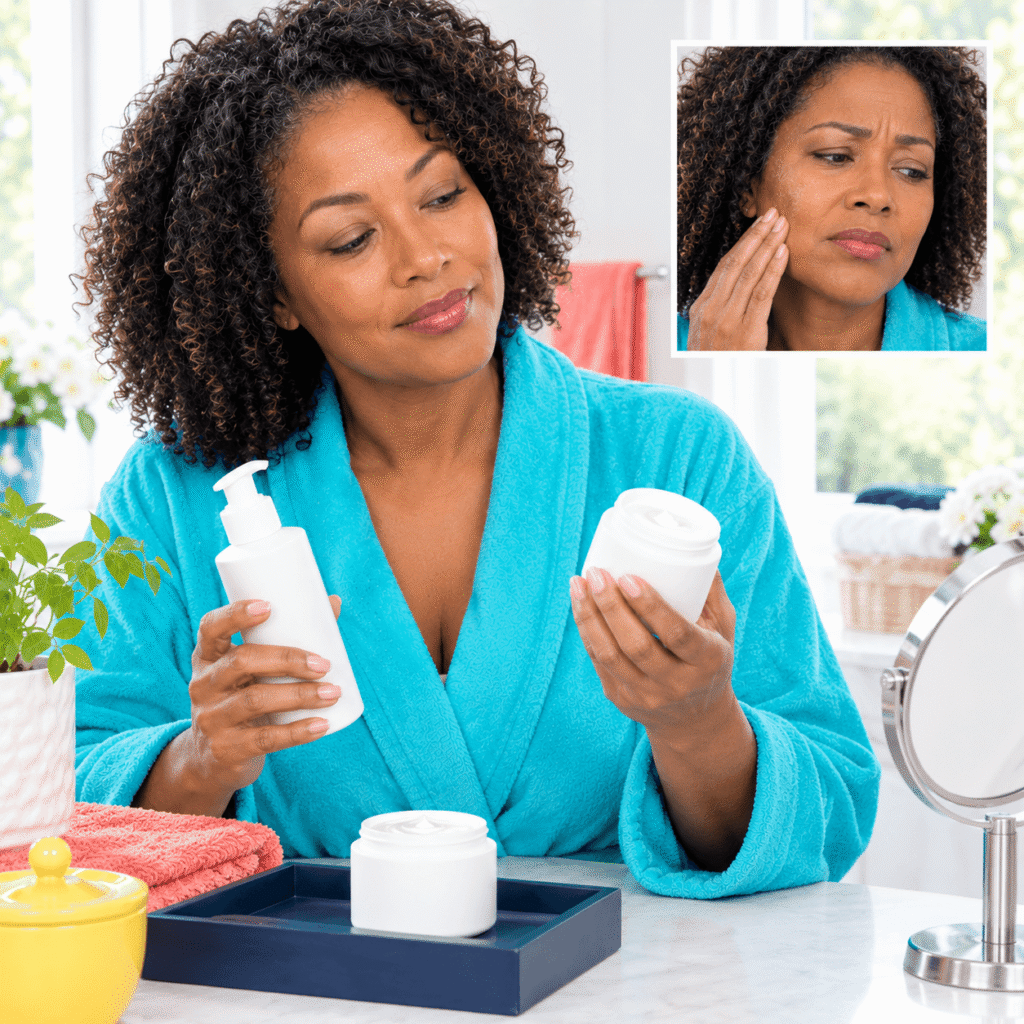
Your skin feels dry when a lotion supplies water but lacks enough lipids or occlusive ingredients to prevent evaporation. Hot water, foaming cleanser, fragrance, and low humidity can worsen barrier loss. Switch to a fragrance-free cream and apply it to damp skin.
Which Skincare Ingredients Worsen Thinning?
Fragrance, essential oils, harsh scrubs, and frequent high-strength acids commonly irritate thin menopausal skin. Overusing retinol or combining several exfoliants can also damage the skin barrier. Avoid any skin care products that repeatedly burn, sting, or cause persistent redness.
Are Ceramides Best For Crepey Neck Skin?
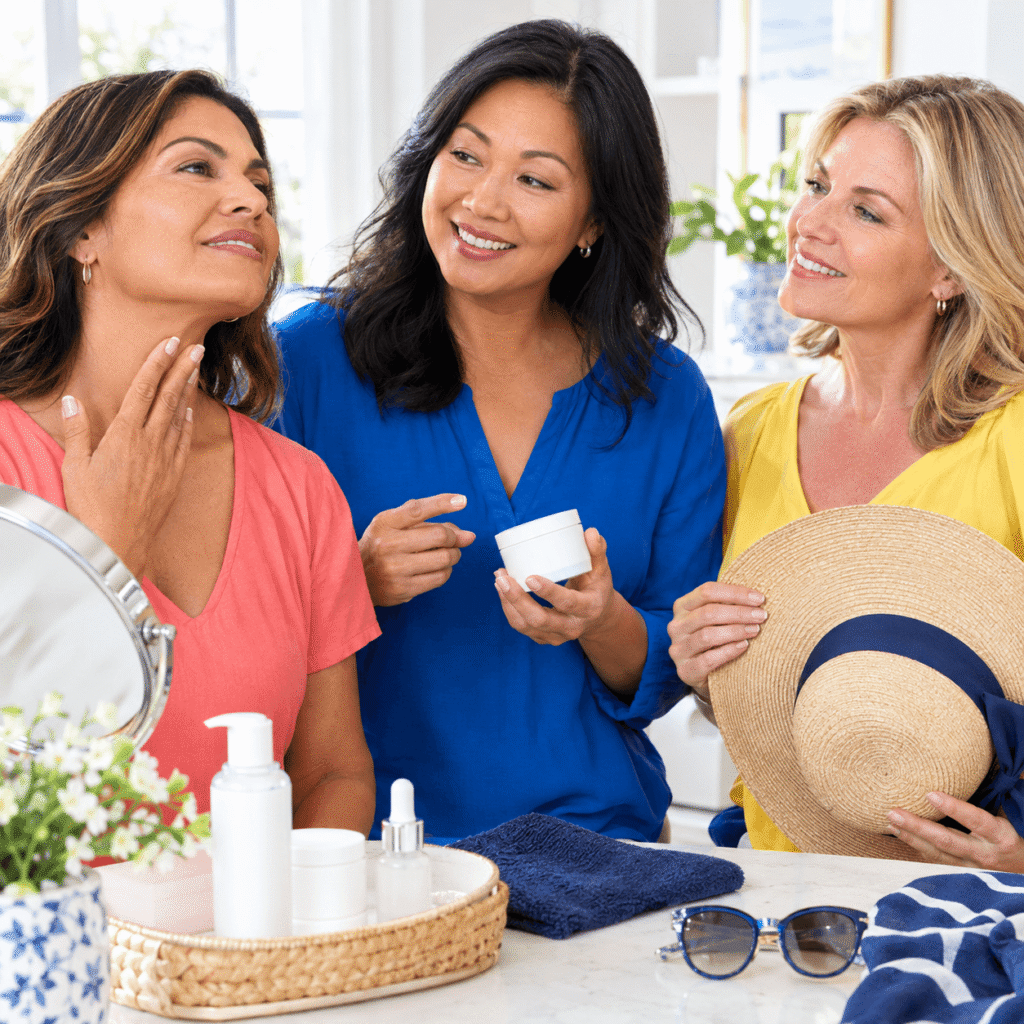
Ceramides are better for barrier repair, while hyaluronic acid provides temporary hydration and plumping. A formula containing both is often the most practical choice for crepey menopause skin. Add sunscreen because ultraviolet exposure accelerates collagen loss.
How Can Menopausal Skin Thicken Naturally?
No moisturizer can substantially thicken the deeper dermis, but protein-rich nutrition, adequate sleep, sun protection, and gentle skincare support normal skin function. Retinoids may improve collagen with consistent use, although irritation must be controlled. Rapid bruising or unusually fragile skin should be assessed medically.
Does Clean Skincare Hydrate Dry Skin?
Clean skincare can hydrate well if it contains proven humectants, barrier lipids, and occlusives. The label does not guarantee safety, effectiveness, or suitability for sensitive skin. Choose products for menopausal skin by formulation and tolerance, not marketing language.
Continue Your Journey
Your Second Spring deserves right care grounded in evidence, not fear-based beauty claims. Continue with our complete guide: How Do I Treat Menopause Dry Skin And The Loss Of Facial Elasticity?
References
- Thornton MJ. Estrogens and aging skin. Dermato-Endocrinology. 2013;5(2):264-270. PubMed Central
- Calleja-Agius J, Brincat M, Borg M. Skin connective tissue and ageing. Best Practice & Research Clinical Obstetrics & Gynaecology. 2013;27(5):727-740. PubMed
- Mukherjee S, et al. Retinoids in the treatment of skin aging: an overview of clinical efficacy and safety. Clinical Interventions in Aging. 2006;1(4):327-348. PubMed Central
- American Academy of Dermatology Association. Dermatologists’ top tips for relieving dry skin. AAD guidance