The 60-Second Answer:
The primary reason for hormonal acne on chin during perimenopause is that estrogen and progesterone fluctuate and eventually decline, allowing androgens to exert a stronger effect on oil glands. Excess oil, inflammation, and dead skin can then clog pores along the chin and jawline. Gentle topical care and appropriate medical treatment can control these breakouts.
Perimenopause Triggers Chin Acne
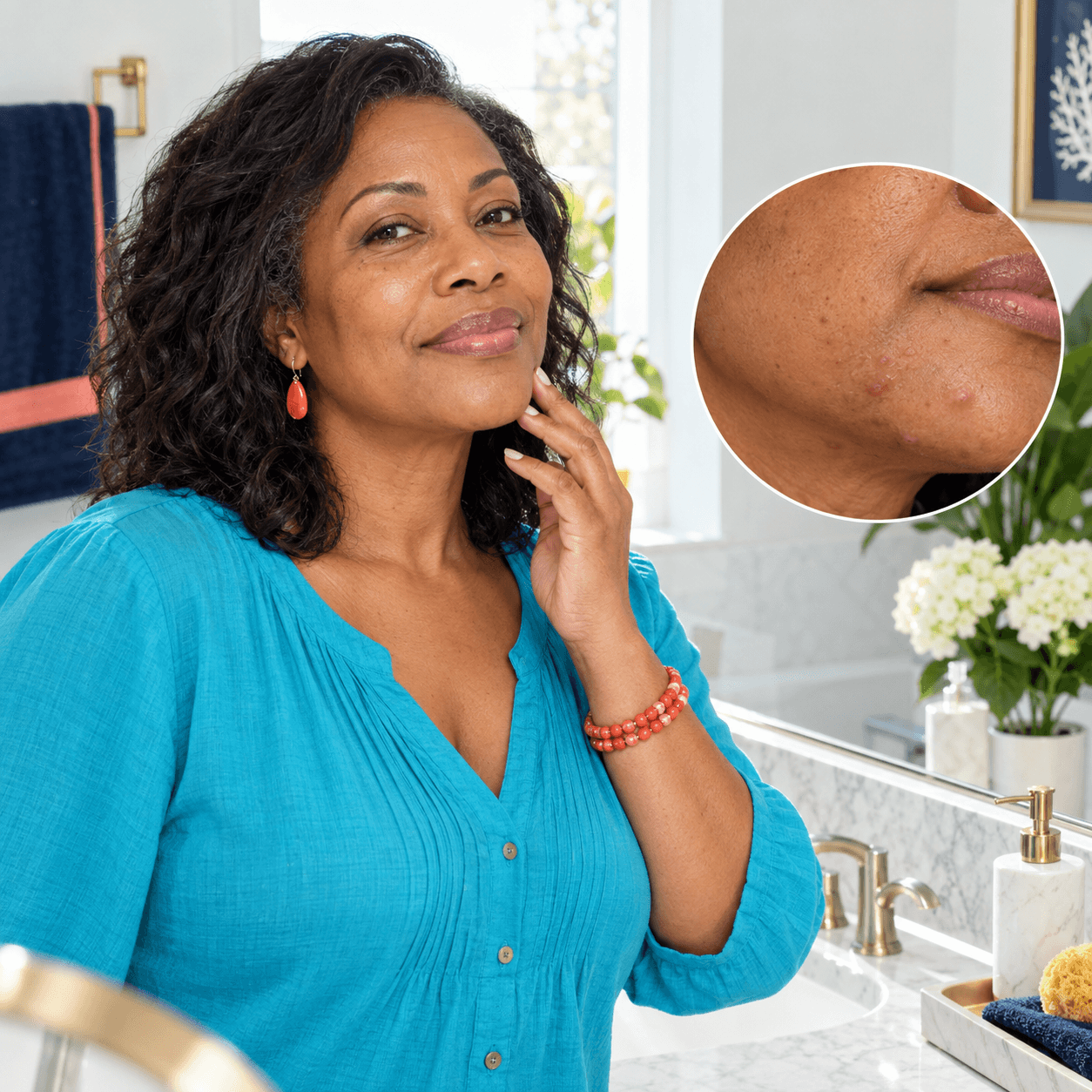
Finding painful acne on your chin after years of clear skin can feel deeply unfair. Yet adult acne is common during the years leading up to menopause. It may appear as tender bumps, cystic acne, blackheads, or recurrent acne lesions along the jawline.
Perimenopausal acne differs from adolescent acne. Teenage acne often involves an oily forehead, nose, chest, and back. Menopausal acne typically concentrates on the lower face while the rest of the face becomes dry or sensitive.
This combination requires balance. Aggressive products may reduce acne temporarily but damage menopausal skin, worsening dryness, irritation, and the appearance of fine lines.
Hormonal Changes Cause Acne
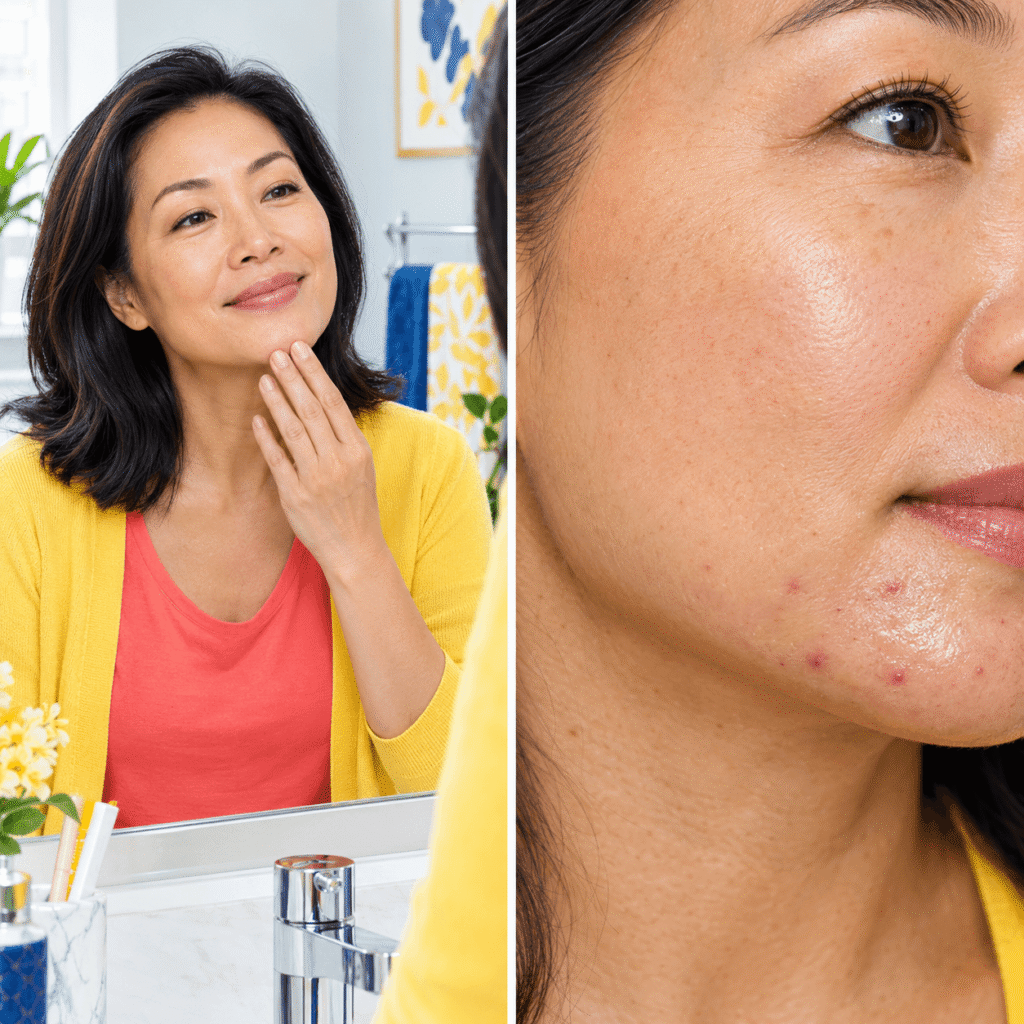
During perimenopause, ovulation becomes less predictable. Progesterone usually declines, while estrogen levels rise and fall before decreasing more consistently. Androgen levels may not increase, but their influence can become more noticeable as estrogen falls.
Oil glands contain hormone receptors that respond to androgens such as testosterone. Stronger androgen activity can increase sebum production and alter how skin cells shed inside each pore. Sebum, dead cells, and Cutibacterium acnes can clog pores and activate inflammation, producing inflammatory acne lesions.
This is sometimes described as a relative hormonal imbalance. It does not automatically mean that a woman has abnormally high testosterone.
Stress may add another layer. Poor sleep, hot flashes, and emotional strain affect nervous system regulation and stress hormones. A metabolic shift involving insulin resistance may also influence androgen signaling in susceptible women, although neither stress nor diet is the sole cause of acne.
Menopausal Acne Has Distinct Signs

Hormonal acne commonly appears along the jawline, chin, and around the mouth. Breakouts may flare before a period, persist for weeks, or leave dark marks.
A dermatologist should evaluate acne that appears suddenly, becomes severe, or occurs with increased facial hair, scalp hair loss, irregular bleeding, or a deepening voice. These signs may justify testing hormone levels or investigating polycystic ovary syndrome, medication effects, or another endocrine condition.
Not every red facial bump is acne vulgaris. Rosacea, folliculitis, and perioral dermatitis can resemble perimenopausal acne but need different treatment options.
Acne Treatments Affect Aging Skin Differently
| Treatment | Primary Action | Aging-Skin Concern | Best Use |
|---|---|---|---|
| Salicylic acid | Clears oil and dead cells from pores | May dry sensitive skin | Mild clogged pores |
| Benzoyl peroxide | Reduces acne-causing bacteria | Can cause dryness and irritation | Inflammatory acne |
| Topical retinoid | Prevents clogged pores and supports cell turnover | Irritation is common initially | Persistent acne and comedones |
| Azelaic acid | Reduces inflammation and dark marks | Usually gentler, but may sting | Sensitive or uneven-toned skin |
| Spironolactone | Blocks androgen effects systemically | Requires prescription screening | Persistent hormonal acne |
| Clascoterone | Blocks androgen receptors in the skin | Cost and access may be limiting | Hormonal acne needing topical treatment |
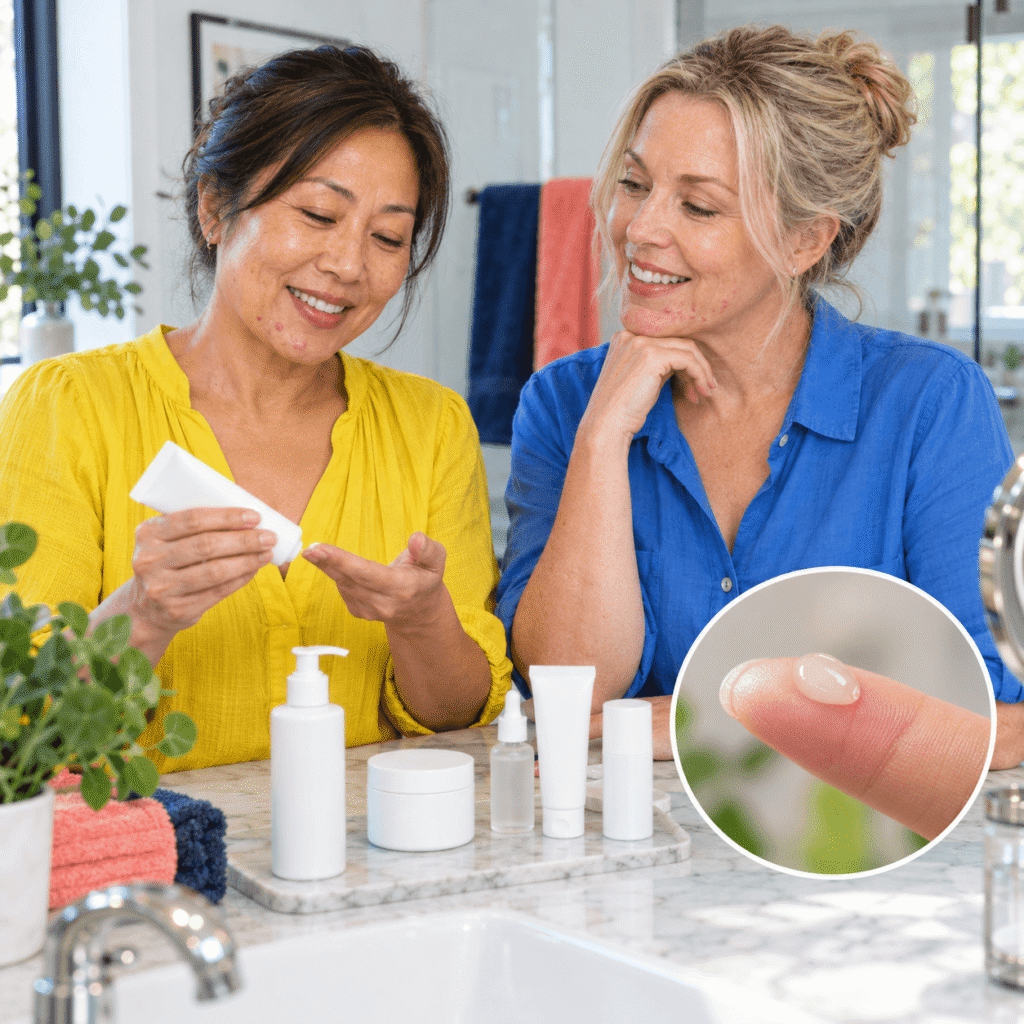
The American Academy of Dermatology recommends benzoyl peroxide and topical retinoids strongly, with conditional recommendations for salicylic acid, azelaic acid, clascoterone, and hormonal therapies. Treatment still needs to match the person’s skin, medical history, and acne severity.
Gentle Skincare Can Reduce Acne
A Barrier-Safe Acne Protocol
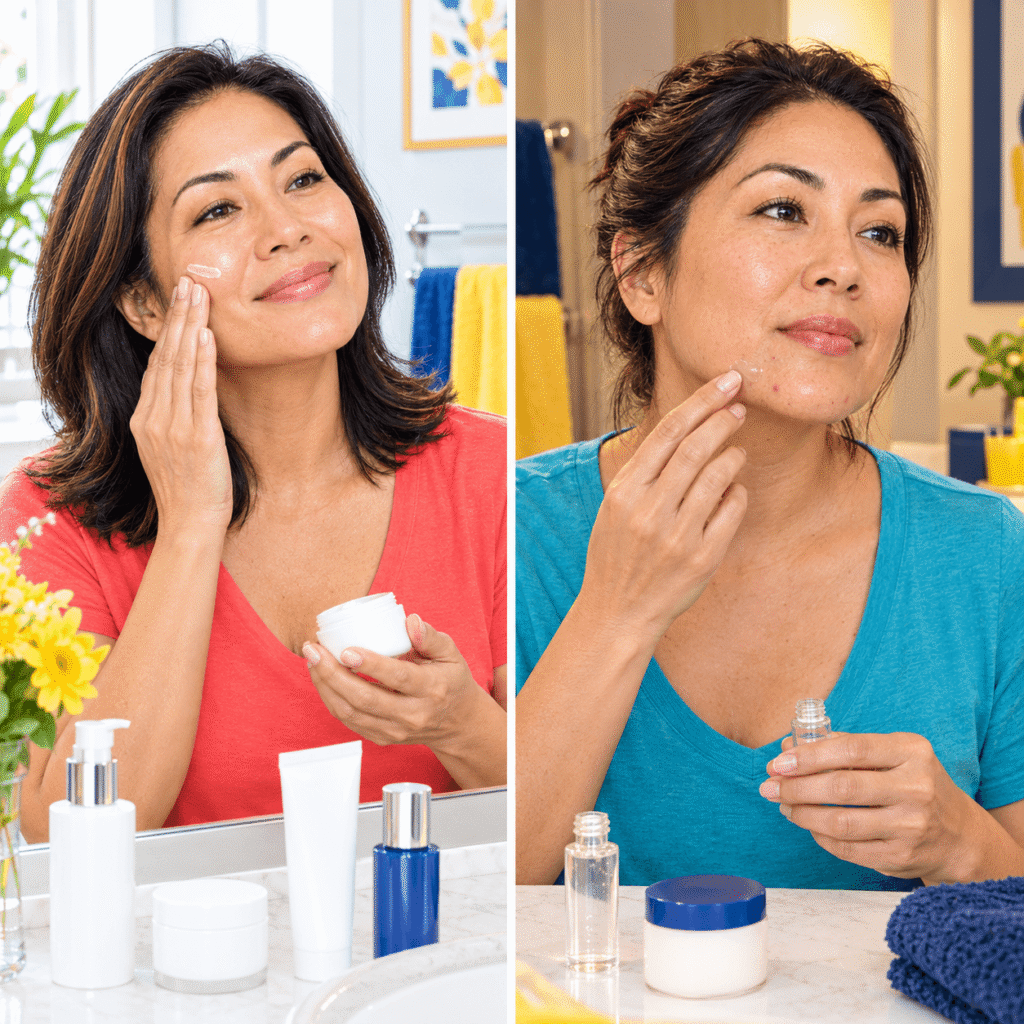
- Morning: Wash with a gentle, fragrance-free cleanser. Apply azelaic acid 10% or a salicylic acid product containing 0.5% to 2% two or three mornings weekly. Finish with non-comedogenic moisturizer and broad-spectrum SPF 30 or higher.
- Evening: Cleanse gently and apply an adapalene 0.1% pea-sized amount two nights weekly. Increase slowly if your skin tolerates it. Apply moisturizer before and after the retinoid if dryness develops.
- For inflamed spots: Try a 2.5% benzoyl peroxide wash or thin topical treatment several times weekly. Higher strengths often cause more irritation without providing better results.
- Avoid: Scrubs, picking, alcohol-heavy toners, and introducing several active ingredients simultaneously.
- Review progress: Allow 8 to 12 weeks. Consult a dermatologist sooner for painful nodules, moderate to severe acne, or acne scarring.
Do not use topical retinoids or spironolactone during pregnancy. Ask a clinician for pregnancy-safe alternatives if pregnancy is possible.
Medical Treatment Options Control Flares
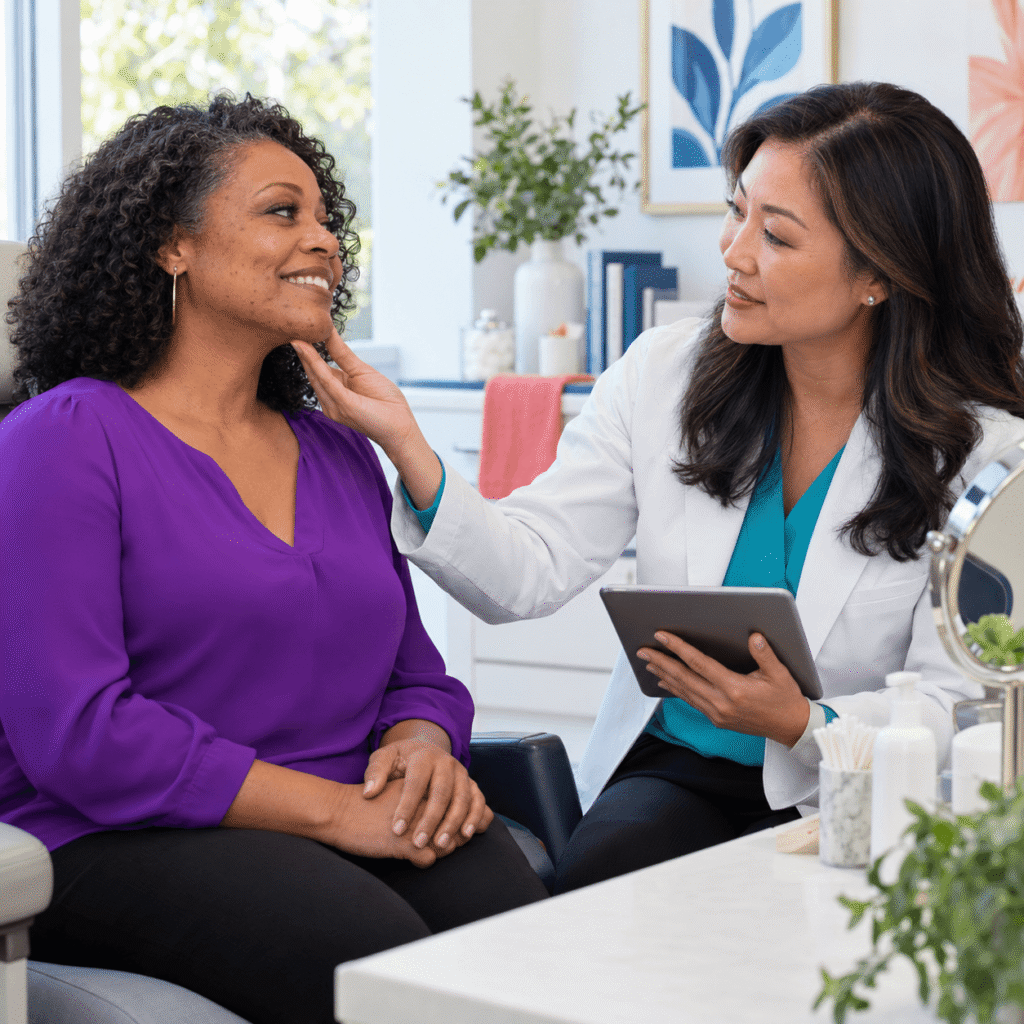
For women with menopausal acne that does not improve with topical treatment, a dermatologist may consider prescription tretinoin, clascoterone, oral spironolactone, combined hormonal contraception, antibiotics, or isotretinoin.
Spironolactone blocks androgen activity and has evidence supporting its use in adult female acne. It may not be appropriate with certain kidney conditions, medications, or pregnancy, so individualized medical screening matters.
Hormone replacement therapy should not be started solely as an acne treatment. Its effect on acne varies according to the formulation, particularly the type of progestogen or androgen exposure. Discuss new acne flares with the clinician managing your menopause symptoms rather than stopping prescribed hormones independently.
The Skin-Barrier Pattern Guides Care
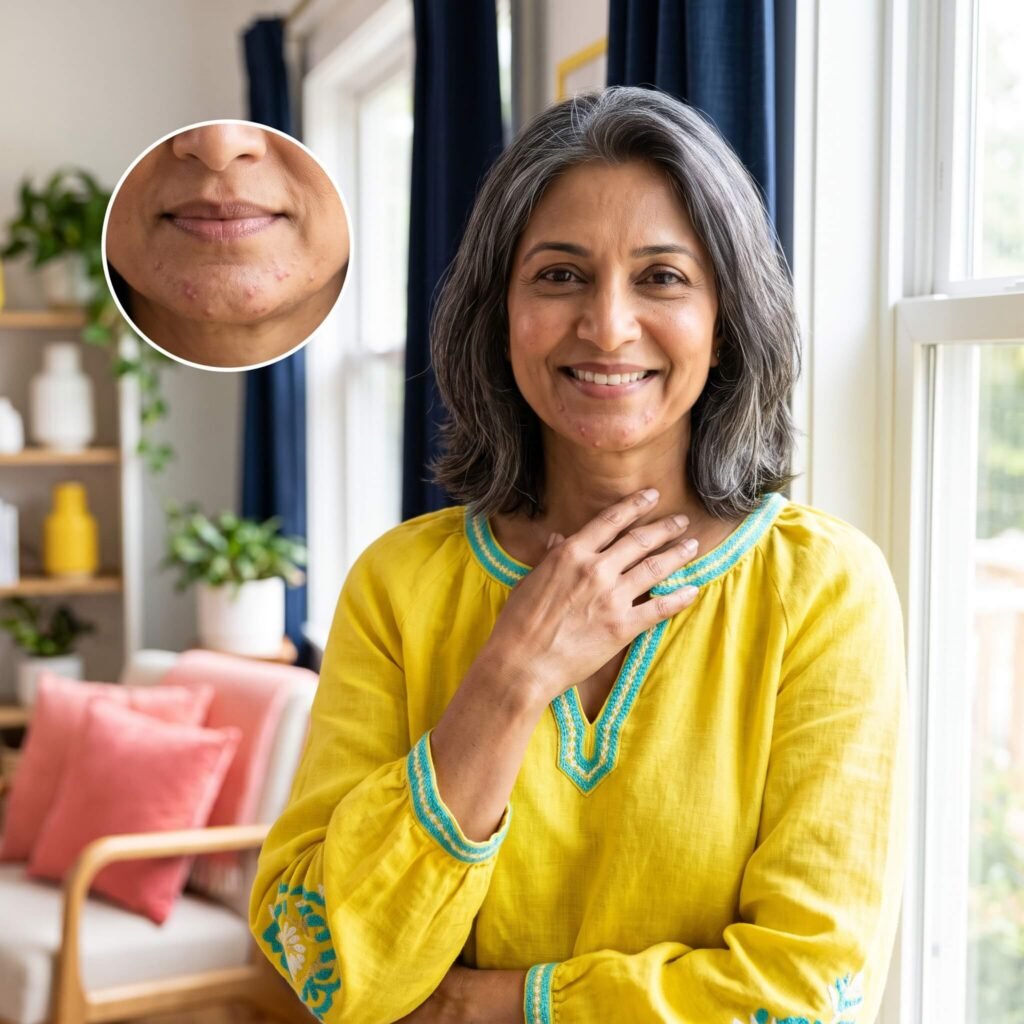
A useful expert angle is to classify women by both acne severity and skin-barrier condition. A woman with oily, resilient skin may tolerate standard acne treatment, while a Wise Woman experiencing dryness, stinging, and facial elasticity loss may need slower retinoid introduction and greater barrier support.
This dual assessment separates perimenopausal and menopausal acne from generic teenage-acne advice. In your Second Spring, successful skin care should clear pores without sacrificing comfort or resilience.
Supplements Have Limited Acne Evidence

No natural supplement has been proven to stop menopause chin acne. Zinc may offer modest benefits in some people, but it can cause nausea, interact with medicines, and produce copper deficiency when taken excessively. Evidence for spearmint tea, DIM, probiotics, and vitex remains too limited to replace established acne treatment.
Avoid high-dose biotin unless medically indicated because it may interfere with laboratory tests. Review every supplement with a clinician, especially when using hormone replacement therapy or prescription medication.
Frequently Asked Questions
Why Am I Getting Cystic Acne At 45?
Hormonal changes during perimenopause can increase androgen influence on oil glands. This encourages deep inflammation and cystic acne along the jawline. A dermatologist can help prevent acne scarring when lesions are painful or recurrent.
Is Perimenopause Acne Low Estrogen?
Perimenopause acne may reflect falling or fluctuating estrogen relative to androgen activity, not necessarily high testosterone. Normal blood results do not exclude hormone-sensitive skin. Sudden acne with excess facial hair or scalp hair loss needs medical assessment.
Does Benzoyl Peroxide Dry Aging Skin?
Yes, benzoyl peroxide can dry or irritate menopausal skin, especially at high strengths. Starting with 2.5% a few times weekly can improve tolerance. Use a gentle moisturizer and reduce frequency if burning or peeling develops.
How Do I Treat Acne And Protect Elasticity?
Use one acne active at a time, moisturize consistently, and wear SPF 30 or higher daily. A slowly introduced retinoid may treat acne while supporting skin renewal. Avoid harsh scrubs that worsen inflammation and barrier damage.
Can Supplements Stop Menopause Chin Acne?
There is no supplement guaranteed to prevent hormonal acne during menopause. Limited evidence suggests zinc could help some patients, but unnecessary high doses carry risks. Discuss supplements and a complete treatment plan with your healthcare professional.
Continue Your Journey
Chin acne can be treated without punishing mature skin. Continue with our pillar guide, How Do I Treat Menopause Dry Skin And The Loss Of Facial Elasticity?, to build a routine that supports hydration, comfort, and clearer skin throughout the menopause transition.
References
- Reynolds RV, Yeung H, Cheng CE, et al. “Guidelines of Care for the Management of Acne Vulgaris.” Journal of the American Academy of Dermatology. 2024;90(5):1006.e1-1006.e30. American Academy of Dermatology guideline.
- Khunger N, Mehrotra K. “Menopausal Acne: Challenges and Solutions.” International Journal of Women’s Health. 2019;11:555-567. doi:10.2147/IJWH.S174292. Full review.
- Bagatin E, Freitas THP, Rivitti-Machado MC, et al. “Adult Female Acne: A Guide to Clinical Practice.” Anais Brasileiros de Dermatologia. 2019;94(1):62-75. doi:10.1590/abd1806-4841.20198203. Full review.
- Carmina E, Dreno B, Lucky WA, et al. “Female Adult Acne and Androgen Excess: A Report From the Multidisciplinary Androgen Excess and PCOS Committee.” Journal of the Endocrine Society. 2022;6(3):bvac003. doi:10.1210/jendso/bvac003. Consensus report.
- American Academy of Dermatology. “Acne: Diagnosis and Treatment.” Updated treatment guidance. Patient guidance.