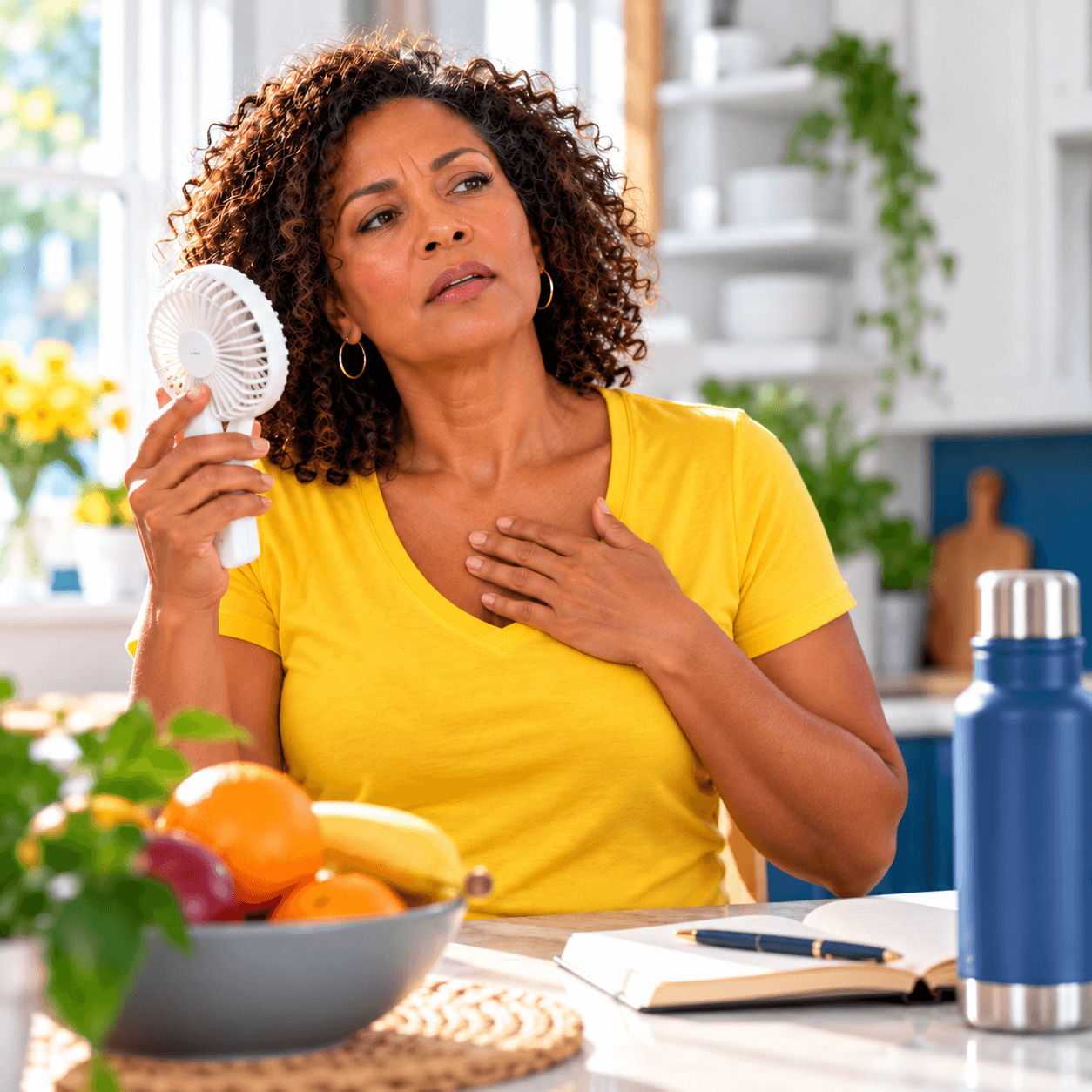
The 60-Second Answer
Because a hot flash activates your body’s heat-release response, blood vessels widen, sweat begins, and your heart rate may briefly rise. Heart racing during hot flashes can be part of this response. A new, persistent, irregular, or unusually intense racing heartbeat still deserves medical assessment, especially with chest pain, breathlessness, or fainting.
Why Your Heart Races During A Hot Flash
Menopause Changes The Body’s Thermostat
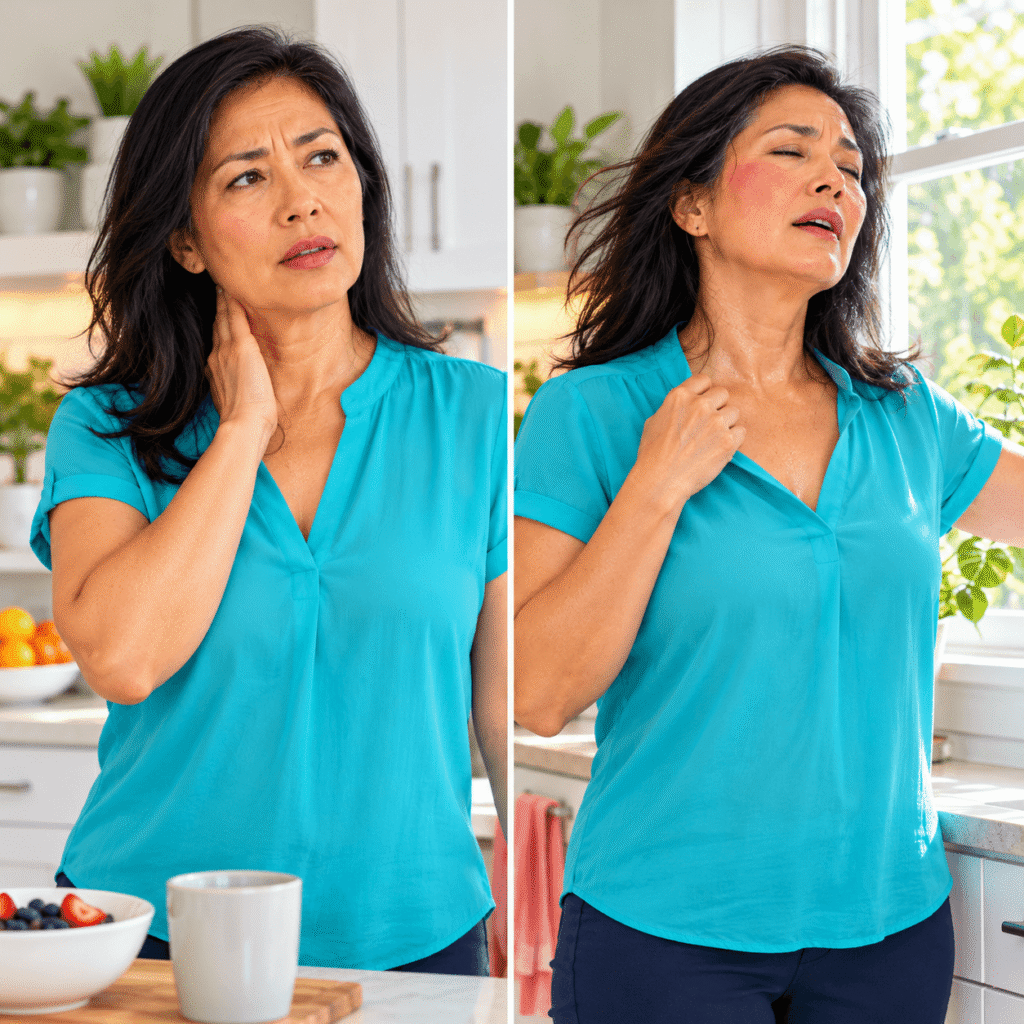
During perimenopause, ovarian hormone levels fluctuate; after the final menstrual period, estrogen levels remain lower. Estrogen acts through hormone receptors in brain circuits involved in temperature regulation. As that signaling changes, the hypothalamus, your internal thermostat, can respond to a small rise in the body’s temperature as though you need to cool down urgently. Researchers describe a narrowed thermoneutral zone: a smaller temperature range in which the body feels comfortable without switching on sweating or heat-saving responses. PMC
Progesterone levels also change across the menopausal transition, particularly as ovulation becomes irregular. But it would be too simple to blame one low hormone reading for an individual palpitation. The best-established hot-flash mechanism centers on changing estrogen signaling and the hypothalamus’s heat-control pathways. A single estrogen or FSH blood test may miss the fluctuation occurring in perimenopause. NIH
A Hot Flash Activates Sweat And Blood Vessels
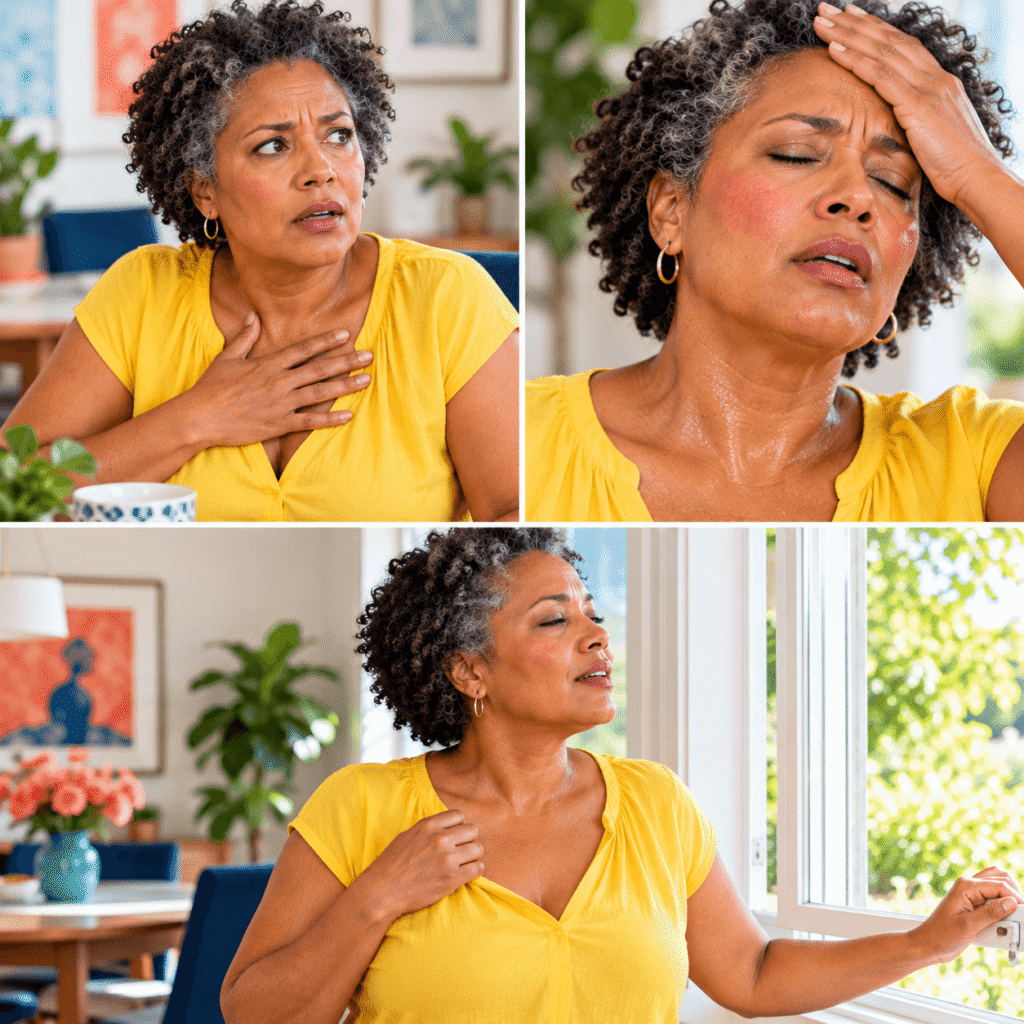
When that heat-loss response starts, blood vessels near the skin widen and sweat helps release heat. Nervous system regulation shifts at the same time. Your pulse may rise, creating a racing or pounding sensation just before or during the feeling of heat. One small laboratory study measured an average increase of about 9 to 10 beats per minute during hot flashes. That is a study average, not a safe limit for any individual pulse reading. PubMed
This timing is a useful detail to notice: researchers have measured changes in skin blood flow before participants reported the flash. A woman who feels her heartbeat first may therefore be noticing an early physical part of the same event. It does not, by itself, prove that the sensation is harmless or that an irregular rhythm is absent.
Night Sweats Can Disrupt Sleep Quality
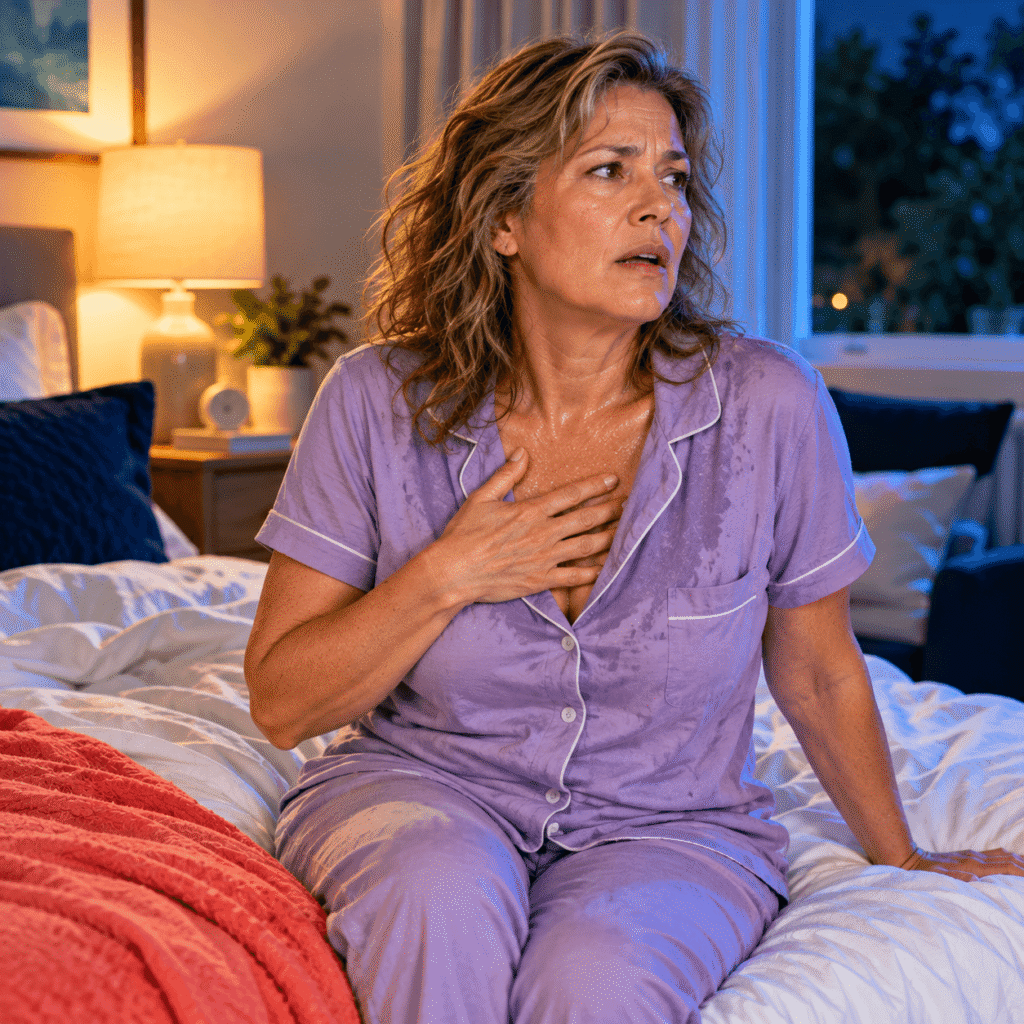
Hot flashes and night sweats are menopausal vasomotor symptoms. At bedtime, a flash may wake you with a drenched shirt, a noticeable heartbeat, and then a chill. Repeated awakenings can lead to poor sleep or insomnia, making physical symptoms feel harder to manage the next day. Symptoms vary: some women rarely feel a palpitation, while others find it more bothersome than the heat itself.
A Racing Heart Has More Than One Trigger
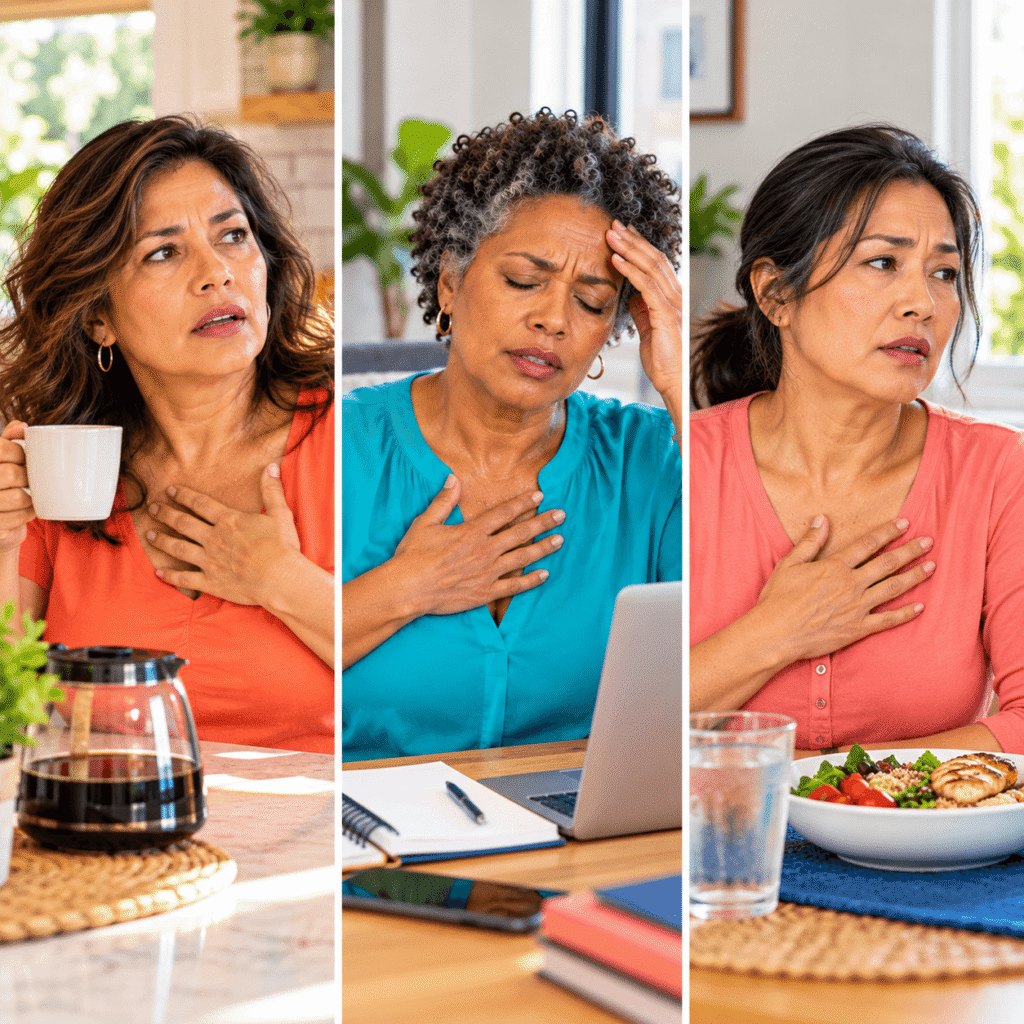
A pulse that changes with a familiar flush is different from assuming every episode of heart racing is menopausal. Stress hormones, caffeine, poor sleep, and other health conditions can also produce palpitations. Use the pattern below as a conversation guide, not a diagnosis.
| Pattern To Notice | What It May Suggest | Sensible Next Step |
|---|---|---|
| Brief, regular-feeling faster pulse with heat and sweat | A hot-flash response | Record the timing and whether it settles |
| Pounding after caffeine or a stressful event | A possible additional trigger | Note the amount, timing, and symptoms |
| Racing after a missed meal, with shakiness | A possible blood sugar issue | Eat regularly and discuss recurring episodes |
| Repeated skipped beats or an irregular rhythm | A rhythm problem that needs assessment | Arrange a healthcare visit |
| Palpitations with chest pain, fainting, or marked breathlessness | A potentially urgent cardiovascular problem | Seek emergency care |
The expert angle: track which sensation starts first. For one week, note whether your pulse change begins before the heat, during the flush, or when you wake from sleep. Add the episode’s duration, whether the rhythm feels regular or irregular, and any breathlessness or dizziness. This sequence gives a healthcare provider more useful information than a note saying only “menopause heart palpitations.” It cannot establish the cause on its own.
Severe Symptoms Need A Heart Check

Seek urgent medical help for chest pain or pressure, fainting, severe breathlessness, or a racing heart with significant dizziness. Arrange a prompt appointment if palpitations are new, frequent or severe, last beyond the flush, occur without heat, or feel irregular. A clinician may review medications and general health, examine your pulse, and consider an ECG, a heart monitor, or a blood test where appropriate. Menopause and a heart condition can occur at the same time.
Menopause Support Starts With A Simple Protocol

- During an episode: Sit down, loosen tight clothing, and move to a cooler space. Notice when the heat, sweat, and heartbeat start and end.
- For seven days: Log flash frequency and severity, sleep, caffeine, meals, and possible hot flash triggers. Note whether a pulse reading was taken while resting.
- At bedtime: Keep breathable layers nearby so you can adjust after a night sweat. If a pattern repeatedly disrupts sleep, bring the log to your healthcare provider.
- For treatment: Ask about options for bothersome vasomotor symptoms. Menopause hormone therapy is highly effective for appropriate candidates; someone with a uterus generally needs a progestogen alongside systemic estrogen. Evidence-based nonhormonal options also exist. Do not assume vitamin E or black cohosh will treat the problem: evidence for these supplements is inconsistent. A clinician can help choose treatment based on your health history rather than a pulse number alone.
Frequently Asked Questions
Why Does My Heart Beat Fast Before A Hot Flash?

The heat-release response can begin before you consciously feel hot. Changes in skin blood flow and nervous system activity may make your heartbeat the first sensation you notice. Tell a clinician if this is a new pattern or the racing continues after the flush.
Is 100 Bpm Normal During A Menopause Flush?
A brief pulse of 100 beats per minute during a flush does not diagnose either menopause or a dangerous rhythm. Your usual resting rate, the rhythm’s regularity, duration, and accompanying symptoms matter more than one reading. Discuss repeated readings or a marked change from your normal with your healthcare provider.
Can A Menopause Racing Heart Damage My Heart?
A brief pulse increase during a hot flash does not mean the flash has damaged your heart. Recurrent palpitations should still be assessed when they are new, irregular, prolonged, or accompanied by other symptoms. A clinician can check whether something besides the hot flash is affecting your cardiovascular health.
How Can I Calm Heart Pounding During A Flush?
Sit, cool your surroundings, and let the episode pass while noting how long it lasts. Track any repeat pattern, including night sweats, poor sleep, or a possible trigger. Seek urgent care if the pounding comes with chest pain, fainting, or significant breathlessness.
Is Hot Flash Thumping Linked To Low Estrogen?
Changing estrogen signaling helps explain why hot flashes happen during the menopausal transition. The thumping can accompany the resulting heat-loss and pulse responses, but it cannot confirm your estrogen level or rule out another cause. You deserve an assessment when the pattern changes, even if you recognize other menopause symptoms.
Continue Your Journey
Your Second Spring should come with answers, not guesswork. If the pounding leaves you wondering what is expected and what needs attention, read Are menopause heart palpitations dangerous or just a normal symptom? for the next step in understanding your heart.
References
- Freedman RR. “Menopausal Hot Flashes: Mechanisms, Endocrinology, Treatment.” Journal of Steroid Biochemistry and Molecular Biology. 2014;142:115–120. PMC
- Gombert-Labedens M, et al. “Effects of Menopause on Temperature Regulation.” 2025. NIH
- Low DA, et al. “Cutaneous and Hemodynamic Responses During Hot Flashes in Symptomatic Postmenopausal Women.” Menopause. 2008. PubMed
- Thurston RC, et al. “Hot Flashes and Cardiac Vagal Control During Women’s Daily Lives.” Menopause. 2012. pubmed.ncbi.nlm.nih.gov
- The North American Menopause Society Advisory Panel. “The 2022 Hormone Therapy Position Statement.” Menopause. 2022;29(7):767–794. PubMed
- The North American Menopause Society Advisory Panel. “The 2023 Nonhormone Therapy Position Statement.” Menopause. 2023;30(6):573–590. PubMed
- American Heart Association. “How Serious Are Heart Palpitations? Causes, Symptoms and When to Worry.” February 9, 2026. American Heart Association