
The 60-Second Answer
The primary reason restless leg syndrome may flare during perimenopause is not fully established. Fluctuating hormones, disrupted dopamine signaling, low iron, heavier bleeding, night sweats, and poor sleep may contribute. Effective restless leg syndrome menopause relief begins with confirming RLS, checking iron status, removing triggers, and selecting evidence-based treatment with a clinician.
Restless Leg Syndrome During Perimenopause
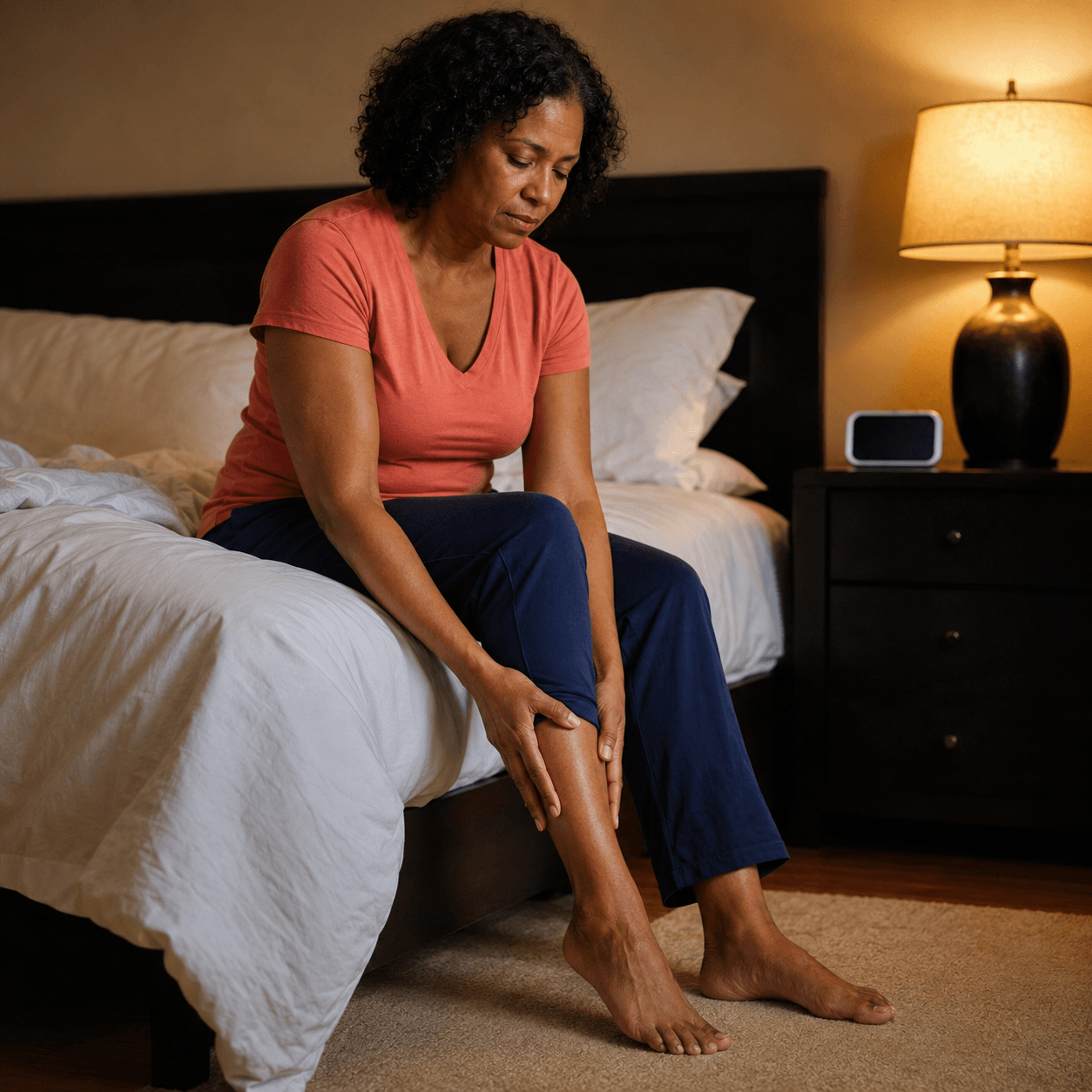
That maddening crawling, tingling, or aching sensation can turn bedtime into a nightly struggle. Restless leg syndrome, also called Willis-Ekbom disease, produces an irresistible urge to move, usually during rest, evening, or at night. Walking or stretching temporarily relieves the leg discomfort.
RLS is common in women, but menopause is not a proven direct cause. Research indicates that reproductive history, iron biology, genetics, sleep disruption, and hormonal fluctuations may all play a role. During your Second Spring, new restlessness in the legs deserves investigation rather than dismissal as “just menopause.”
How Hormones May Cause Restless Symptoms

The exact cause of RLS involves altered brain iron availability and dopamine-related nervous system regulation. Iron is required for dopamine production and normal function of dopamine receptors. Low brain iron may therefore disturb sensory and motor pathways, producing an overwhelming urge to move your legs.
Estrogen and progesterone hormone receptors are found throughout the nervous system. Changes in estrogen levels or oestrogen levels may influence dopamine transmission, temperature control, sleep architecture, and sensory processing. However, evidence does not show that declining estrogen alone causes restless legs.
The perimenopausal metabolic shift can amplify symptoms indirectly:
- Irregular or heavy periods may cause iron deficiency.
- Night sweats fragment sleep and increase symptom awareness.
- Low mood may lead to antidepressant use, which can worsen symptoms in some people.
- Poor sleep can reduce pain tolerance and intensify an uncomfortable sensation.
- Sleep apnea, kidney disease, diabetes, neuropathy, pregnancy history, and certain medicines can cause secondary restless legs syndrome.
RLS In Menopause Can Disrupt Sleep

Symptoms of restless legs syndrome usually begin while awake. Periodic limb movement refers to involuntary leg movements during sleep. Restless legs syndrome and periodic limb movement disorder can coexist, but they are not the same diagnosis.
Repeated leg movements may produce brief awakenings that you do not remember. The result can be poor sleep, daytime fatigue, reduced sleep quality, and a substantial impact on quality of life. Patients with restless legs syndrome may also mistake the sensation in the legs for cramps, anxiety, or menopause symptoms.
Iron Deficiency Is A Treatable Cause

Low iron can occur without anemia. Ferritin reflects stored iron, while transferrin saturation helps show how much circulating iron is available. RLS-specific thresholds are higher than those commonly used to diagnose anemia.
The 2025 American Academy of Sleep Medicine guideline advises regularly checking ferritin and transferrin saturation in clinically significant RLS. Iron treatment decisions should use both results and medical history, not ferritin alone. Never begin a high-dose iron supplement without testing because excess iron can be harmful. AASM guideline
| Factor | Clue | Useful Check | Clinical Response |
|---|---|---|---|
| Iron deficiency | Fatigue, heavy periods, low ferritin | Morning ferritin and transferrin saturation | Clinician-directed oral or IV iron |
| Hormonal fluctuation | Symptoms vary with cycle | Cycle and symptom diary | Treat contributing menopause symptoms |
| Medication trigger | RLS began after a new medicine | Medication review | Adjust only with the prescriber |
| Sleep apnea | Snoring, gasping, morning headaches | Sleep assessment | Test and treat apnea |
| Periodic limb movement | Kicking reported during sleep | Sleep history or study when indicated | Treat associated sleep disorder |
HRT Is Not A Proven RLS Treatment

Hormone replacement therapy may relieve hot flushes and night sweats, indirectly improving sleep. However, HRT may improve, worsen, or have no effect on RLS, and it is not an established treatment of restless legs syndrome.
A clinician should base HRT on the overall benefits and risks of treating menopausal symptoms, not promise it as menopause restless-leg therapy. Track symptoms before and after any hormonal change to identify your individual response.
Lifestyle Changes Support Managing Restless Legs
A Practical Nighttime Protocol

- Record symptom timing, menstrual bleeding, medicines, caffeine, alcohol, and sleep for two weeks.
- Ask for a fasting morning iron panel, including ferritin, iron, total iron-binding capacity, and transferrin saturation.
- Avoid caffeine after midday and alcohol or nicotine near bedtime if they worsen symptoms.
- Use moderate physical activity earlier in the day. Avoid unusually intense late-evening exercise.
- During a flare, walk, stretch gently, massage the legs, or take a warm bath.
- Review sedating antihistamines, dopamine-blocking anti-nausea drugs, and serotonergic antidepressants with your clinician. Do not stop prescriptions independently.
- Seek treatment if symptoms occur at least three times weekly, repeatedly interrupt sleep, or become moderate to severe RLS.
Menopausal Women Need Updated Treatment

The important expert angle is treatment-related “augmentation.” Dopamine agonists such as ropinirole can initially reduce symptoms of RLS but later make them start earlier, become stronger, or spread to the arms.
Consequently, current AASM guidance strongly recommends gabapentin, pregabalin, and gabapentin enacarbil for appropriate adults, while suggesting against routine standard use of ropinirole and several other dopamine agonists. Medication choice and dosage require individualized prescribing because these treatments can cause sedation, dizziness, and other adverse effects. AASM recommendations
Magnesium Evidence Remains Inconclusive
Magnesium flakes or sprays have not been proven to penetrate the skin sufficiently or treat RLS. A small trial reported improvement with oral magnesium oxide plus vitamin B6, but a systematic review found insufficient evidence to establish magnesium as an effective therapy. Magnesium should not replace iron testing or neurological evaluation. Systematic review
Frequently Asked Questions
Why Do My Legs Feel Tingly And Restless Only When I Lie Down?

RLS is activated by rest and follows a strong evening pattern. Typical symptoms of restless legs include tingling, crawling, aching, or an urge to move the legs that improves with movement. Persistent numbness or pain that does not improve with movement may indicate another condition.
Is Iron Deficiency Or Low Estrogen Causing My Restless Legs?
Iron deficiency is an established and testable contributor, while low estrogen is only a possible indirect influence. Heavy perimenopausal bleeding may reduce iron stores, and hormone-related night sweats may worsen sleep. Request ferritin and transferrin-saturation testing before assuming hormones are responsible.
Can Magnesium Flakes Or Sprays Stop RLS Flares At Night?
There is no reliable evidence that topical magnesium stops RLS. Oral magnesium research is also limited and does not establish a standard dose for restless leg syndrome menopause relief. Discuss supplementation with a clinician, particularly if you have kidney disease or take interacting medicines.
Why Does RLS Get Worse During The Week Of My Period In Perimenopause?

Changing hormones, heavier bleeding, declining iron stores, pain, and poorer sleep may contribute to cyclical RLS symptoms. A daily cycle-and-symptom record can reveal whether the pattern repeats. New or worsening symptoms warrant iron testing and a medication review.
Continue Your Journey
Explore this guide, Why Can’t I Stay Asleep During Menopause And How Do I Fix It?, to build a complete plan for night sweats, repeated waking, sleep apnea, insomnia, and other barriers to restorative sleep.
References
- Winkelman JW, Berkowski JA, DelRosso LM, et al. Treatment of restless legs syndrome and periodic limb movement disorder: an American Academy of Sleep Medicine clinical practice guideline. Journal of Clinical Sleep Medicine. 2025;21(1):137-152. doi:10.5664/jcsm.11390.
- Silber MH, Buchfuhrer MJ, Earley CJ, Koo BB, Manconi M, Winkelman JW. The management of restless legs syndrome: an updated algorithm. Mayo Clinic Proceedings. 2021;96(7):1921-1937. doi:10.1016/j.mayocp.2020.12.026.
- Seeman MV. Why are women prone to restless legs syndrome? International Journal of Environmental Research and Public Health. 2020;17(1):368. doi:10.3390/ijerph17010368.
- Marshall NS, Serinel Y, Killick R, et al. Magnesium supplementation for the treatment of restless legs syndrome and periodic limb movement disorder: a systematic review. Sleep Medicine Reviews. 2019;48:101218. doi:10.1016/j.smrv.2019.101218.