Find practical guidance for menopause insomnia, night waking, stress, anxiety, and exercise recovery. Learn how changing hormones, hot flashes, sleep apnea, nighttime habits, blood sugar, and emotional strain may affect sleep during perimenopause and menopause.
The 60-Second Answer High cortisol symptoms in women over 40 can resemble perimenopause, sleep loss, and everyday stress. Fatigue, cravings, weight gain, mood swings, and brain fog cannot confirm high cortisol levels. Persistent symptoms need medical assessment, especially with unusual bruising or muscle weakness. Supportive habits help with stress, but…
The 60-Second Answer Yes, pelvic floor and menopause sleep quality are closely connected. Urinary urgency, nocturia, incontinence, prolapse pressure, and pelvic pain can repeatedly interrupt sleep. Declining estrogen may also affect vaginal and bladder tissues. Identifying whether muscles are weak, overactive, or poorly coordinated helps guide treatment and restore more…
The 60-Second Answer The primary reason mouth taping for menopause sleep is unlikely to stop fatigue is that it cannot correct hormonal sleep disruption or untreated sleep apnea. Although keeping the mouth closed may reduce dryness or snoring in carefully selected people, evidence does not show that it reliably improves…
The 60-Second Answer Yes, waking three times to urinate can be a part of nocturia menopause symptoms, but it warrants assessment. Falling estrogen can affect bladder and urethral tissues, urgency, sleep, and nighttime urine production. Cognitive shuffling for menopause insomnia may help you fall back asleep afterward, but it does…
The 60-Second Answer L-Theanine for menopause sleep anxiety may promote relaxation without acting like a conventional sedative. Early research suggests it can reduce stress-related mental arousal and improve sleep quality, sleep onset, and nighttime rest. However, menopause-specific trials remain limited, so persistent waking, hot flashes, or suspected sleep apnea require…
The 60-Second Answer The best NSDR for menopause sleep onset combines slow breathing, a progressive body scan, and nonjudgmental awareness in a 10-to-20-minute recording. It may calm the nervous system and reduce bedtime arousal, helping you fall asleep. However, NSDR complements sleep treatment and cannot correct night sweats, sleep apnea,…
The 60-Second Answer Yes, cortisol spikes at night menopause can contribute to alertness, sweating and repeated waking. However, a nighttime spike does not directly shut down progesterone production. Perimenopausal anovulation lowers progesterone first, while stress, hot flashes and fragmented sleep can dysregulate cortisol. Together, these changes create a self-reinforcing cycle…
The 60-Second Answer Yes, melatonin for menopause insomnia may help when difficulty falling asleep reflects a delayed or disrupted body clock. Current trials do not show that typical supplemental doses suppress estrogen. However, results for menopause-related sleep quality are inconsistent, and melatonin cannot directly treat hot flashes, sleep apnea, or…
The 60-Second Answer Yes, magnesium glycinate for menopause sleep may modestly improve insomnia symptoms, especially when magnesium intake is low. However, it is not proven to be the best natural sleep aid or a menopause-specific cure. Persistent waking may require treatment for night sweats, sleep apnea, restless legs, anxiety, or…
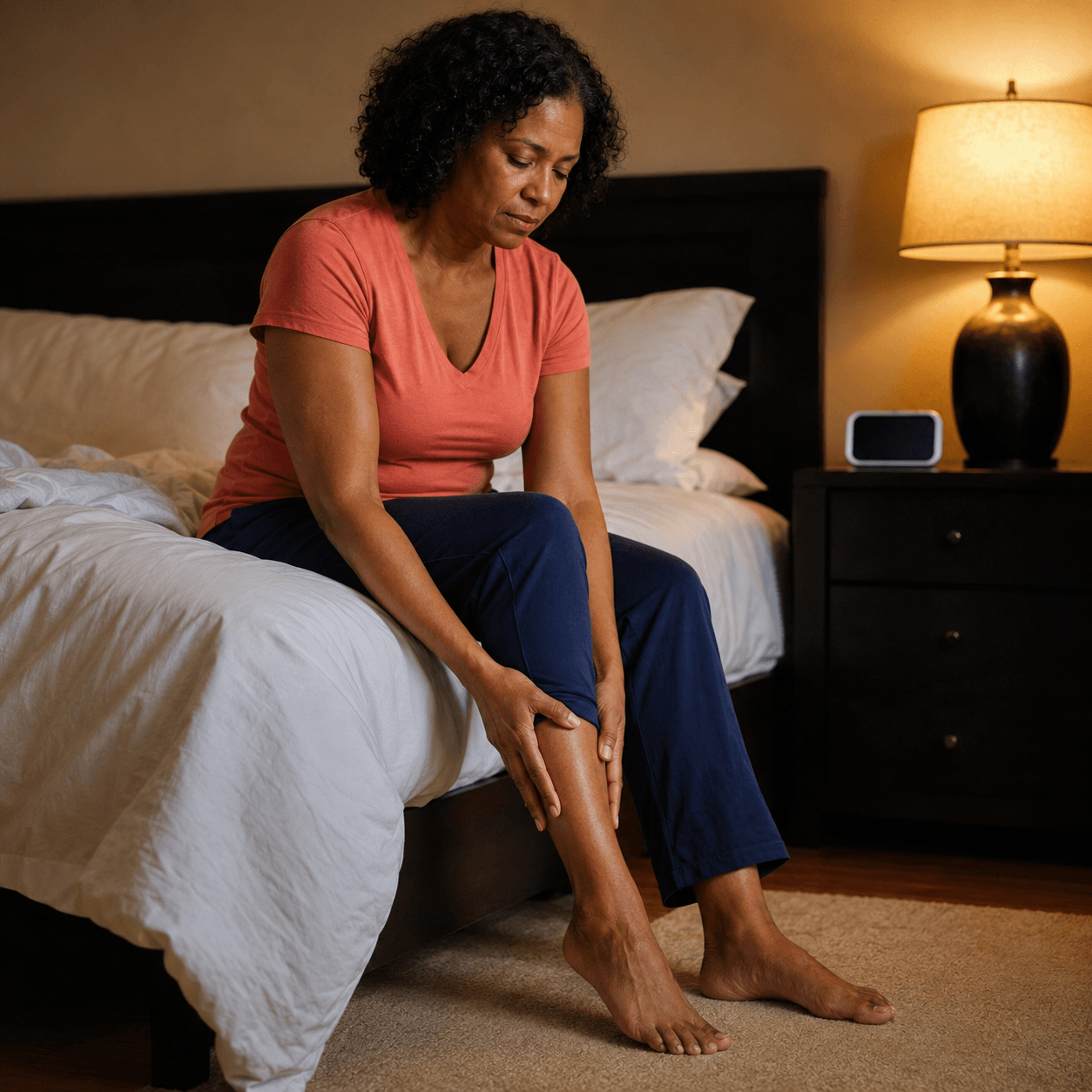
The 60-Second Answer The primary reason restless leg syndrome may flare during perimenopause is not fully established. Fluctuating hormones, disrupted dopamine signaling, low iron, heavier bleeding, night sweats, and poor sleep may contribute. Effective restless leg syndrome menopause relief begins with confirming RLS, checking iron status, removing triggers, and selecting…