The 60-Second Answer
You can enjoy a beach vacation while managing hot flashes in hot weather. Pack shade, water, a light cover-up, a spare dry swimsuit, and a cooling cloth. Plan beach time for cooler hours, and step out of the sun when a flush begins. These steps improve comfort but do not treat the underlying hot flashes.
A Beach Hot Flash Kit Starts With Shade
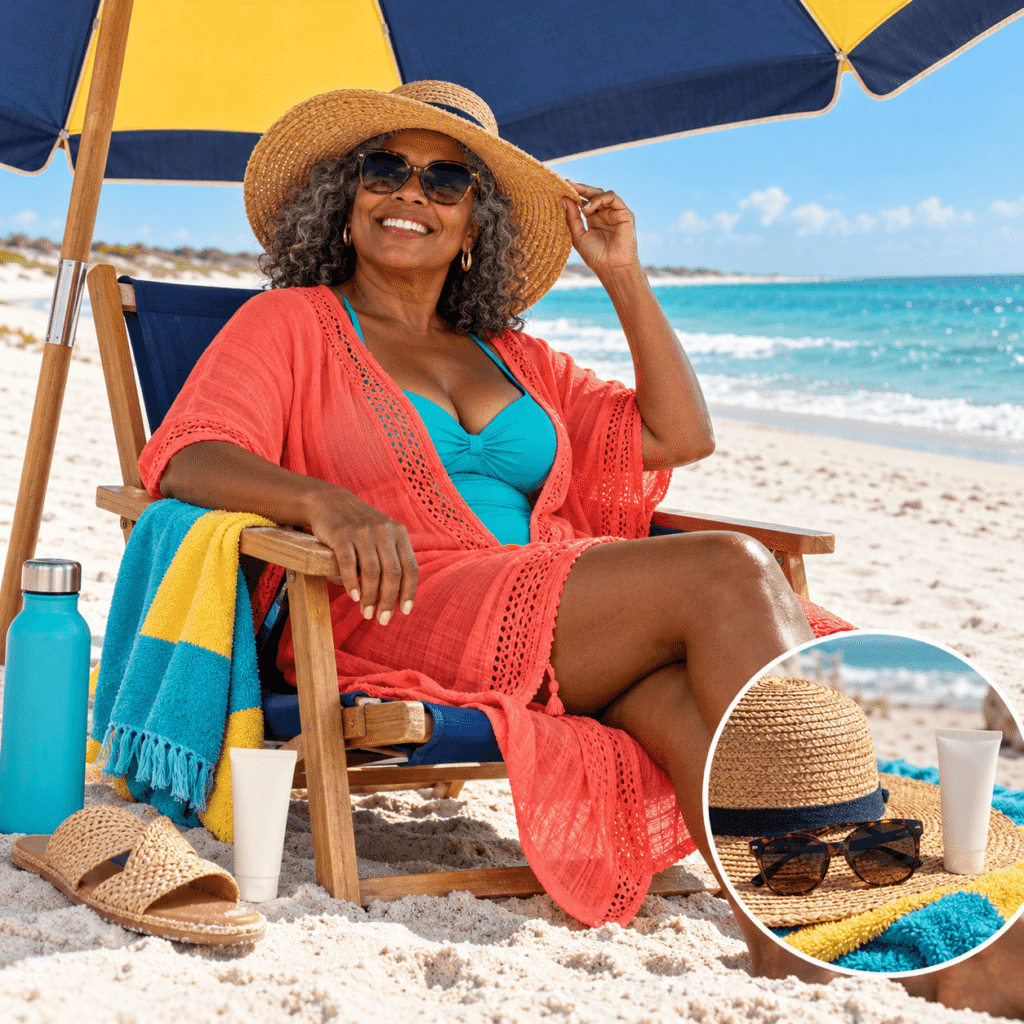
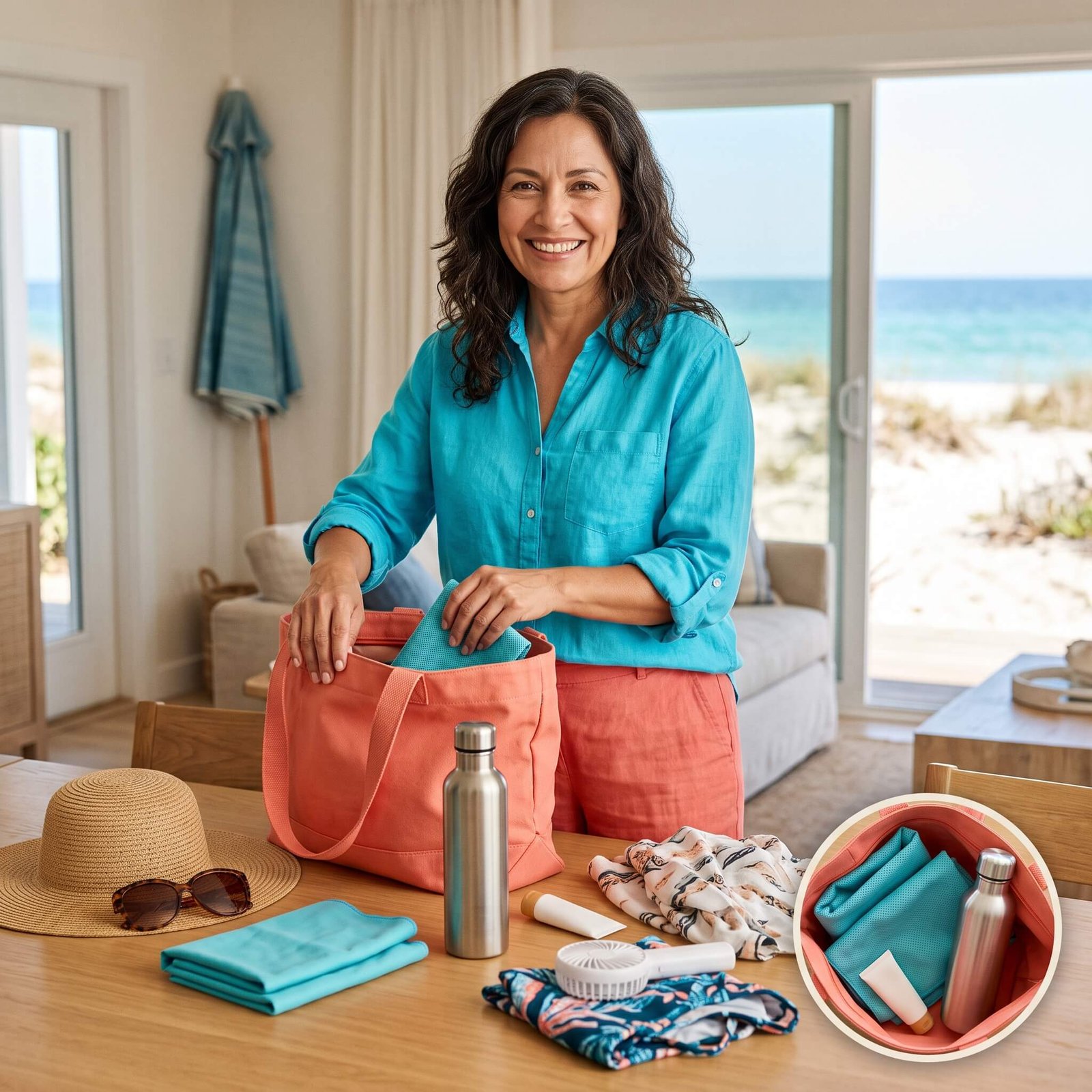
Pack a wide-brimmed hat, sunglasses, an umbrella or access to reliable shade, and a loose, light-colored cover-up. Add a refillable water bottle, a small fan, two cooling cloths, and a dry change of clothes. A second swimsuit is useful if your first stays wet after swimming.
Choose a broad-spectrum, water-resistant sunscreen with SPF 30 or higher. Apply it before going outside and reapply every two hours, as well as after swimming, toweling off, or heavy sweating, according to its label. Sunscreen protects against UV exposure; it is not a hot flash remedy.
Estrogen Changes The Body’s Thermostat
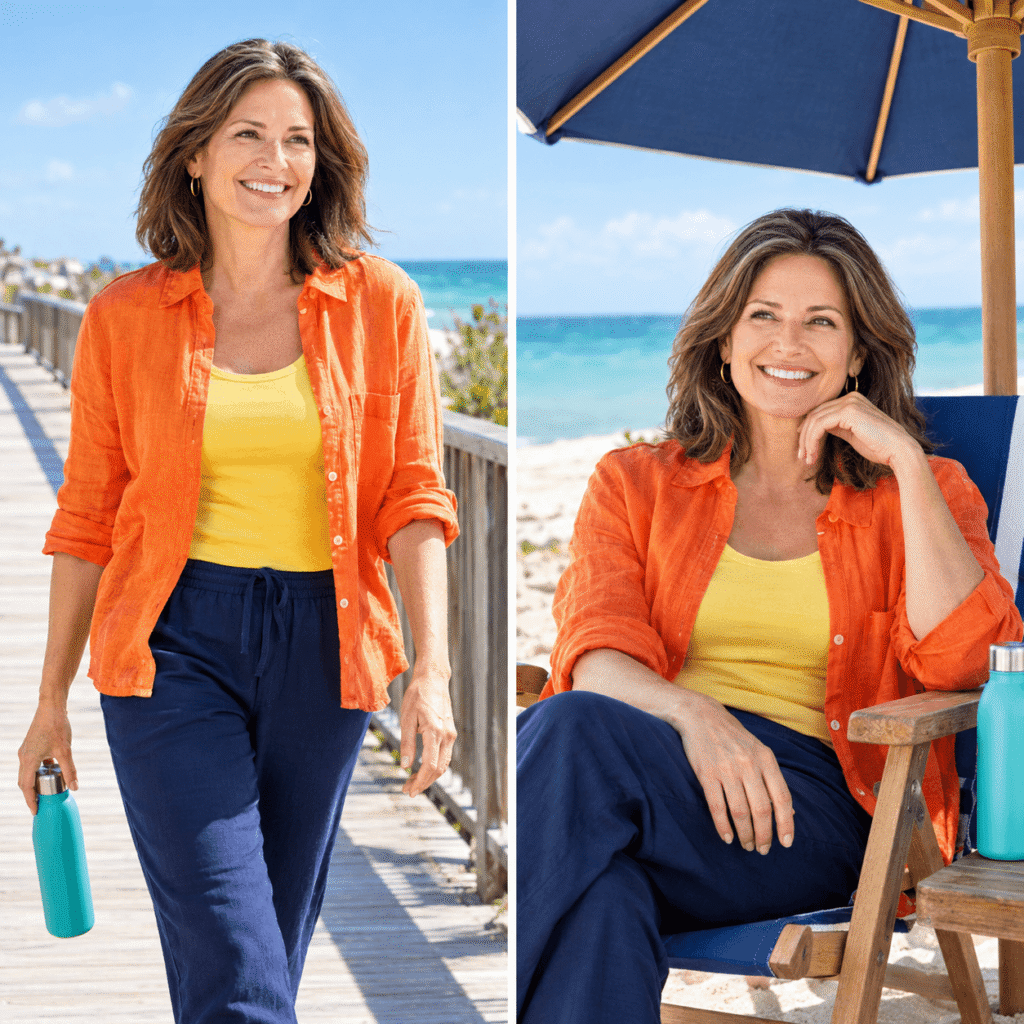
During the menopause transition, estrogen and progesterone levels shift as menstrual periods become less predictable. Declining estrogen affects hormone receptors and nervous system regulation in the hypothalamus, the brain region involved in body temperature control. A small change in internal temperature can then set off a heat-loss response: blood vessels near the skin widen, sweat glands increase perspiration, and you feel a sudden hot flash or flush. A chill may follow as the skin cools. The Menopause Society
Beach heat adds a separate challenge. In hot, humid weather, sweat evaporates less readily, limiting the body’s ability to cool. Sun exposure and a hot flash can happen together, but feeling hot on the beach does not automatically mean that menopause has increased your hot flash frequency. Heat exhaustion also needs its own response.
Managing Hot Flashes Requires Two Plans
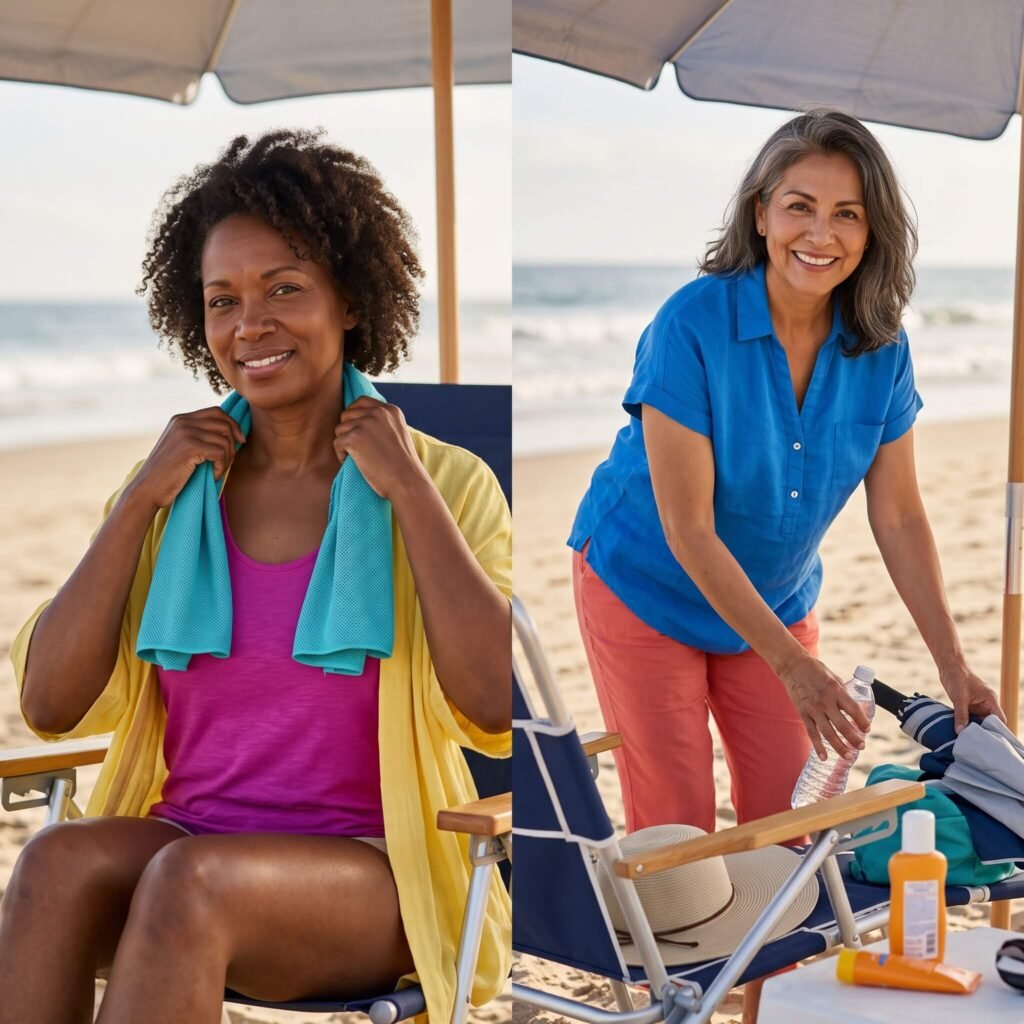
Think of your bag as serving two purposes: comfort during a short flush and protection from prolonged environmental heat.
| Beach Variable | What To Pack Or Do | Why It Helps |
|---|---|---|
| Direct sun | Umbrella, hat, and cover-up | Provides shade and reduces sun exposure |
| Hot flash | Fan and damp cooling cloth | Helps you feel more comfortable during a flush |
| Sweat and humidity | Dry swimsuit and loose clothing | Lets damp skin and clothing dry |
| Long beach outing | Water and a planned cool break | Supports hydration and gives you a place to recover |
| UV exposure | SPF 30+ water-resistant sunscreen | Protects exposed skin when used as directed |
The useful distinction: Check what happens after you move to shade. A brief flush that settles may fit your familiar hot flash pattern. Heavy sweating with weakness, nausea, dizziness, or symptoms that worsen in the heat calls for prompt cooling and assessment for heat illness. This is a practical beach decision, not a way to diagnose yourself.
A Heat Wave Calls For A Shorter Beach Day

On the hottest days of summer, check the local heat forecast before you leave. Choose an earlier or later visit, stay close to a genuinely cool place, and shorten the outing during a heat wave. Do not depend on a fan alone when the surrounding air is extremely hot. If you feel faint or weak, stop the activity and move somewhere cool. CDC
Cooling Strategies Support Comfort
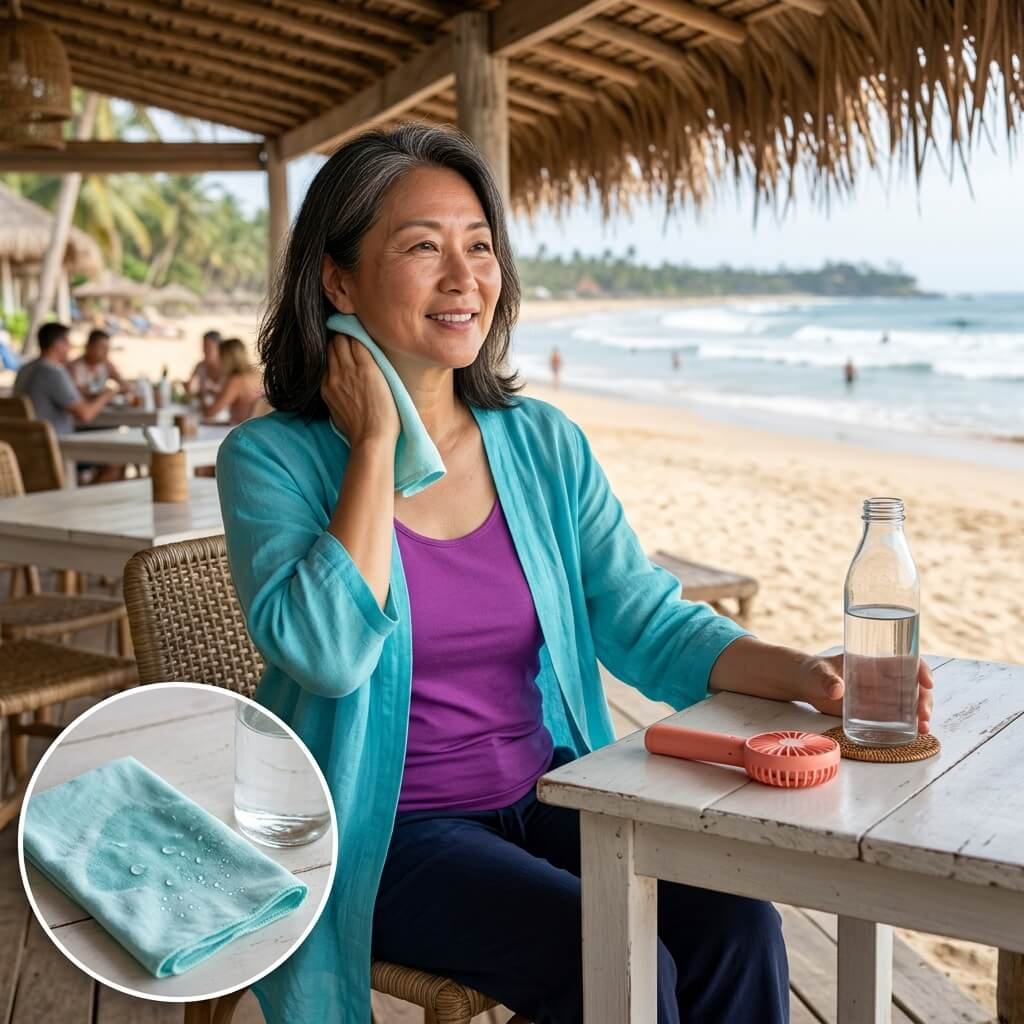
A cooling cloth on the back of your neck, a cool drink, and a break in the shade can make a hot flash easier to ride out. You can freeze a clean damp cloth before leaving and carry it in an insulated bag, keeping a second cloth ready once the first warms up. Slow breathing or other relaxation techniques may help you feel steadier during the moment.
These are comfort strategies, not proven treatments for reducing menopausal hot flash frequency. The Menopause Society’s evidence review does not recommend cooling techniques or avoiding triggers as treatments for vasomotor symptoms, even though personal adjustments may make an individual beach day more pleasant. PubMed
A Simple Beach Protocol Helps You Manage Heat
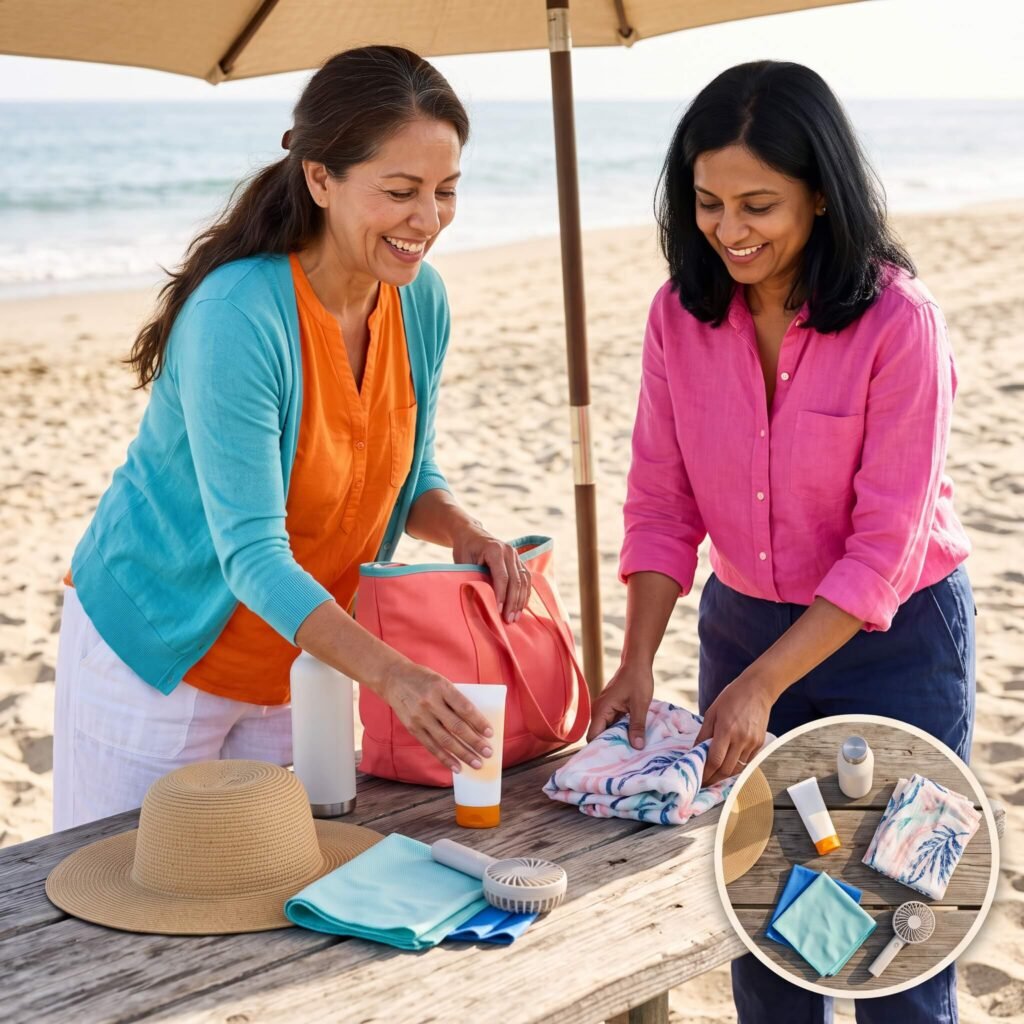
- Before leaving: Check the heat forecast. Pack shade, water, sunscreen, a fan, two cooling cloths, and dry clothes.
- Before sun exposure: Apply sunscreen as directed. Pick a spot with shade and identify a nearby cool place.
- During a flush: Stop, sit in shade, loosen your cover-up, sip water, and place a cool damp cloth on your neck. Notice whether the feeling passes as your usual hot flashes do.
- After swimming or sweating: Reapply sunscreen as directed and change out of a persistently wet swimsuit.
- If symptoms escalate: Leave the heat. Seek medical help for worsening weakness, nausea, fainting, confusion, or inability to cool down. Confusion or suspected heat stroke is an emergency. CDC
Persistent Hot Flashes Deserve Treatment

If hot flashes or night sweats repeatedly disrupt sleep, travel, or quality of life, talk with a healthcare professional before the trip. Menopausal hormone therapy is an effective option for many people, and evidence-based nonhormone medication is also available. Your clinician can review your history, including cancer, unexplained bleeding, diabetes, and certain medications, before recommending or prescribing treatment. Do not change a dose for vacation without that discussion. menopause.org
Skip the idea of starting a new supplement at the beach. Evidence does not support black cohosh, evening primrose, ashwagandha, or another extract as a reliable quick fix for a hot flash. Your Second Spring deserves a plan that matches your symptoms and medical history, not a last-minute experiment.
Frequently Asked Questions
Does Sun Exposure Make Menopause Hot Flashes More Frequent Or Intense?
Sun and hot weather can make an episode feel harder to tolerate because you are already warm. They do not prove that your underlying hot flash frequency has changed. Track when symptoms occur, and take persistent or unusual changes to your clinician.
What Are The Best Moisture-Wicking Swimsuits For Menopausal Women?

Choose a swimsuit that fits comfortably, dries reasonably quickly, and is easy to change out of; there is no single clinically proven “menopause swimsuit.” A loose cover-up made from cotton or another breathable natural fiber may feel better while resting in shade. Try the full outfit before traveling so straps or seams do not irritate wet skin.
How Do I Cool Down Quickly After A Hot Flash On A Beach With No AC?
Move into shade, stop exerting yourself, sip water, and use a cool wet cloth on your neck or skin. If you remain weak, dizzy, or nauseated, seek a cooler location and help rather than waiting for the feeling to pass. Confusion, collapse, or suspected heat stroke requires emergency care.
Will Heat And Sweat Make My Menopause-Related Skin Rashes Worse?
Heat and perspiration can cause heat rash, but a new rash is not necessarily a symptom of menopause. Change out of wet clothing, cool the skin, and keep affected areas dry. Seek medical advice if a rash is severe, spreading, painful, or persistent. cdc.gov
Can Drinking Alcohol At The Beach Trigger More Frequent “Vacation” Hot Flashes?
Some people notice alcohol as a personal hot flash trigger, and caffeine or spicy food may also appear in their symptom diary. Evidence does not show that avoiding these triggers reliably treats hot flashes for everyone. On a hot beach day, pay attention to how you feel, keep water available, and avoid assuming every flush has one cause.
A beach day should feel like a break, not a test of how much heat you can tolerate. If you are in perimenopause or menopause, a little planning can help you respond to a hot flash, protect your skin, and recognize when the problem is more than a passing flush.
Continue Your Journey
A beach bag is one part of traveling comfortably through menopause. For help planning sleep, meals, medication, and activities around your symptoms, explore our guide: How Do I Manage Menopause Symptoms While Traveling Or On Vacation?
References
- The Menopause Society. “Hot Flashes.” Patient education.
- The North American Menopause Society. “The 2023 Nonhormone Therapy Position Statement.” Menopause, 2023.
- The Menopause Society. “Too Much Exercise Could Actually Trigger a Hot Flash.” 2024.
- American Academy of Dermatology Association. “How to Apply Sunscreen.” Updated 2025.
- Centers for Disease Control and Prevention. “About Heat and Your Health.”
- Centers for Disease Control and Prevention. “Heat Illnesses.” Travelers’ Health.
- National Institute for Occupational Safety and Health. “Heat-Related Illnesses.” CDC, updated 2026.
- American College of Obstetricians and Gynecologists. “Hormone Therapy for Menopause.” Patient FAQ.