

The 60-Second Answer
Burning mouth syndrome is ongoing burning, tingling, or soreness inside a mouth that often looks normal. It is more common in women during and after menopause, possibly because hormonal changes affect saliva and nerve signals. Still, menopause is not the only cause, so proper medical and dental testing is important.
Burning Mouth Syndrome Can Mark Menopause
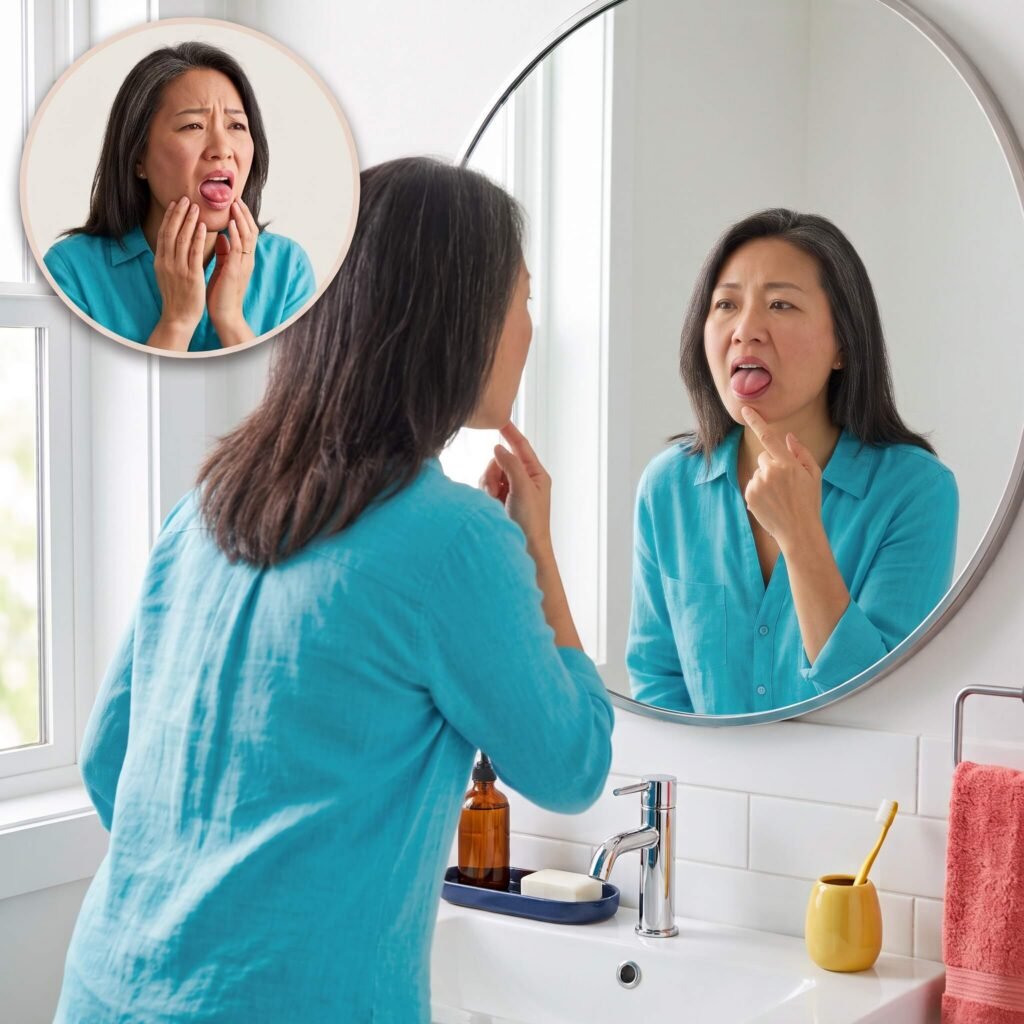
Burning mouth syndrome is a chronic pain condition affecting the tongue, lips, gum tissue, roof of the mouth, or entire oral cavity. The pain may feel like a hot drink scald, pepper sauce burn, or uncomfortable tingle.
Common symptoms of burning mouth syndrome include:
- Burning or tingling that worsens during the day
- A dry mouth sensation despite normal saliva production
- A sour or metallic taste
- Reduced or altered taste
- Numbness of the tongue or lips
- Pain and discomfort lasting for months
BMS usually does not create visible mouth sores, mouth ulcers, swelling, or blisters. Those findings may suggest infection, lichen planus, trauma, or another oral health condition.
Hormone Changes Alter Oral Pain Signals
Lower Estrogen Can Disrupt Pain Control

Estrogen and progesterone interact with hormone receptors throughout the brain, oral mucosa, salivary glands, and nervous system. When estrogen or oestrogen fluctuates during perimenopause and menopause, nervous system regulation may change.
Researchers believe BMS often involves abnormal taste and pain processing within the trigeminal system. Small sensory nerves may become overresponsive, producing neuropathic pain even when the mouth appears healthy. A 2025 review proposed that estrogen-mediated neural pathways may help explain why the condition is common in postmenopausal women, but this mechanism remains under investigation.
A 2024 systematic review found altered sex hormones, particularly estradiol, among people with burning mouth syndrome. However, hormone levels did not consistently correlate with symptom severity. This means reaching menopause may increase vulnerability, but low estrogen alone does not prove what causes burning mouth.
Dry Mouth Can Intensify Burning Pain

Hormonal changes during menopause may reduce saliva quantity or alter its composition. Medicines for allergies, blood pressure, depression, anxiety, or bladder symptoms can also cause dry mouth.
Low moisture makes spicy foods, acidic drinks, toothpaste ingredients, and alcohol-containing mouthwash more irritating. Yet some menopausal women with BMS feel dry even when testing shows adequate saliva. This suggests the dry sensation may sometimes come from altered nerve signaling rather than dehydration alone.
Secondary Conditions Can Cause BMS
Primary BMS is diagnosed when no underlying disease explains the burning feeling. Secondary burning has a detectable cause, such as:
- Vitamin B12, folate, iron, or zinc deficiency
- Diabetes, thyroid disease, or anemia
- Oral thrush, gum disease, or poorly fitting dentures
- Acid reflux or allergic contact reactions
- Medication-related dry mouth
- Teeth grinding or tongue-thrusting habits
There is no single test for burning mouth syndrome. Diagnosis may require an oral examination, blood tests, salivary-flow testing, fungal cultures, allergy assessment, and a medication review.
BMS Patterns Help Guide Diagnosis

| Feature | Primary BMS | Dry Mouth | Oral Thrush | Mouth Sores | Lichen Planus |
|---|---|---|---|---|---|
| Visible changes | Usually none | Dry or sticky tissues | White or red patches | Ulcers or blisters | White lines or red areas |
| Typical sensation | Burning, tingle, numbness | Dryness and irritation | Sore or burning | Localized pain | Burning or soreness |
| Taste changes | Common | Possible | Possible | Uncommon | Possible |
| Main evaluation | Exclusion testing | Saliva and medication review | Swab or examination | Lesion examination | Oral specialist or biopsy |
| Treatment focus | Neuropathic pain control | Moisture restoration | Antifungal therapy | Treat the cause | Anti-inflammatory care |
Persistent Mouth Pain Needs Evaluation
See a dentist or healthcare professional if symptoms persist for more than two weeks. Seek prompt assessment for a new lump, bleeding, unexplained weight loss, difficulty swallowing, facial weakness, or a mouth ulcer lasting longer than three weeks.
This evaluation protects Wise Women from months of trial-and-error treatment while ensuring that nutritional, dental, metabolic, and medication-related causes are not missed.
Burning Mouth Syndrome Relief Protocol

- Book a dental or oral medicine assessment. Ask about blood glucose, complete blood count, ferritin, vitamin B12, folate, zinc, and thyroid testing when clinically appropriate.
- Sip water regularly and use ice chips for short-term relief. Choose sugar-free gum or lozenges if your dentist approves them.
- Avoid alcohol mouthwash, tobacco, cinnamon products, acidic drinks, and eating spicy foods for two weeks. Use mild, unflavored toothpaste.
- Rinse up to four times daily with one teaspoon of baking soda dissolved in eight ounces of lukewarm water. Spit it out rather than swallowing.
- Discuss cognitive behavioral therapy, topical clonazepam, capsaicin, or saliva substitutes with a clinician. Prescription clonazepam can cause sedation and dependence.
- Do not begin alpha-lipoic acid or high-dose B12 or zinc unless a clinician checks safety and confirms whether deficiency exists. Clinical trials show mixed results for supplements.
HRT or hormone replacement therapy may help other menopause symptoms, including hot flashes and mood swings, but evidence does not establish it as a reliable BMS treatment. Decisions about hormone replacement require an individualized risk-benefit discussion.
An Expert Angle Improves BMS Care

Track burning intensity, taste changes, dry mouth, foods, medicines, sleep, stress, and hot flashes for 14 days. This symptom-timing map can help distinguish a hormonal pattern from contact irritation, medication effects, or constant neuropathic pain.
This approach is more informative than relying on one hormone test because perimenopausal levels fluctuate. It also gives clinicians practical evidence for choosing an approach to treatment during your Second Spring.
Frequently Asked Questions
Why Does My Tongue Feel Scalded?

A tongue that feels like it was scalded with hot coffee may reflect BMS, dry mouth, oral thrush, reflux, or nutritional deficiency. Primary BMS often produces burning pain without visible damage. Persistent symptoms need a dental and medical evaluation.
Does Low Estrogen Alter Mouth Pain?
Low estrogen may affect hormone receptors, saliva, and neural pathways involved in taste and pain. However, research has not proven that estrogen decline directly causes every case. Other causes must still be excluded before attributing mouth pain to menopause.
Can B12 Or Zinc Stop Mouth Burning?
Vitamin B12 or zinc may help when testing confirms a deficiency that causes burning mouth symptoms. They are not proven universal treatments for primary BMS. Unnecessary high doses can cause side effects or mask another diagnosis.
Is Menopause Dry Mouth Linked To BMS?
Yes, dry mouth can irritate the mucosa and increase the pain of burning mouth syndrome. Some people with burning mouth also perceive dryness despite normal saliva flow. Saliva testing and a medication review can clarify the difference.
Which Natural Rinses Help Menopausal BMS?

A mild baking-soda-and-water rinse may reduce irritation, while cool water or ice chips can provide temporary comfort. Avoid acidic remedies, concentrated essential oils, and alcohol mouth rinses. Capsaicin rinses have research support but can initially worsen burning and should be clinician-guided.
Continue Your Journey
Burning mouth may be one part of broader changes affecting menopausal skin and mucosal tissues. Continue with this blog post: How Do I Treat Menopause Dry Skin And The Loss Of Facial Elasticity?
References
- Brauwers KG, Bueno VM, Calcia TBB, Daroit NB. “Sexual Hormones Changes in Burning Mouth Syndrome: A Systematic Review.” Journal of Oral Rehabilitation. 2024;51(11):2475-2483. doi:10.1111/joor.13831
- Tan HL, Smith JG, Hoffmann J, Renton T. “A Systematic Review of Treatment for Patients With Burning Mouth Syndrome.” Cephalalgia. 2022;42(2):128-161. doi:10.1177/03331024211036152
- Nagamine T. “Estrogen-Mediated Neural Mechanisms of Sex Differences in Burning Mouth Syndrome.” NeuroSci. 2025;6(2):61. Full review
- Mayo Clinic. “Burning Mouth Syndrome: Diagnosis and Treatment.” Updated February 22, 2023. Clinical guidance