The 60-Second Answer
Yes, a weighted blanket for menopause anxiety may reduce bedtime tension and support better sleep through evenly distributed deep pressure. However, menopause-specific trials are lacking, and weighted blankets do not treat hormonal changes, hot flashes, sleep apnea, or clinical anxiety. Hot sleepers should prioritize breathable, cooling materials and a manageable weight.
A Weighted Blanket May Ease Menopause Anxiety
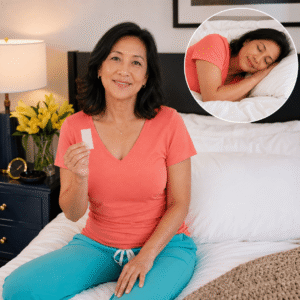
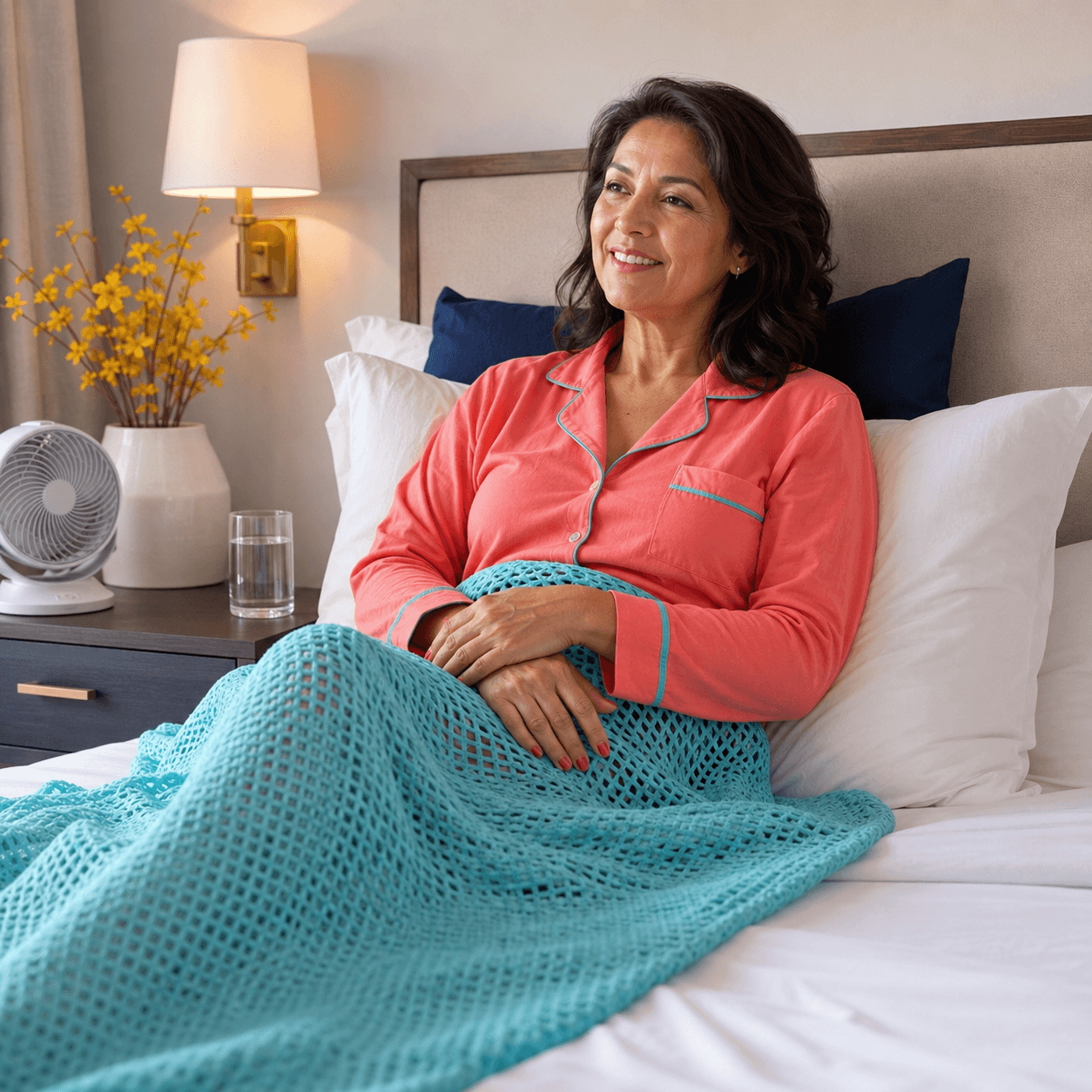
A racing mind, restless tossing and turning, and sudden night sweats can make bedtime feel unpredictable during your Second Spring. A weighted blanket may help create a calmer transition into sleep, but it should be viewed as a comfort tool, not a menopause treatment.
The strongest evidence comes from adults with psychiatric conditions rather than menopausal women. A 2024 meta-analysis found a moderate reduction in anxiety symptoms, although studies were small and varied considerably in quality. A separate review concluded that weighted blankets may improve anxiety, insomnia, fatigue, and sleep quality, but larger trials are still needed. (Wong et al., 2024; Zhao et al., 2024)
Menopause Hormones Can Disrupt Sleep
Fluctuating estrogen and progesterone interact with hormone receptors involved in mood, temperature control, breathing, and sleep regulation. Their decline can contribute to vasomotor symptoms, anxiety and insomnia, night waking, and a narrower thermoneutral zone, meaning small temperature changes may trigger a hot flash.
Progesterone-related neuroactive metabolites also influence calming GABA pathways. As hormone patterns become less predictable, nervous system regulation may become less stable. This biological and metabolic shift helps explain why some women feel alert or anxious at night despite being exhausted. (Haufe et al., 2023)
Deep Pressure May Signal Safety
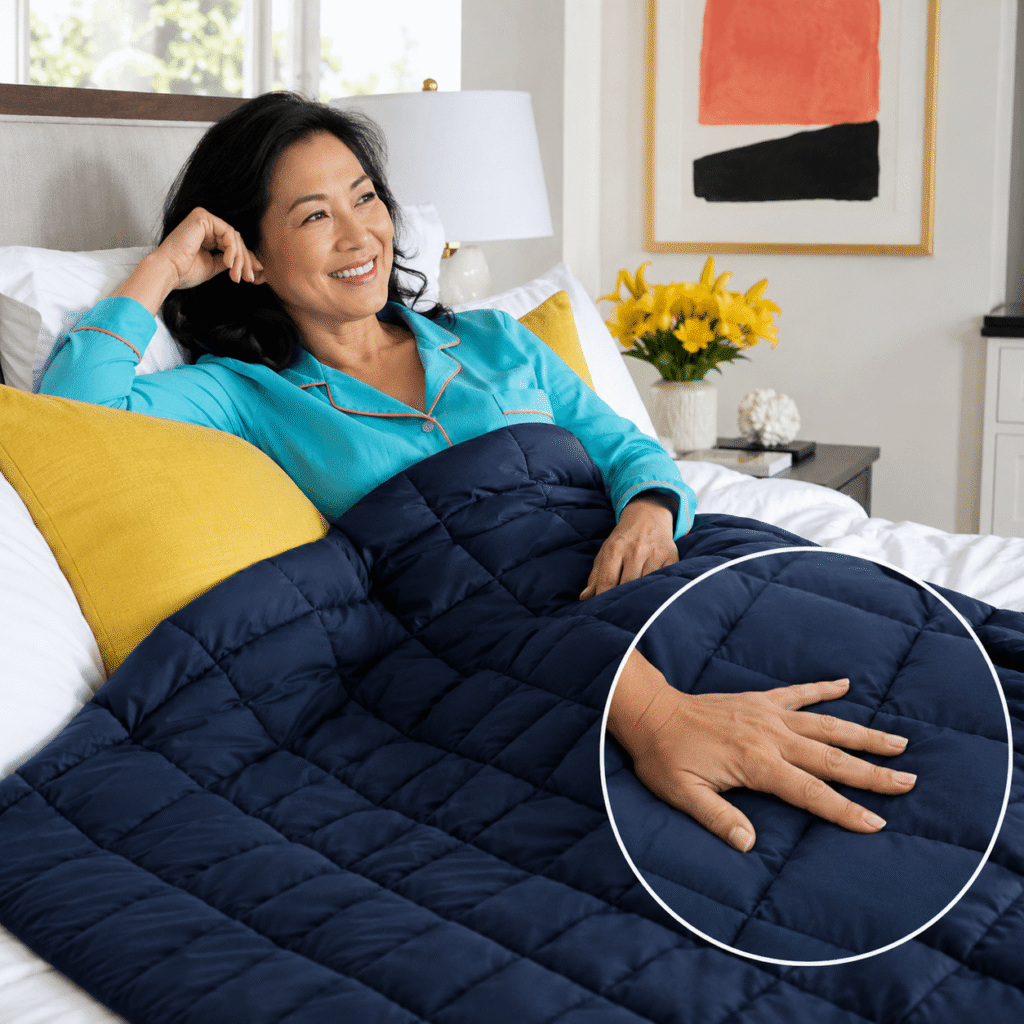
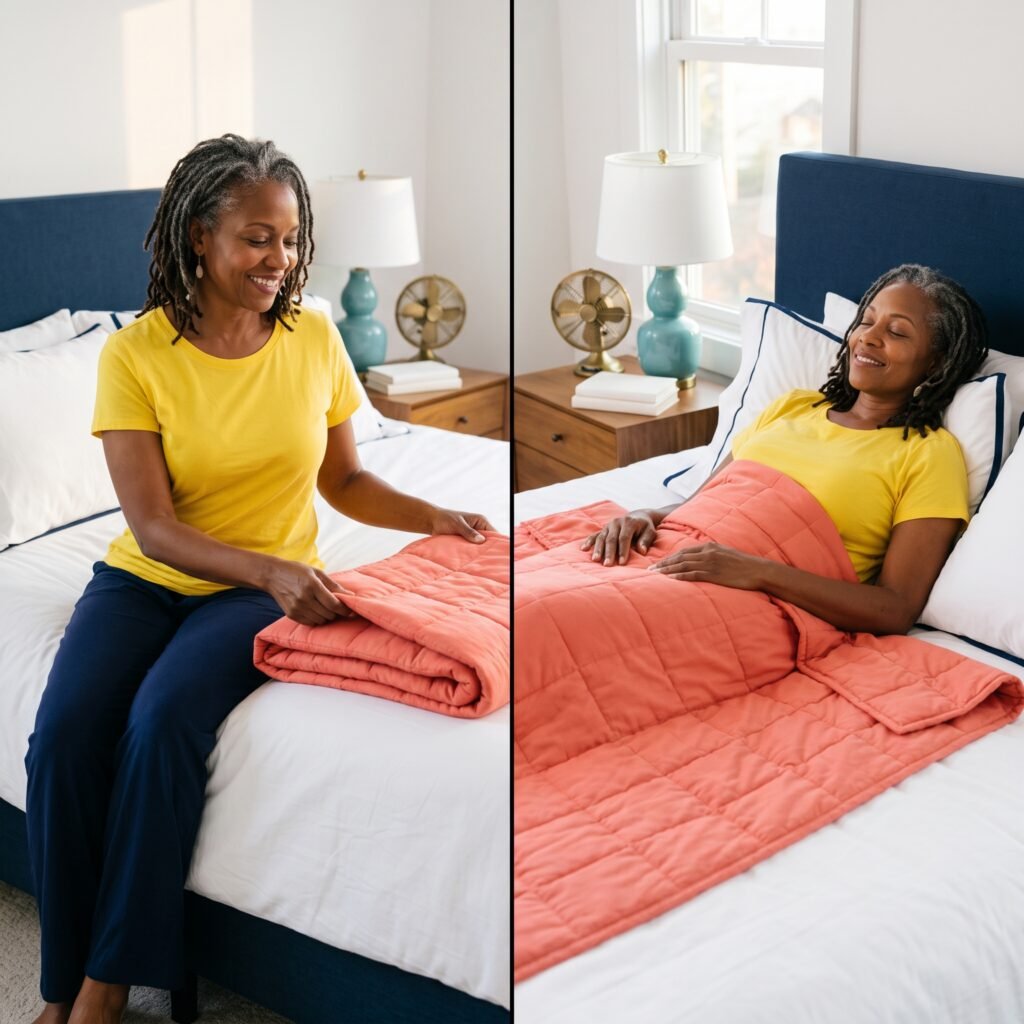
Weighted blankets provide gentle pressure across the body, often described as feeling like a hug. This deep pressure touch supplies steady sensory input that may reduce perceived arousal and support a shift toward parasympathetic activity.
The mechanism remains partly theoretical. In one crossover experiment involving 26 healthy young adults, a blanket weighing approximately 12 percent of body weight increased the pre-sleep rise in melatonin by about 32 percent. It did not significantly change cortisol, oxytocin, sleepiness, or total sleep time. (Meth et al., 2023)
Cooling Weighted Blankets Reduce Heat Buildup
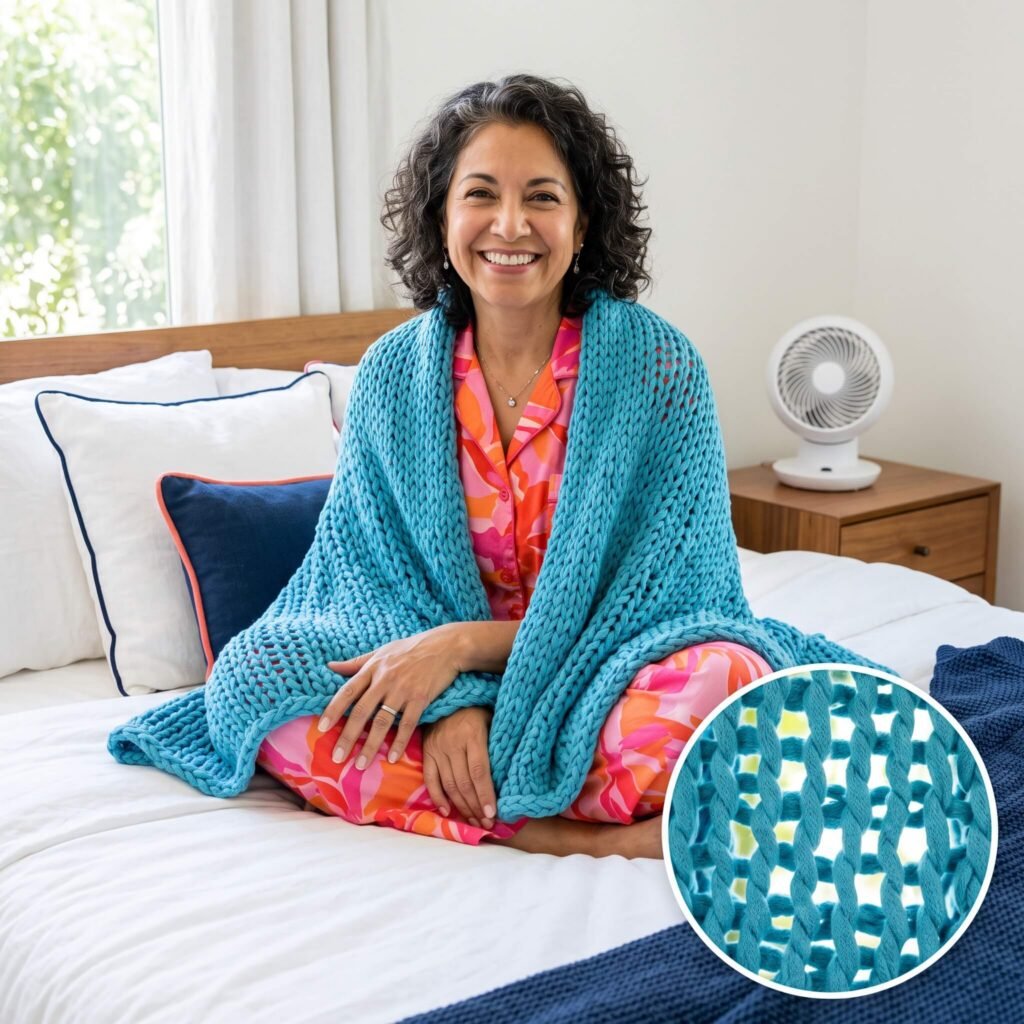
Traditional weighted blankets commonly contain plastic or glass beads held in stitched pockets. Glass beads create a thinner profile, but fill alone does not determine whether a blanket keeps you cool and dry. Shell fabric, batting, duvet cover, room temperature, airflow, and moisture-wicking performance matter more.
A hot sleeper should consider blankets for hot sleepers made with breathable cotton, Tencel, or open-knit construction. A cooling blanket may reduce retained warmth, but “cool to the touch” describes initial sensation, not proven control of night sweats.
Best Cooling Weighted Blankets Need Airflow
Open-knit products, including Bearaby’s Tree Napper weighted blanket, allow more airflow than heavily padded models. A knit weighted blanket may still feel warm if the room, mattress, or sleeper retains heat.
YnM Cooling models typically use bamboo-derived fabric with bead-filled compartments. Neither Bearaby, YnM Cooling, a Gravity Blanket, nor other branded products has been proven to treat menopause symptoms. “Best cooling weighted blankets” and “best weighted blankets” are therefore preference-based labels, not clinical rankings.
Blanket Designs Have Different Tradeoffs
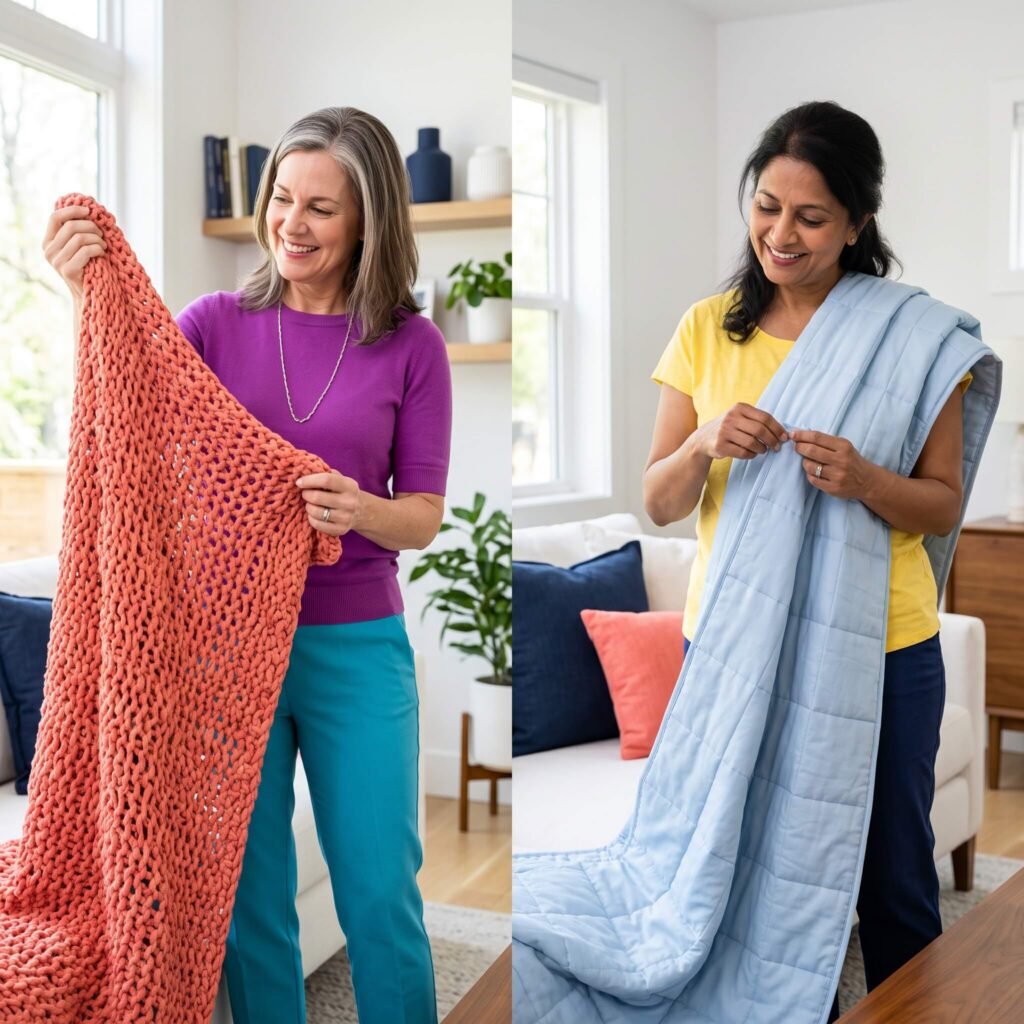
| Design | Pressure Source | Heat Consideration | Ease Of Care | Best-Fit Use |
|---|---|---|---|---|
| Glass-bead blanket | Glass beads in pockets | Moderate, depends on batting | Often needs removable cover | Even pressure with less bulk |
| Plastic-pellet blanket | Plastic pellets | May retain more warmth | Check washing-machine limits | Budget-conscious sleeper |
| Open-knit blanket | Heavy woven fabric | Higher airflow | Can be difficult to lift wet | Hot sleeper wanting no loose fill |
| Tencel cooling weighted blanket | Beads plus cooling fabrics | Better moisture management | Often machine washable by cover | Night sweats or warm climates |
| Standard duvet | No therapeutic weight | Usually coolest | Easiest care | Heat-sensitive or mobility-limited sleeper |
The Right Weighted Blanket Feels Manageable

The familiar recommendation is approximately 10 percent of body weight, but it is a convention rather than a firmly validated medical dosage. Research has used different blanket weights, including 12 percent and a 15-pound blanket.
The right weighted blanket must be heavy enough to feel comforting but light enough for you to turn, sit up, and remove it without help. Overall quality also depends on evenly distributed fill, secure stitching, breathable fabric, a washable removable cover, and suitable dimensions. Bigger does not automatically mean better because the weight of the blanket can spread beyond your body.
Choose The Right Weighted Blanket Safely
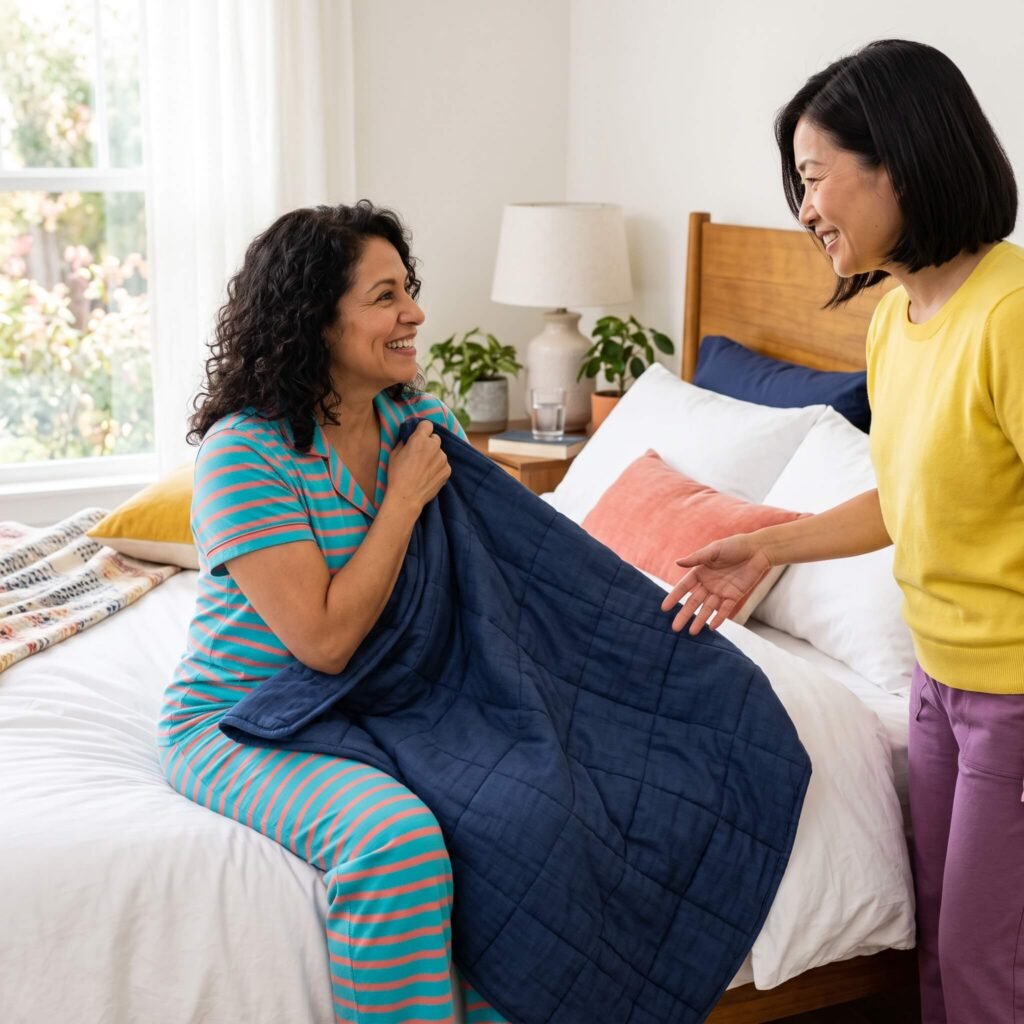
When using weighted blankets, avoid weighted blankets that restrict movement, cover the face, or make breathing uncomfortable. They may pose a risk for people with limited mobility, respiratory disease, circulation problems, claustrophobia, or untreated sleep apnea. Ask a clinician before use if any of these apply.
Use A Weighted Blanket With This Protocol
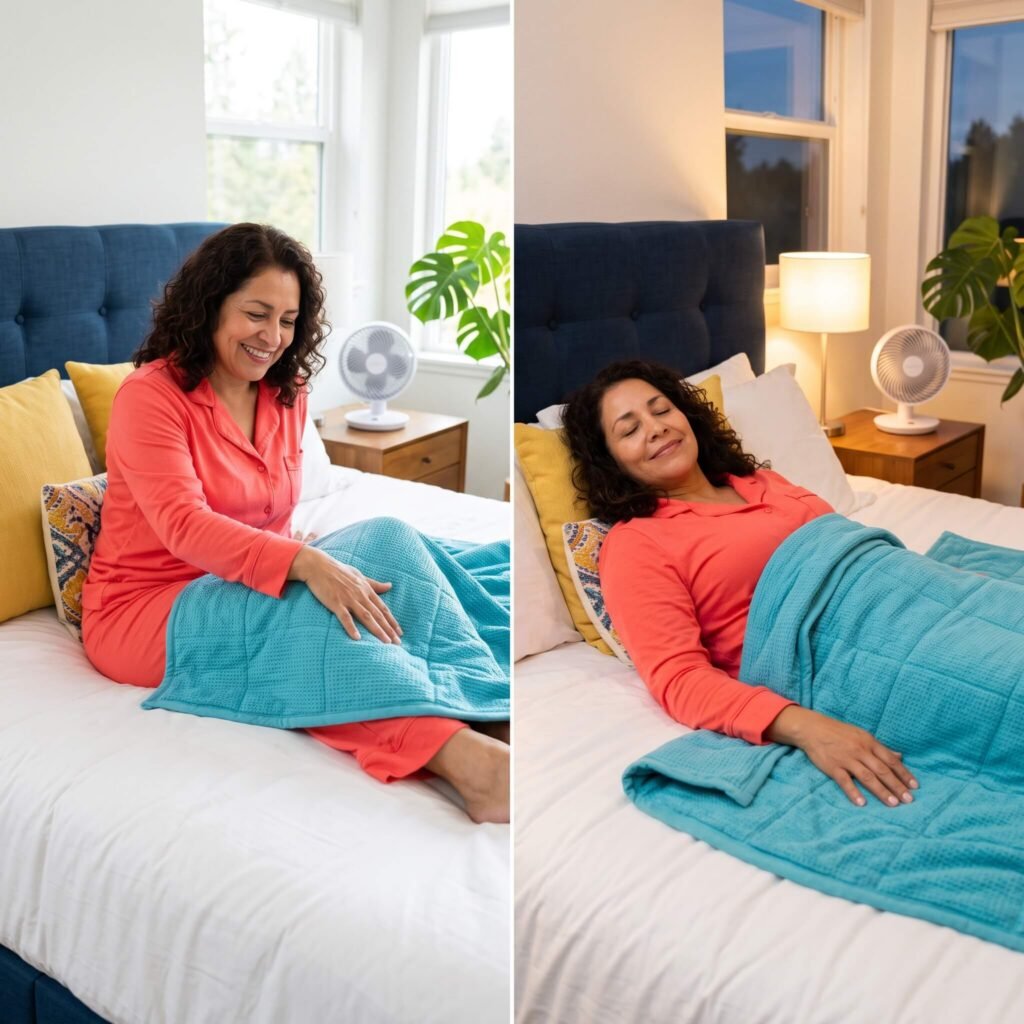
- Choose the right weighted blanket at roughly 5 to 10 percent of body weight, starting lighter if you are heat-sensitive, smaller, or uncertain.
- Test it while awake for 10 to 20 minutes. Confirm you can roll over and remove it independently.
- For nights 1 to 3, place it over your legs for 20 to 30 minutes before sleep.
- If comfortable, extend it to your torso or use it throughout the night.
- Keep the bedroom cool and use breathable sleepwear, cooling fabrics, or a light duvet cover.
- Track anxiety levels, hot flashes, awakenings, temperature discomfort, and morning alertness for 14 nights.
- Stop if you feel trapped, overheated, short of breath, numb, or unusually restless.
A weighted blanket may help relaxation, but persistent insomnia deserves assessment and evidence-based care, including cognitive behavioral therapy for insomnia and appropriate treatment of vasomotor symptoms.
Menopause-Specific Tracking Adds Information

A useful expert angle is to run a personalized two-week “pressure versus heat” experiment. Record pre-sleep anxiety, overnight hot flashes, blanket design, room temperature, and awakenings rather than judging success only by how quickly you fall asleep. This distinguishes a genuine calming effect from sleep disruption caused by retained heat, an issue generic weighted-blanket advice often overlooks.
Frequently Asked Questions
Will A Weighted Blanket Worsen Hot Flashes?
A dense blanket may trap heat and make a hot flash or night sweats feel worse. Choose breathable construction, strong airflow, and moisture-wicking bedding. Stop using it if overheating increases awakenings.
What Is The Best Weight For A Menopause Cooling Weighted Blanket?
Many adults begin near 5 to 10 percent of body weight, but comfort and independent removal matter more than a formula. A 15-pound blanket may be excessive for one sleeper and comfortable for another. Start lighter when heat, pain, breathing, or mobility is a concern.
Does Deep Pressure Lower Nighttime Cortisol?
Current evidence does not establish that deep pressure stimulation lowers nighttime cortisol. The 2023 laboratory study found increased pre-sleep melatonin but no significant cortisol difference. Claims that weighted blankets work by lowering cortisol remain unproven.
Can A Weighted Blanket Help Restless Legs During Perimenopause?
A weighted blanket may help some people feel calmer, but evidence for restless legs syndrome is limited. It does not correct iron deficiency or treat the neurological condition. Persistent leg urges or movements warrant clinical evaluation.
Continue Your Journey
A weighted blanket for menopause can support comfort, but repeated waking often has several causes. Continue with our pillar guide, Why Can’t I Stay Asleep During Menopause and How Do I Fix It?, to explore hot flashes, hormonal changes, anxiety, sleep apnea, and practical treatment options.
References
- Wong S, et al. “The Effect of Weighted Blankets on Sleep Quality and Mental Health Symptoms in Adults.” American Journal of Occupational Therapy. 2024. PubMed.
- Zhao Y, et al. “Safety and Effectiveness of Weighted Blankets for Symptom Management in Psychiatric Disorders.” 2024. PubMed.
- Meth EMS, et al. “A Weighted Blanket Increases Pre-Sleep Salivary Concentrations of Melatonin in Young, Healthy Adults.” Journal of Sleep Research. 2023;32(2):e13743. doi:10.1111/jsr.13743.
- Yu J, et al. “The Effect of Weighted Blankets on Sleep and Related Disorders: A Systematic Review.” Frontiers in Psychiatry. 2024;15:1333015. doi:10.3389/fpsyt.2024.1333015.
- Haufe A, et al. “What Is the Role of Reproductive Hormones in the Menopausal Sleep Disturbance?” Journal of Sleep Research. 2023. PubMed.
- Office on Women’s Health. “Menopause Symptoms and Relief.” U.S. Department of Health and Human Services. Women’s Health.gov.