
The 60-Second Answer
Yes, collagen supplements for menopause bone strength may modestly improve bone mineral density, particularly in women with osteopenia. However, no clinical trial has proven that collagen prevents fractures. Consider collagen an optional support for the bone matrix, not a replacement for calcium, vitamin D, resistance exercise, fall prevention, bone-density screening, or prescribed osteoporosis treatment.
Can Collagen Supplements Prevent Fractures?
Your bones are living tissue, not rigid blocks of calcium. Collagen is a protein that forms a flexible framework within the bone matrix, while calcium and other minerals provide hardness. Type I collagen accounts for most of bone’s organic structure and plays an important role in bone flexibility and resistance to impact.
This biological role makes collagen supplements for menopause bone strength plausible. Small clinical studies suggest that specific bioactive collagen peptides may support bone density and strength. However, researchers have primarily measured bone mineral density and bone turnover markers, not actual fracture rates.
The honest conclusion is that collagen may support bone health after menopause, but it has not been proven to prevent bone fractures.
Menopause Accelerates Bone Loss

Estrogen communicates with hormone receptors on osteoblasts, which build bone, and osteoclasts, which remove old bone. When estrogen declines during menopause, this regulation changes. Osteoclast activity can outpace bone formation, producing a metabolic shift toward increased bone breakdown.
Progesterone’s role is less clearly defined, but declining ovarian hormones may further affect bone remodeling. The result can be reduced bone mass, weaker internal architecture, and a greater risk of osteoporosis.
This process also interacts with muscle loss and nervous system regulation. Reduced muscle strength and poorer balance increase fall risk, which is why preventing fractures requires more than changing bone density alone.
Collagen Peptide Supports Bone Matrix

Hydrolyzed collagen is broken into smaller amino-acid chains that are easier to digest. These hydrolyzed collagen peptides provide glycine, proline, and hydroxyproline, which the body can use during collagen synthesis.
Laboratory evidence suggests certain peptides may also signal osteoblast activity, enhance bone formation, and influence bone metabolism. In theory, collagen peptides on bone provide both building materials and biological signals that support bone mineralization.
Still, collagen production depends on adequate total protein, vitamin C, minerals, hormones, and mechanical loading. A collagen supplement cannot build bone effectively when these foundations are missing.
Collagen Supplement Evidence Is Promising

A 2018 randomized controlled study followed 131 postmenopausal women with reduced bone mineral density. Participants received either 5 g of collagen peptides daily or a placebo for 12 months. Supplementation with specific bioactive collagen was associated with significantly increased bone mineral density at the spine and femoral neck, alongside favorable changes in bone markers in postmenopausal women. König et al., 2018
A later open-label follow-up included 31 women who continued taking 5 g daily. Bone density increased progressively over four years, but the study had no control group, involved a small sample, and relied on self-reported fractures. Zdzieblik et al., 2021
A 2025 meta-analysis also found that collagen peptide supplementation may improve femoral-neck and spinal bone mineral density. However, differences among products, dosages, co-supplements, and study designs limit certainty. Sun et al., 2025
Bone Health Strategies Have Different Roles

| Strategy | Primary Role In Bone | Evidence For BMD | Proven Fracture Prevention |
|---|---|---|---|
| Specific collagen peptides | Supports organic bone matrix | Promising but limited | Not established |
| Calcium and vitamin D | Supports mineralization and corrects deficiencies | Established when intake is inadequate | Mixed in healthy community-dwelling women |
| Resistance and weight-bearing exercise | Stimulates bone and strengthens muscle | Moderate evidence | Helps reduce falls and fracture risk factors |
| Osteoporosis medication | Reduces breakdown or increases formation | Strong | Yes, for appropriate high-risk patients |
| Balance training | Improves stability and nervous system regulation | Limited direct effect | Helps prevent falls |
Calcium and collagen are complementary, not interchangeable. Calcium contributes minerals, while type I collagen creates the scaffold that holds those minerals. Neither should be viewed as a stand-alone fracture solution.
Type I Collagen Best Matches Bone

Type I collagen is the main collagen type in skin and bone. Type II collagen is concentrated in cartilage and is generally marketed for joint support. Type III often accompanies Type I in skin, muscles, and blood vessels.
Most research showing effects of specific collagen peptides on bone used hydrolyzed Type I collagen derived from bovine or porcine sources. Marine collagen is also usually rich in Type I collagen, but there is less direct evidence that marine products produce the same effect on bone.
“Hydrolyzed” only describes processing. It does not guarantee that a collagen peptide supplement contains the specific collagen peptides studied in clinical trials.
Take Collagen As An Optional Addition
This protocol should complement professional care, not replace it:
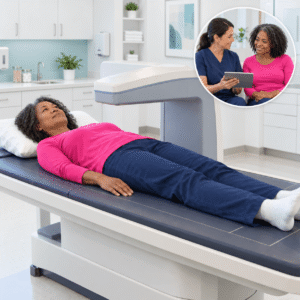
- Ask your clinician whether you need a DXA scan, particularly if you are 65 or older, have sustained a low-trauma fracture, or have additional risk factors.
- If approved, take collagen at the studied dose of 5 g daily. Powder makes this amount easier to obtain than collagen capsules.
- Choose hydrolyzed Type I collagen with independent testing and transparent sourcing.
- Take collagen consistently at any convenient time. Long-term adherence matters more than morning versus evening timing.
- Eat enough complete protein and vitamin C-rich foods to support collagen synthesis.
- Meet calcium and vitamin D needs through food and individualized supplementation.
- Perform resistance, weight-bearing, and balance exercises regularly.
- Reassess bone mineral density according to your clinician’s recommended interval.
Collagen supplements are generally well tolerated, but supplements may cause digestive discomfort or allergic reactions. Check the source if you have fish, shellfish, or animal-protein allergies. Discuss use with a clinician if you have kidney disease, recurrent kidney stones, or a condition requiring protein restriction.
Bone Density Is Not Fracture Proof

The most important expert angle is the distinction between a surrogate outcome and a clinical outcome. Increased bone mineral density is encouraging, but it does not automatically prove fewer broken bones.
Fracture risk also depends on bone architecture, bone strength, age, medication use, vision, muscle function, balance, and falls. Existing collagen studies have generally been too small or too short to determine fracture reduction.
Another limitation is product specificity. Evidence that specific collagen peptides improve bone measurements cannot automatically be applied to every collagen hydrolysate sold online. Some influential studies also evaluated branded formulations and reported industry involvement, making independent replication especially important.
For a Wise Woman entering her Second Spring, collagen can be one supportive tool. It should never delay osteoporosis assessment or medication when fracture risk is high.
Frequently Asked Questions
Does Collagen Help Bone Density Or Just Skin?

Collagen is helpful for more than skin and hair because bone contains a substantial collagen framework. Clinical studies suggest collagen peptides may improve bone mineral density and bone markers in postmenopausal women. The evidence remains smaller than the evidence supporting established osteoporosis treatments.
Which Collagen Type Is Best For Bone Health?
Type I collagen best matches the primary collagen type found in bone. Most positive studies have used specific hydrolyzed Type I collagen peptides. Type II collagen is mainly associated with cartilage and joint-health products.
Can Collagen Prevent Fractures Better Than Calcium?
No evidence shows that collagen prevents bone fractures better than calcium. Collagen and calcium support different parts of bone, while vitamin D helps the body absorb calcium. Fracture prevention may also require exercise, fall prevention, and osteoporosis medication.
Is There Proof Collagen Peptides Increase BMD?
A randomized trial found that 5 g of collagen peptides daily produced favorable changes in bone mineral density and bone turnover markers after 12 months. A four-year follow-up reported continued improvements, although it lacked a placebo group. Larger independent trials are needed to confirm efficacy and determine the impact of collagen on fractures.
How Long Must I Take Collagen For Bones?

The strongest randomized evidence evaluated collagen supplementation for 12 months. Changes in bone mineral density develop slowly, so a few weeks is unlikely to show a meaningful difference. If you take collagen, review your complete bone-health plan and monitoring schedule with your clinician.
Continue Your Journey
Collagen may help maintain bone health, but lasting protection requires a complete strategy. Continue with our pillar guide: How Do I Prevent Osteoporosis and Bone Loss During Menopause Naturally?
References
- König D, Oesser S, Scharla S, Zdzieblik D, Gollhofer A. “Specific Collagen Peptides Improve Bone Mineral Density and Bone Markers in Postmenopausal Women: A Randomized Controlled Study.” Nutrients. 2018;10(1):97. doi:10.3390/nu10010097.
- Zdzieblik D, Oesser S, Baumstark MW, Gollhofer A, König D. “Specific Bioactive Collagen Peptides in Osteopenia and Osteoporosis: Long-Term Observation in Postmenopausal Women.” Journal of Bone Metabolism. 2021;28(3):207-213. doi:10.11005/jbm.2021.28.3.207.
- Sun C, et al. “Efficacy of Collagen Peptide Supplementation on Bone and Muscle Health: A Meta-Analysis.” Frontiers in Nutrition. 2025;12:1646090. doi:10.3389/fnut.2025.1646090.
- Zaheer S, LeBoff MS. “Osteoporosis: Prevention and Treatment.” Endotext. MDText.com, Inc.; updated 2022. National Institutes of Health, NCBI Bookshelf.
- U.S. Preventive Services Task Force. “Vitamin D, Calcium, or Combined Supplementation for the Primary Prevention of Fractures in Community-Dwelling Adults.” JAMA. 2018;319(15):1592-1599. USPSTF Recommendation.