The 60-Second Answer
Yes, preliminary research suggests boron may influence calcium retention and vitamin D metabolism, but benefits remain uncertain. Boron supplements for bone health have reduced urinary mineral losses in some small studies, yet they have not established reliable protection against menopause bone loss or fractures. Adequate nutrition and appropriate osteoporosis care remain essential.
Boron May Influence Calcium Retention
Effects Of Boron Differ Between Studies
Boron is a trace mineral present in the human body and many plant foods. Although researchers investigate its role in bone health, it is not classified as an essential nutrient for humans.
In a 1987 metabolic study, 12 postmenopausal women received 3 mg per day after consuming a very low boron diet. Boron supplementation reduced urinary losses of calcium and magnesium, particularly when magnesium intake was low, and increased estradiol and testosterone concentrations. These were biochemical findings, not proof of improved bone mineral density or fewer fractures.
A 1993 study found no significant changes in mineral balance, sex hormones, or bone turnover markers after adding 3 mg daily for three weeks. The conflicting results make it premature to promise that boron helps everyone retain minerals.
Menopause Alters The Bone Matrix
Estrogen Loss Accelerates Bone Breakdown
Bone is living tissue. Osteoblasts build its collagen-rich bone matrix, while osteoclasts remove older bone.
Declining estrogen changes signaling through hormone receptors and increases bone resorption. This metabolic shift can allow breakdown to outpace rebuilding, lowering bone density even when calcium intake is adequate.
Progesterone also declines during the menopause transition, but its independent contribution to bone loss is less established than estrogen’s. Boron has not been shown to restore either hormone to premenopausal levels.
Boron On Health Remains An Emerging Field
The proposed role of boron involves mineral metabolism, bone-cell activity, and steroid hormone function, including vitamin D. Limited depletion research links low boron intake with lower circulating 25-hydroxyvitamin D, but this does not establish that supplementation prolongs vitamin D activity.
Claims about an “up-regulatory impact of boron” on vitamin D function describe proposed mechanisms, not proven treatment outcomes. The National Institutes of Health concludes that additional research is needed to determine boron supplementation’s effects on human bone health. Health Professional Fact Sheet
Healthy Bones Need More Than Mineral Retention
Vitamin D supports intestinal calcium absorption, while calcium supplies mineral for maintaining bone. Adequate protein, muscle strength, and appropriate mechanical loading also support bone health.
Retaining more calcium in the body does not automatically mean depositing it into stronger bones. Mineral balance, bone mineral density, and fracture prevention are different outcomes.
Dietary Supplements Have Different Evidence
| Option | Amount Or Dose Context | Evidence Relevant To Menopause |
|---|---|---|
| Boron | 3 mg daily in small studies | Mixed mineral-retention findings; fracture benefit unproven |
| Calcium | 1,200 mg daily total for women 51+ | Meets established nutritional needs |
| Vitamin D | BHOF suggests 800–1,000 IU daily for adults 50+ | Supports calcium absorption; needs vary |
| Magnesium | No boron-specific replacement dose | Adequacy matters; deficiency requires assessment |
| Osteoporosis Medication | Drug-specific prescription | Approved treatments can reduce fractures in appropriate patients |
Calcium and vitamin D targets include food and supplements; extra supplementation is not automatically better. Medication decisions depend on fracture risk, medical history, and bone density results. PMC
Supplement Forms Are Not Proven Equivalent
Dietary supplements may contain boron citrate, glycinate, an amino acid chelate, or calcium fructoborate. Evidence does not establish a superior form of boron for preventing menopause bone loss.
Check the elemental boron per serving rather than the compound’s total weight. Hypromellose describes a capsule material, not an ingredient proven to improve bone strength. Never ingest household borax or boric acid products. Health Professional Fact Sheet
Customer Reviews Cannot Confirm Stronger Bones
Customer reviews may describe joint pain, joint function, or tolerability, but they cannot establish improved mineral density. Osteoarthritis symptom studies also cannot prove osteoporosis prevention.
Likewise, observations about regional rates of arthritis or hormone changes in middle-aged men cannot establish boron benefits for postmenopausal women.
Osteoporosis Care Requires Outcome Checks
A useful expert angle is a retention-versus-results audit for women whose bone density continues falling despite supplementation.
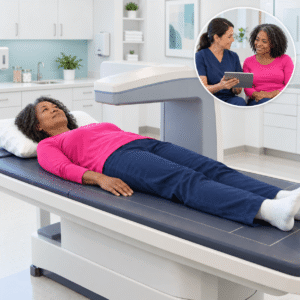
Ask whether a DXA change exceeds the testing facility’s measurement variability before assuming treatment failure. Then review medication adherence, absorption problems, vitamin D status, and possible secondary causes of bone loss. Investigating these factors provides more actionable information than assuming low boron is the missing component for bone health. PMC
A Food-First Plan Supports Healthy Bones
- Include good sources of boron, such as avocado, apples, beans, peanuts, and raisins.
- Estimate calcium intake. Women 51 and older generally need 1,200 mg of calcium daily from all sources; supplement only the shortfall.
- Discuss vitamin D needs with your clinician. BHOF recommends 800–1,000 IU daily for adults 50 and older in bone-health care.
- If your clinician recommends boron, 3 mg per day is a studied amount, not an established menopause requirement. Follow their timing instructions; twice daily dosing has no demonstrated bone advantage.
- Do not assume 6 mg per day works better. The adult upper limit is 20 mg daily from all sources, not a target.
- Add resistance exercise, weight-bearing activity, and balance practice appropriate to your fracture risk.
Discuss health concerns and other dietary supplements before starting, particularly with kidney disease or hormone-sensitive conditions. Pregnant women should seek individualized advice. Take boron only as directed by your healthcare professional. Consumer
Frequently Asked Questions
Why Does Bone Density Fall On Calcium And D?
Calcium and vitamin D cannot fully counter estrogen-driven bone breakdown. Continued loss may reflect osteoporosis, poor absorption, another medical condition, or measurement variability. Review the results and your treatment plan with your clinician.
Can Boron Reduce Urinary Mineral Wasting?
A small study found reduced urinary calcium and magnesium after boron supplementation. Another study did not reproduce comparable effects. Suspected mineral wasting needs investigation rather than automatic supplementation.
How Much Boron Prevents Menopause Bone Loss?
No dose has been established to prevent menopause bone loss. Researchers have studied 3 mg daily, but evidence does not justify routine escalation to 6 mg. Historical WHO guidance cited by NIH estimates an acceptable safe range of boron intake of 1–13 mg daily, not an effective treatment range.
Can Boron Improve Osteoporosis Drug Results?
Boron is not a proven solution for inadequate medication response. Treatment assessment should include adherence, fracture history, DXA interpretation, and secondary causes. Do not stop osteoporosis medication to try boron.
Does Boron Prolong Estrogen And Vitamin D?
Boron appears to influence some hormone-related measurements under experimental conditions. That does not prove it helps the body “hold onto” estrogen or vitamin D longer during menopause. It cannot replace hormone therapy or vitamin D deficiency treatment.
Continue Your Journey
Your Second Spring deserves informed choices, not supplement guesswork. Explore How do trace minerals like Zinc and Selenium regulate my menopause metabolism?to connect mineral intake, hormonal changes, and everyday nourishment with practical ways to support your long-term health goals confidently.
References
- Nielsen FH, Hunt CD, Mullen LM, Hunt JR. Effect of dietary boron on mineral, estrogen, and testosterone metabolism in postmenopausal women. FASEB Journal. 1987;1(5):394–397. doi: 10.1096/fasebj.1.5.3678698.
- Beattie JH, Peace HS. The influence of a low-boron diet and boron supplementation on bone, major mineral and sex steroid metabolism in postmenopausal women. British Journal of Nutrition. 1993;69(3):871–884. doi: 10.1079/BJN19930087.
- National Institutes of Health, Office of Dietary Supplements. Boron: Health Professional Fact Sheet.
- National Institutes of Health, Office of Dietary Supplements. Boron: Consumer Fact Sheet.
- National Institutes of Health, Office of Dietary Supplements. Calcium: Health Professional Fact Sheet.
- LeBoff MS, et al. The clinician’s guide to prevention and treatment of osteoporosis. Osteoporosis International. 2022;33:2049–2102. doi: 10.1007/s00198-021-05900-y.