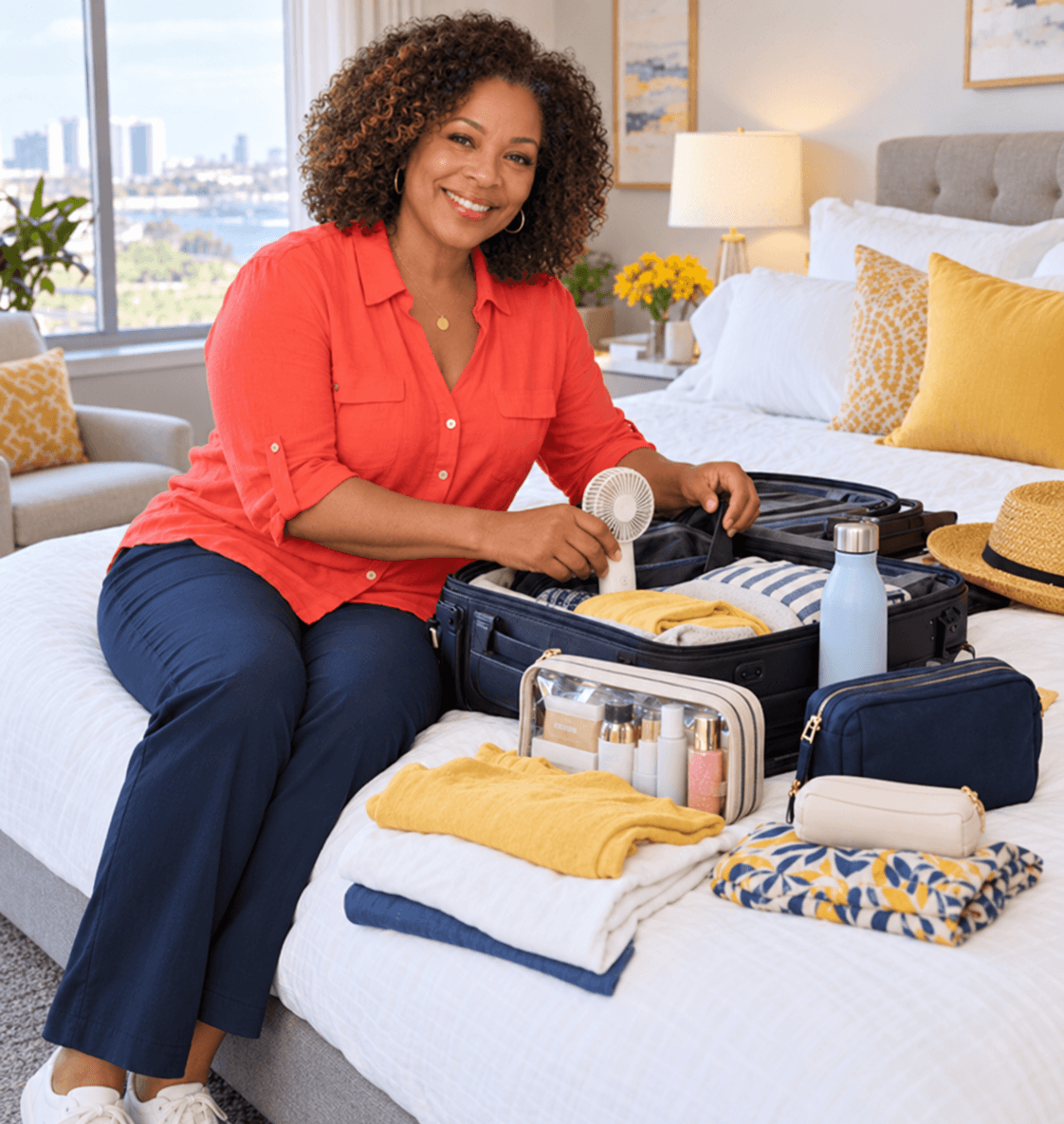
The 60-Second Answer
The best menopause travel essentials are breathable layers, a quiet fan, water, menstrual supplies, and prescribed medicines in your carry-on. Keep them within reach for hot flashes, unexpected bleeding, and delays. For a long-haul flight, plan how you will move, sleep, and take medication across time zones.
Menopause Travel Essentials Meet Real Needs
Hot Flashes Call For Breathable Layers
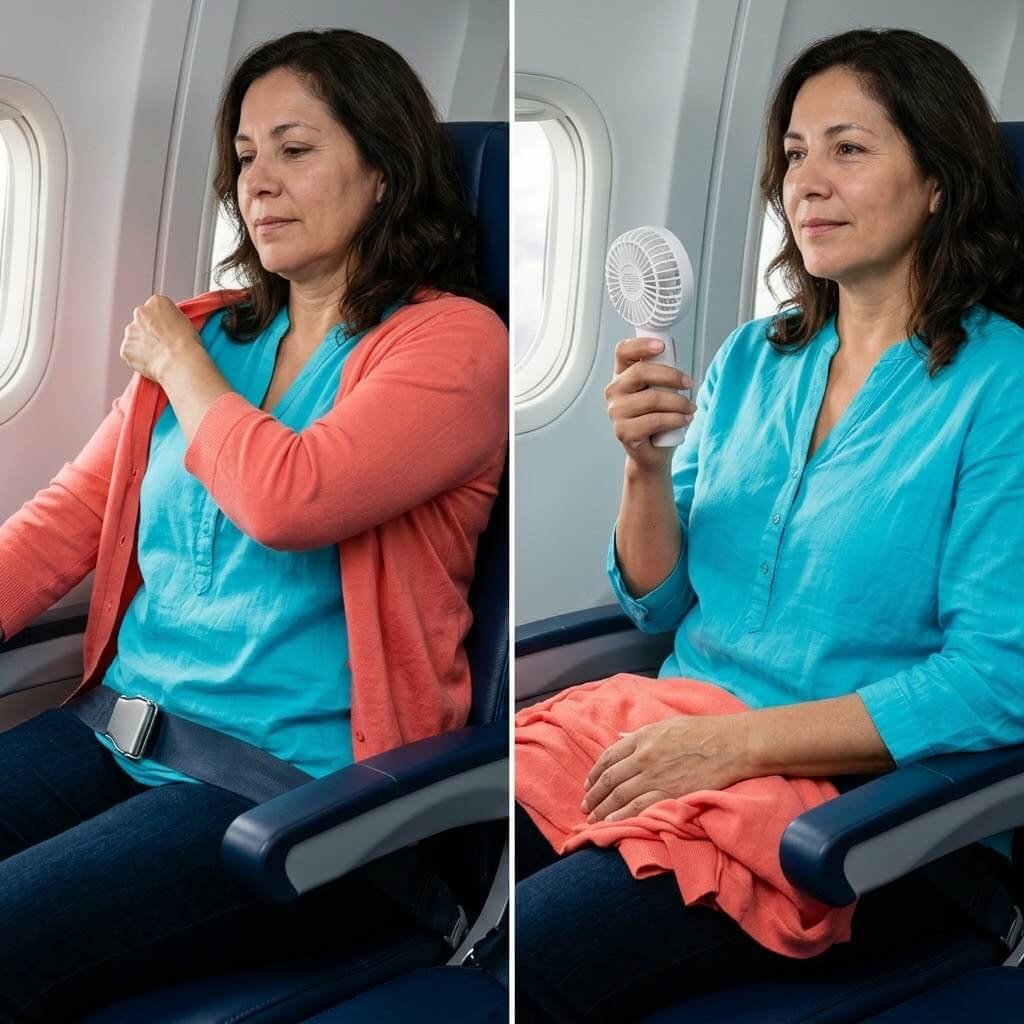
Pack a light top, a removable layer, and a quiet handheld fan. Cooling offers practical support for hot flashes, but it does not change estrogen levels or treat the underlying cause. A spare top helps if a night sweat leaves your clothes damp on an overnight flight.
Perimenopause Calls For A Bleeding Kit
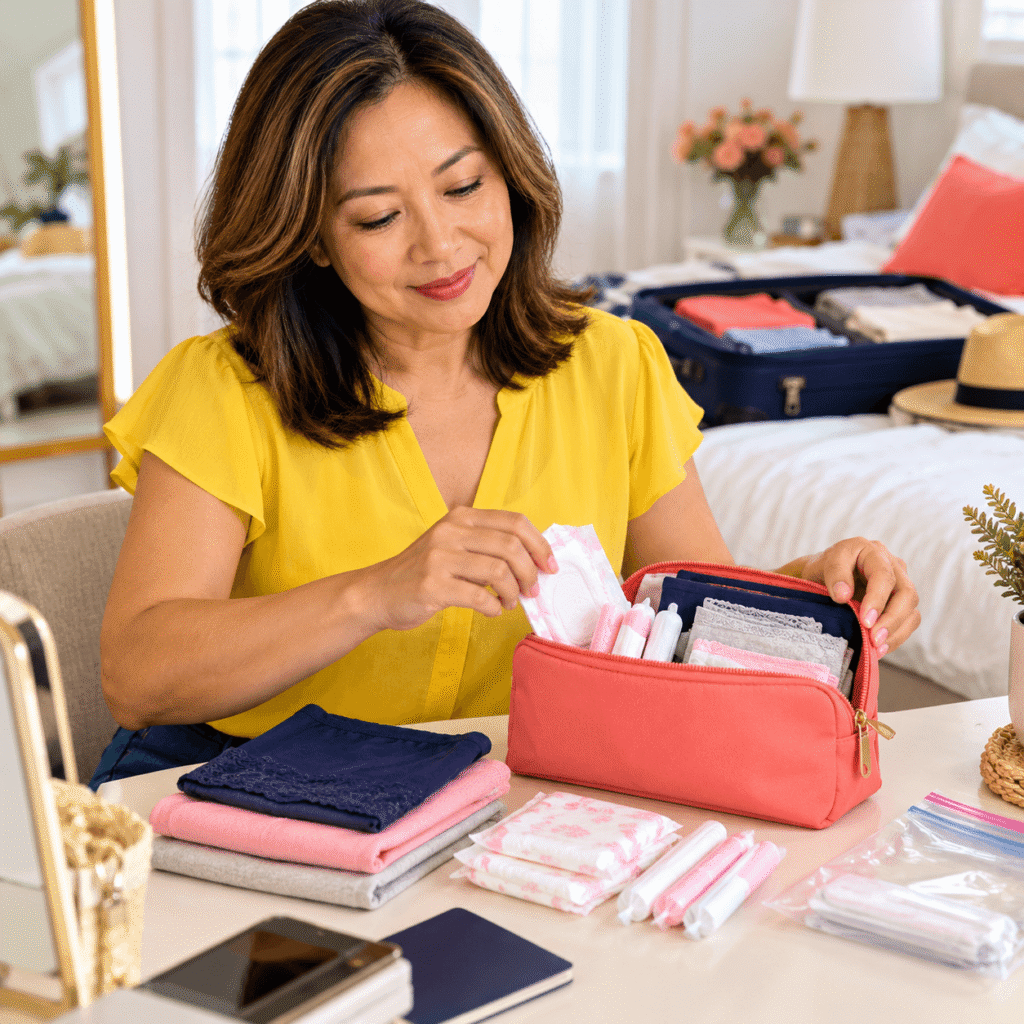
For some perimenopausal women, menstrual flow becomes less predictable leading up to menopause. Keep pads or tampons, spare underwear, and a sealable bag in your personal item. If bleeding is unusually heavy, do not dismiss it as one of the routine symptoms of perimenopause and menopause.
Menopause Support Includes Your Usual Medicines
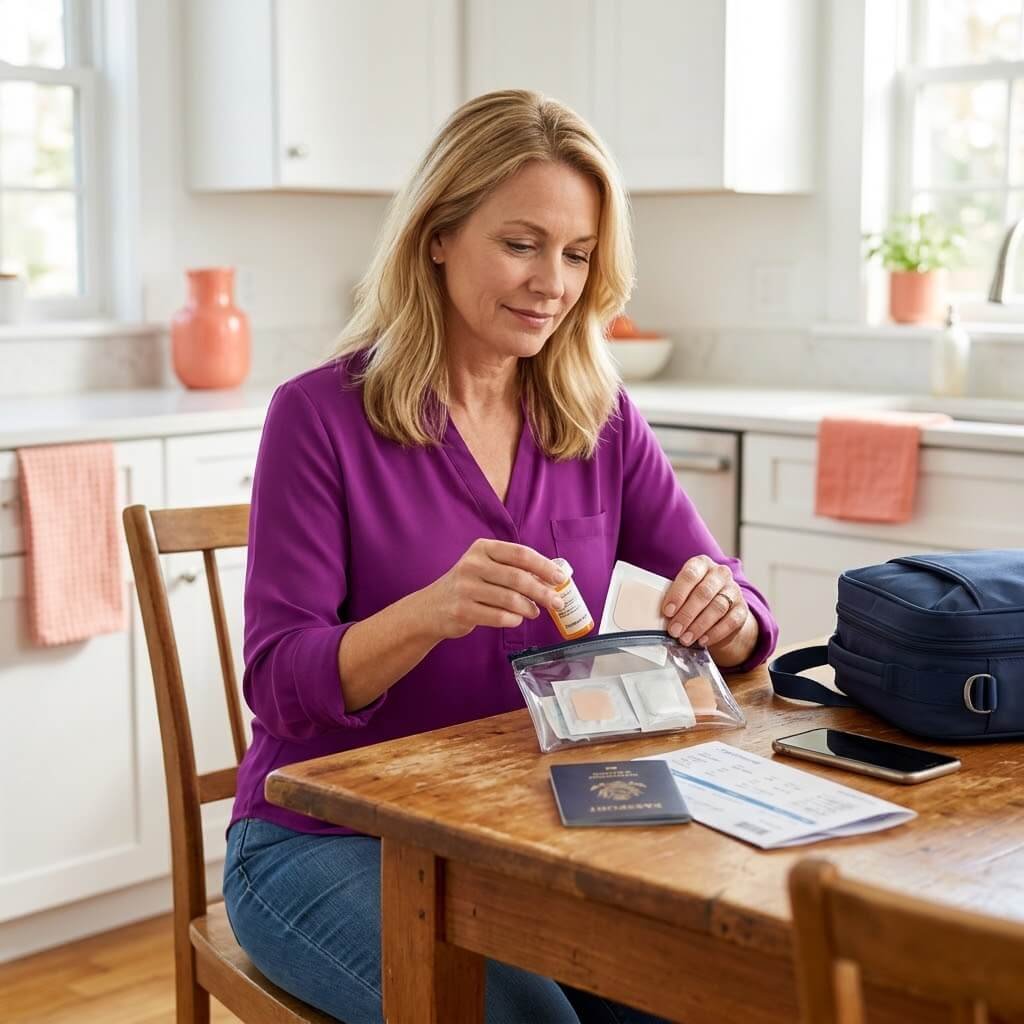
Keep prescribed medicines, including hormone replacement therapy (HRT), in your carry-on with prescription details and extra supply for delays. Check the medicine rules at your destination. If hot flashes and night sweats regularly disrupt sleep quality or daily life, discuss treatment before traveling: hormone therapy is the most effective treatment for bothersome vasomotor symptoms in suitable patients. menopause.org
| Flight concern | Keep within reach | Practical purpose |
|---|---|---|
| Hot flashes | Breathable layer and quiet fan | Adjustable cooling |
| Night sweat | Spare top and underwear | A dry change of clothes |
| Unpredictable menstrual flow | Period supplies and sealable bag | Private, prompt changes |
| Dry cabin air | Water and familiar skincare | Comfort without trying new products |
| Medication timing | Medicines and written schedule | Fewer missed doses |
| Long periods seated | Clear foot space | Room for calf and ankle movements |
Hormonal Changes Affect Temperature Control
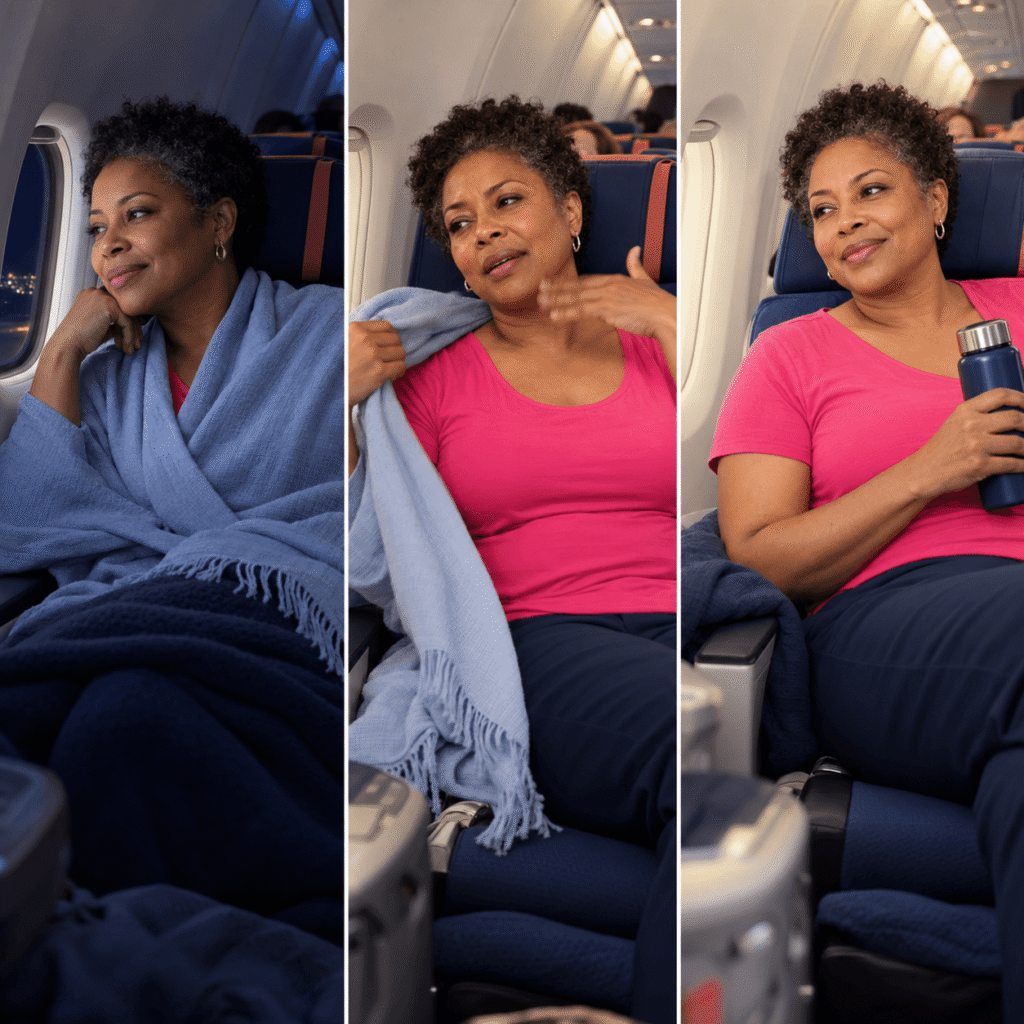
During the menopause transition, estrogen and progesterone levels can fluctuate before declining. Estrogen interacts with hormone receptors in brain circuits that regulate body temperature. This shift in hormones can narrow the temperature range that feels comfortable, contributing to hot flashes and night sweats. Changes in progesterone, sleep, and nervous system regulation may also affect how rested you feel. Cabin heat and jet lag can make existing menopausal symptoms more noticeable; flying itself does not cause the hormonal fluctuations.
Perimenopause and menopause can involve mood swings, joint pain, changing energy levels, and urinary discomfort as well as heat symptoms. These experiences differ among perimenopausal and menopausal travelers. A burning sensation when urinating, for example, needs assessment for a possible UTI rather than an assumption that it is menopause-related.
Menopause Products Cannot Replace Treatment
A fan may provide hot flash relief in the moment; it cannot reliably reduce hot flashes over time. Be similarly cautious with menopause products marketed for “hormonal balance” or as all-in-one, daily menopause symptom support. Claims involving collagen, omega-3s, omega-3 fatty acids, black cohosh, or rhubarb do not establish that a product effectively treats hot flashes.
Skincare and supplements can have a place in self-care, but avoid testing unfamiliar products during a flight. If you are considering alternative therapies or an integrative plan, review ingredients, interactions, and your health concerns with a qualified clinician. Effective support should match the symptom you want to address.
Long Flights Make Movement A Priority
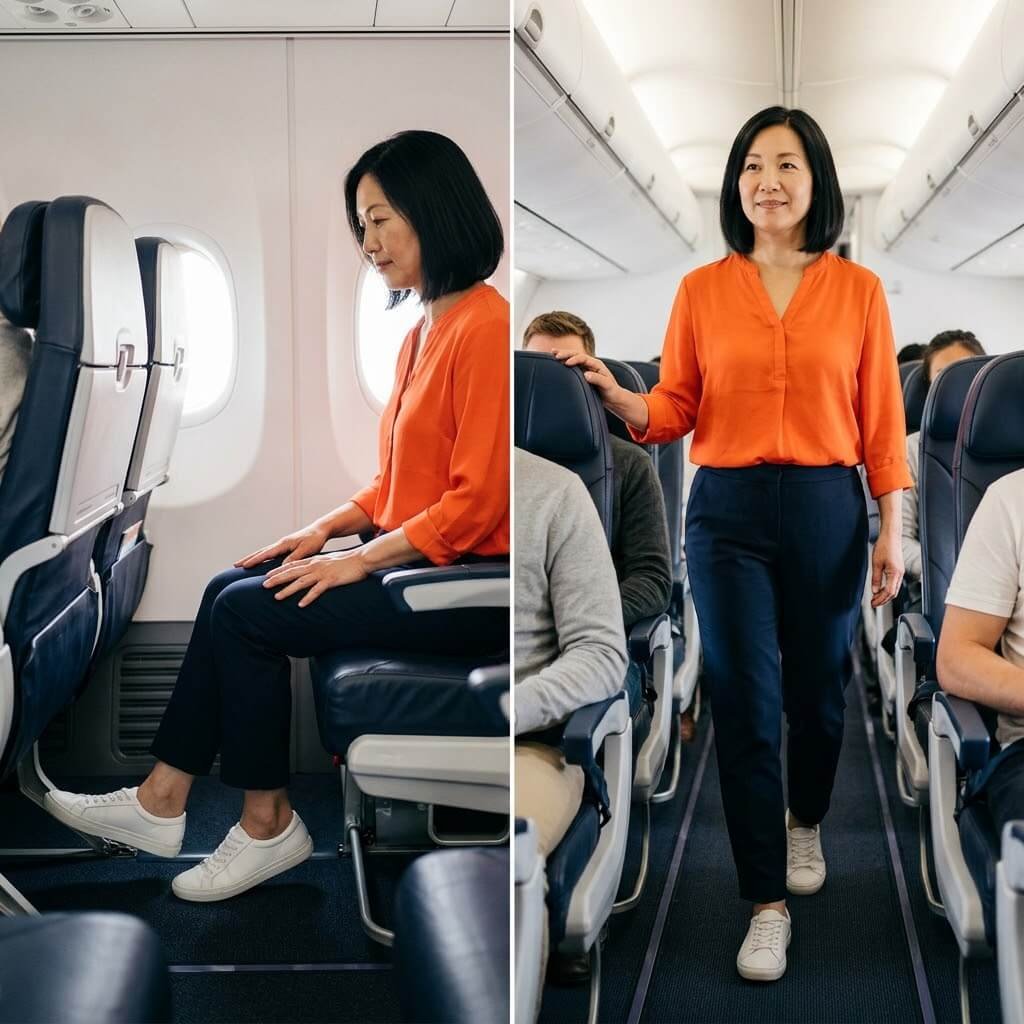
A long period of sitting slows blood flow in the legs. The risk of a travel-related clot is small for most people, but it varies with individual risk factors. Move your ankles and calves while seated, and walk when it is safe; ask your clinician before departure if you have clotting concerns. www.cdc.gov
This is also a useful distinction for menopause wellness: regular exercise, nutrition, and other lifestyle choices support cardiovascular health, bone density, and efforts to maintain a healthy weight across life stages. They matter beyond the flight, but none provides immediate treatment for a hot flash. Declining estrogen after the reproductive years can increase the risk of osteoporosis, making ongoing care important after you land.
A Seat-Side Plan Supports Self-Care
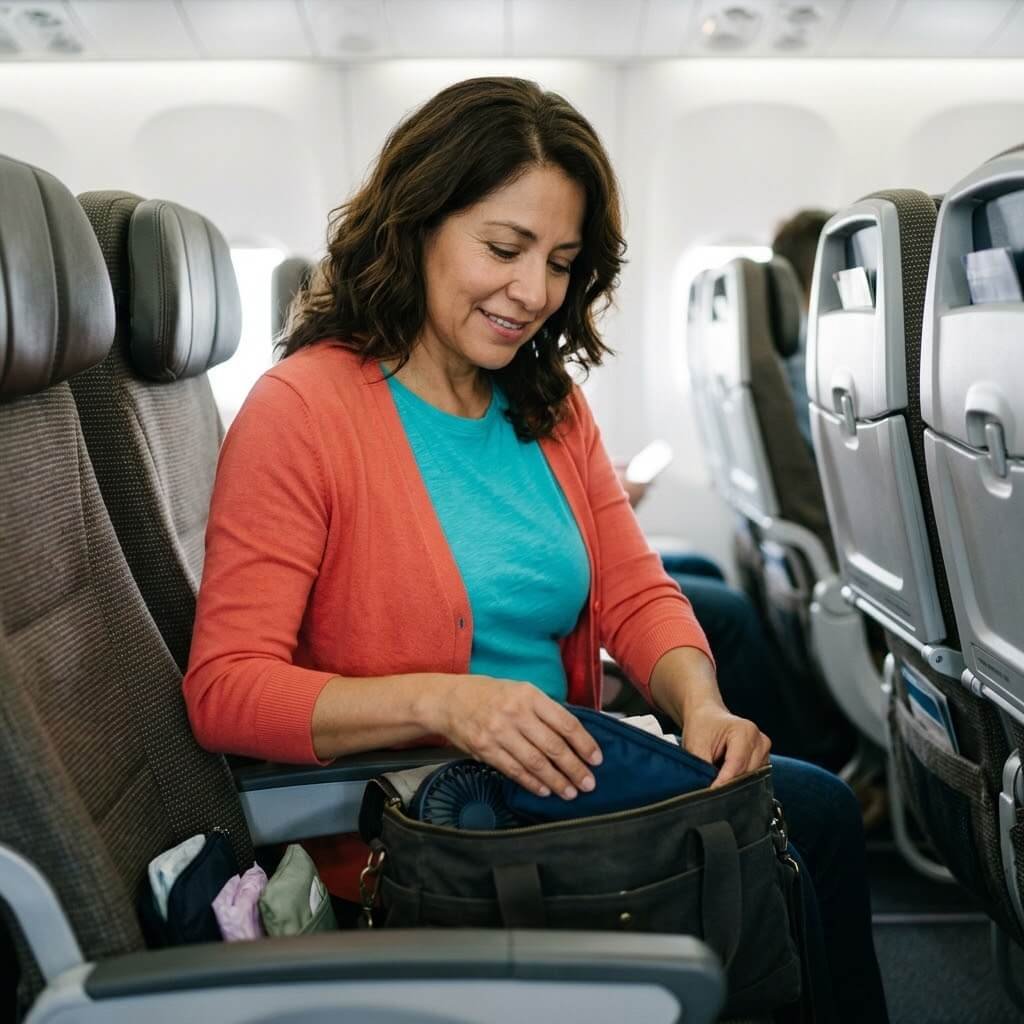
- Before departure: Put medications, period supplies, a fan, and one clothing change in a pouch that fits beneath the seat. Ask your pharmacist how to handle once-daily medicines or patch changes across time zones.
- At the airport: Fill a water bottle after security if permitted. Dress in layers you can remove easily.
- In flight: Use cooling when needed, flex your calves and ankles regularly, and walk when safe. Keep your usual medicines on the agreed schedule.
- After arrival: Return to a manageable sleep routine and note any symptoms that need follow-up.
This symptom-first plan is more useful than packing for every possible “meno” concern. The best kit reflects your own physical and emotional experience, whether that means bleeding supplies, support for hot flashes, or a reliable medication reminder.
Frequently Asked Questions
How Do I Keep HRT Patches On In Humidity?

Apply the patch to clean, dry, cool skin at the site stated in its leaflet, without lotion underneath. If it falls off, follow your brand’s instructions; guidance for some estrogen patches advises using a new patch on a different area while retaining the usual change day. Check with your pharmacist before adding tape or adhesive. www.nhs.uk
Which Cooling Gadgets Work In Airplane Seats?
A small, quiet handheld fan is a discreet option for an airplane seat. A cooling cloth may help if you can dampen it without soaking your clothes. Check your airline’s battery rules for rechargeable devices.
How Do I Manage Perimenopause Flooding On A Plane?
Use the supplies in your seat-side kit and ask cabin crew for help if you need it. Soaking a pad or tampon every hour for several hours warrants prompt medical advice. Seek urgent care if heavy bleeding comes with dizziness, faintness, chest pain, or shortness of breath. www.acog.org
Will Menopause Supplements Clear TSA Security?
TSA permits pills in carry-on bags, subject to screening. Medically necessary liquids may exceed the usual limit in reasonable quantities, but you must declare them. Check separate rules for countries and airports on your route.
How Do I Time HRT Across Time Zones?
Ask your prescriber or pharmacist for a schedule specific to your medicine before you fly. Set reminders for patch changes or tablets on both the outbound and return journeys. Do not double doses or change intervals on your own. wwwnc.cdc.gov
Continue Your Journey
Your flight kit handles the hours in the air; a wider plan helps with the vacation itself. Explore how to manage menopause symptoms while traveling or on vacation for practical ways to prepare for heat, sleep changes, daily routines, and unexpected symptoms.
References
- The Menopause Society. Menopause Topics: Hormone Therapy.
- The Menopause Society. MenoNotes.
- Centers for Disease Control and Prevention. Understanding Your Risk for Blood Clots with Travel. 2024.
- Centers for Disease Control and Prevention. Deep Vein Thrombosis and Pulmonary Embolism. CDC Yellow Book 2026.
- Centers for Disease Control and Prevention. Jet Lag Disorder. CDC Yellow Book 2026.
- Centers for Disease Control and Prevention. Traveling Abroad with Medicine.
- National Health Service. How and When to Use Oestrogen Tablets, Patches, Gel and Spray.
- NHS Specialist Pharmacy Service. Managing Problems When Using Transdermal Patches.
- American College of Obstetricians and Gynecologists. Heavy Menstrual Bleeding and Abnormal Uterine Bleeding.
- Transportation Security Administration. Medications (Pills) and Medical Items.