The 60-Second Answer
Yes, xenoestrogens in skincare menopause discussions refer to external chemicals that may imitate, block, or modify natural estrogen signaling. Certain parabens, phthalates, and ultraviolet filters show endocrine activity in laboratory research. However, detecting these chemicals does not prove that normal cosmetic use causes menopause symptoms, skin aging, or cancer.
Xenoestrogens In Skin Care Explained
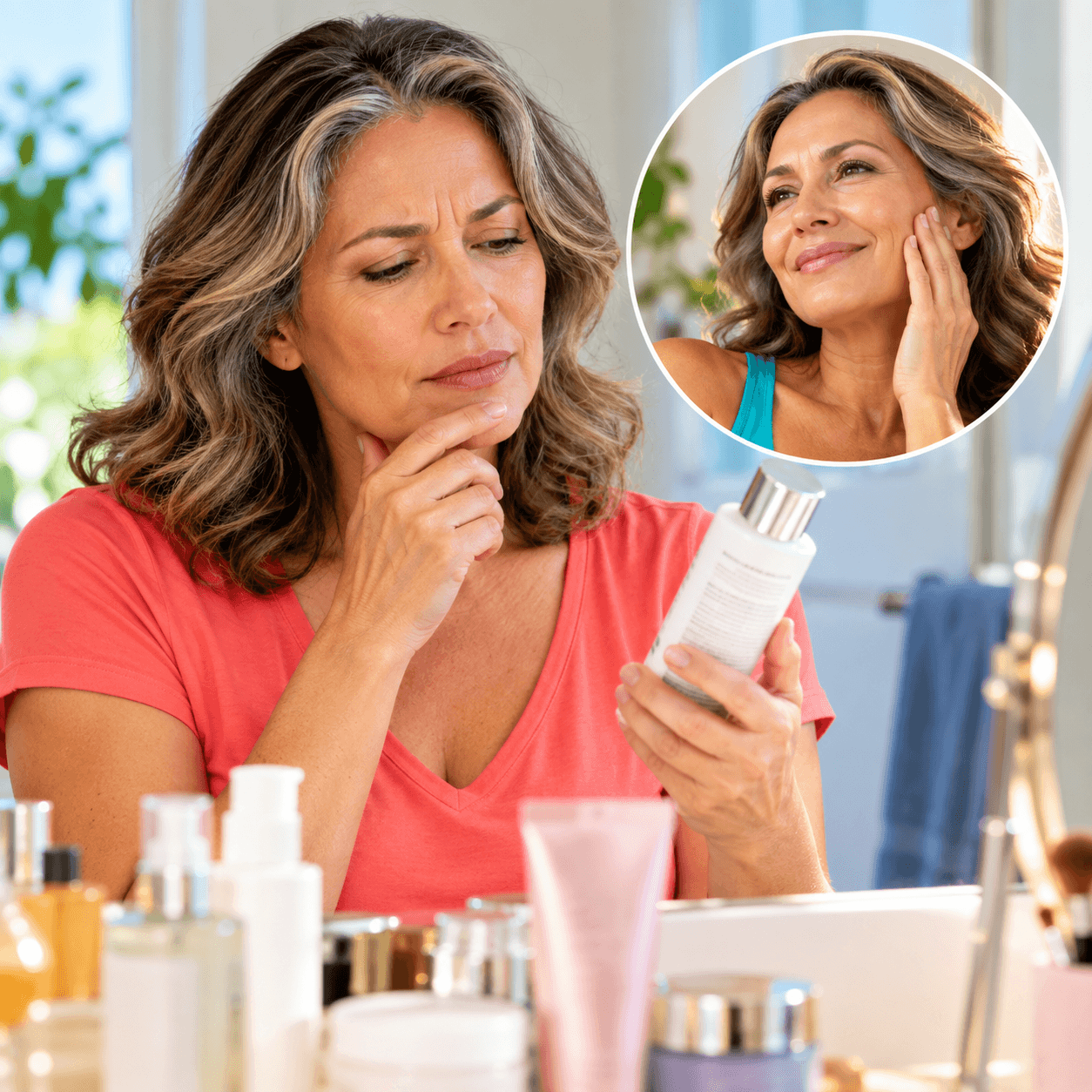
Your bathroom cabinet may contain ingredients that interact with hormone pathways, but this does not mean every product is harmful. Xenoestrogens are substances produced outside the body that can behave somewhat like estrogen or interfere with hormone activity.
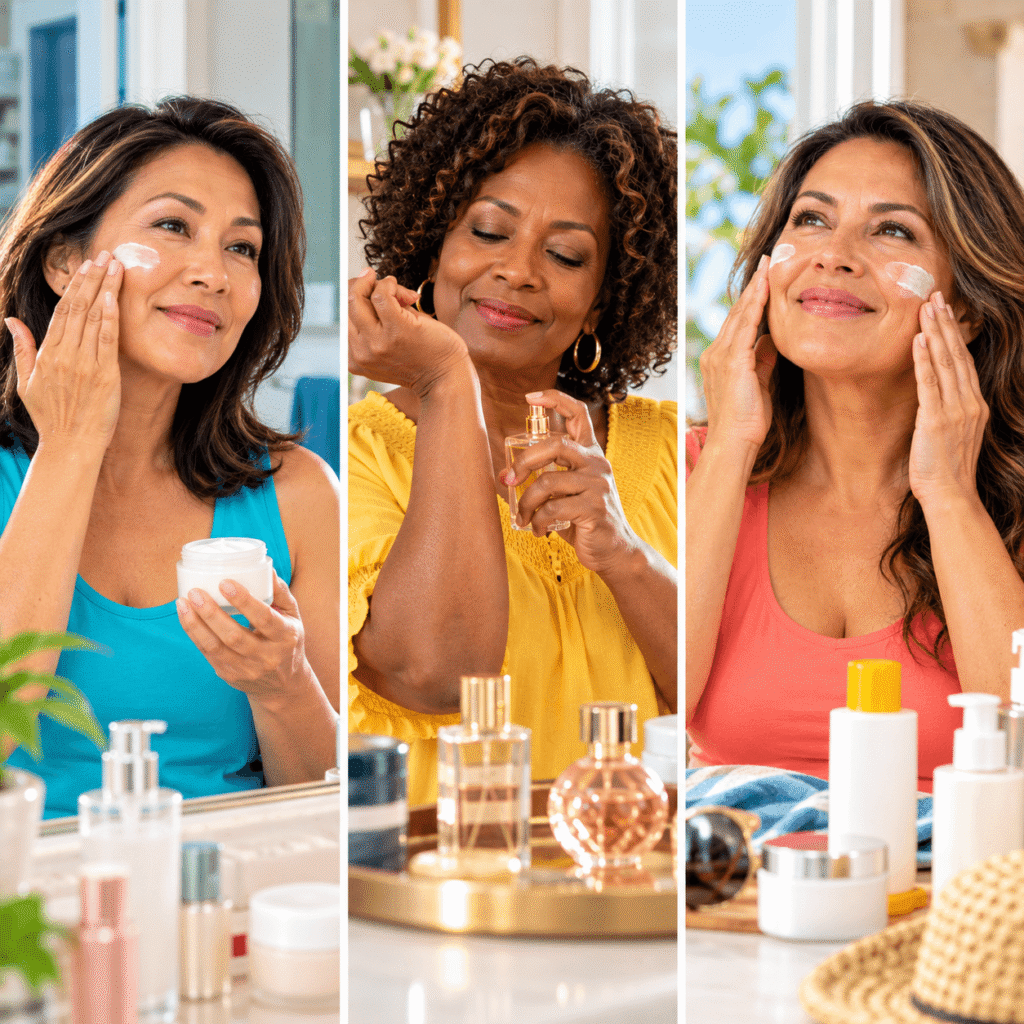
Some parabens, phthalates, triclosan, and ultraviolet filters have demonstrated endocrine activity in experimental studies. These substances may be found in skin care, fragrance, makeup, hair products, plastics, and household materials.
Risk depends on the ingredient, dose, absorption, frequency of use, exposure from other sources, and individual health factors. The FDA currently reports that available evidence does not show that parabens harm human health when used in cosmetics as intended. It has reached a similar conclusion about diethyl phthalate, or DEP, in its present cosmetic applications.
How Xenoestrogens Affect Estrogen
Estrogen is a female sex hormone involved in reproductive health, metabolism, brain function, bone maintenance, hair growth, and skin health. Natural estrogen production fluctuates during perimenopause before remaining lower after menopause.
Xenoestrogens may bind to estrogen receptors, block normal receptor activity, influence hormone metabolism, or change signaling in skin. Estrogen receptor alpha and estrogen receptor beta are nuclear hormone receptors that regulate gene expression in numerous tissues.
Human skin contains both types of hormone receptors, although much estrogen activity appears to occur via estrogen receptor beta. A chemical’s ability to bind to estrogen receptors does not mean that it is as powerful as estrogen in the body. Many suspected xenoestrogens produce weak or inconsistent effects, especially when laboratory concentrations exceed typical human exposure.
Menopause Creates A Metabolic Shift

Estrogen during menopause becomes less predictable and eventually declines. Progesterone commonly falls earlier in the transition. These changes influence nervous system regulation, sleep, temperature control, insulin sensitivity, fat distribution, and skin function.
Environmental chemicals could theoretically modify these pathways through activity through estrogen receptors or other endocrine mechanisms. However, researchers have not established that ordinary skincare exposure directly worsens hot flashes, weight gain, insomnia, or breast tenderness.
This distinction matters. Menopause symptoms should not automatically be blamed on one lotion, serum, or fragrance. Exposure reduction can be sensible without promoting fear or unsupported “hormone detox” claims.
Estrogen Supports Skin Health
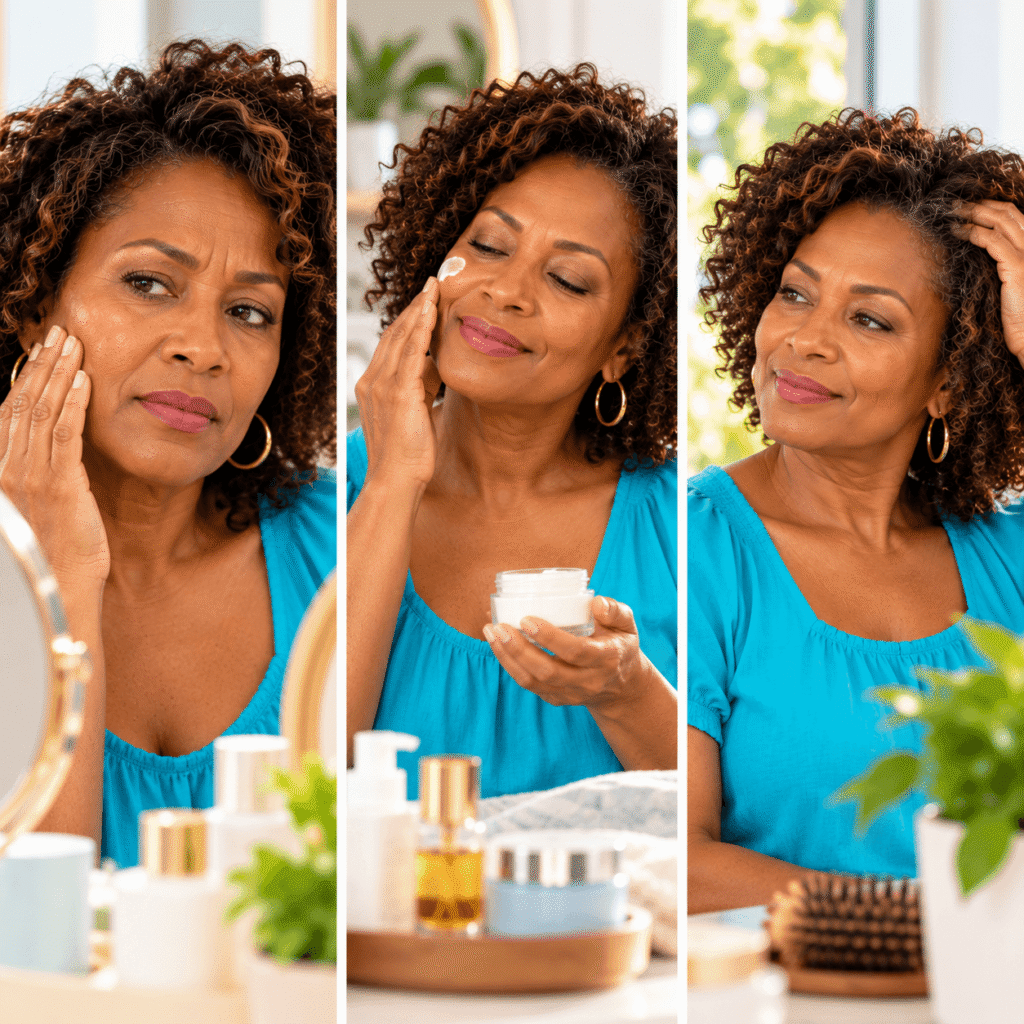
The role of estrogen extends throughout the dermis and epidermis. Estrogen in skin supports skin hydration, barrier repair, elasticity, blood flow, and collagen synthesis. It also has a role in maintaining skin thickness and collagen content.
The loss of estrogen can contribute to menopausal skin changes such as:
- Skin dryness and greater sensitivity
- Decreased skin elasticity
- Reduced skin collagen content
- A gradual decrease in skin thickness
- Fine lines and deeper skin wrinkle formation
- Loss of skin tone and slower wound repair
- Hormone-related skin changes in oil production
- A shorter anagen phase of the hair
- Increased susceptibility to female pattern hair loss
These hormonal skin changes occur alongside sun exposure, genetics, smoking, stress, nutrition, and chronological ageing. Therefore, aging and estrogen are connected, but estrogen deficiency is not the only cause of ageing skin.
Studies involving cultured human skin fibroblasts and human skin in vivo help explain the effects of estrogen on skin. Estrogen can support collagen-producing skin cell activity and modulate skin repair. Researchers have also reported associations between decreased estrogen, reduced elasticity, and changes in facial skin.
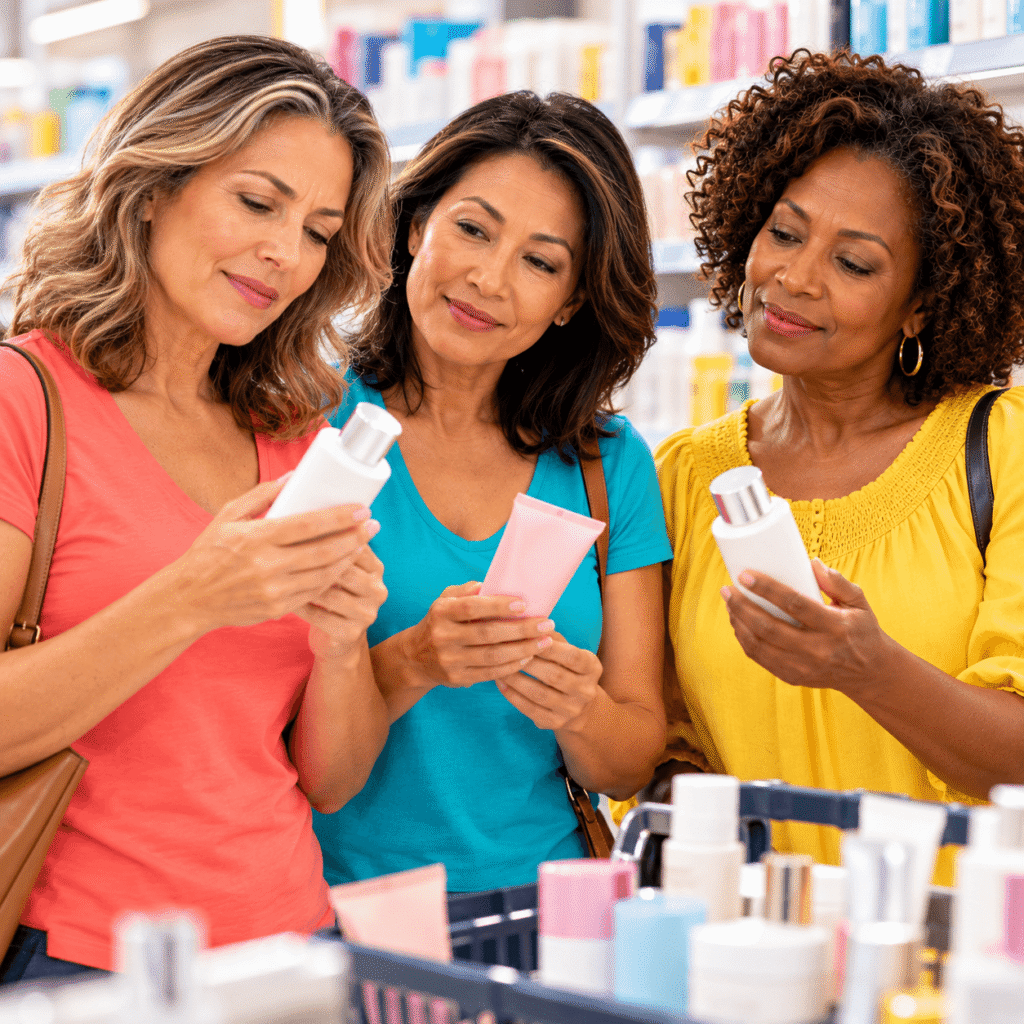
Cosmetic Chemicals Have Different Evidence
| Ingredient Or Category | Possible Hormone Effect | Label Clue | Important Limitation |
|---|---|---|---|
| Parabens | Some show weak estrogen receptor activity | Methylparaben, propylparaben, butylparaben | Cosmetic use has not been proven to cause menopause symptoms |
| Phthalates | Some may alter reproductive hormone pathways | DEP may occur within “fragrance” | Different phthalates have different toxicological profiles |
| Oxybenzone | Shows endocrine activity in some models | Oxybenzone or benzophenone-3 | Human clinical effects remain uncertain |
| Triclosan | May influence several hormone pathways | Triclosan | Use and regulation vary by product type |
| PFAS | Certain compounds may affect endocrine signaling | PTFE or ingredients containing “fluoro” | Dermal absorption data remain limited |
Sunscreen is still essential for skin protection and reducing skin cancer risk. Concerns about a particular filter should not lead you to stop using sunscreen. A broad-spectrum mineral product containing zinc oxide or titanium dioxide is an alternative.
Hormone Therapy Is Not A Cosmetic
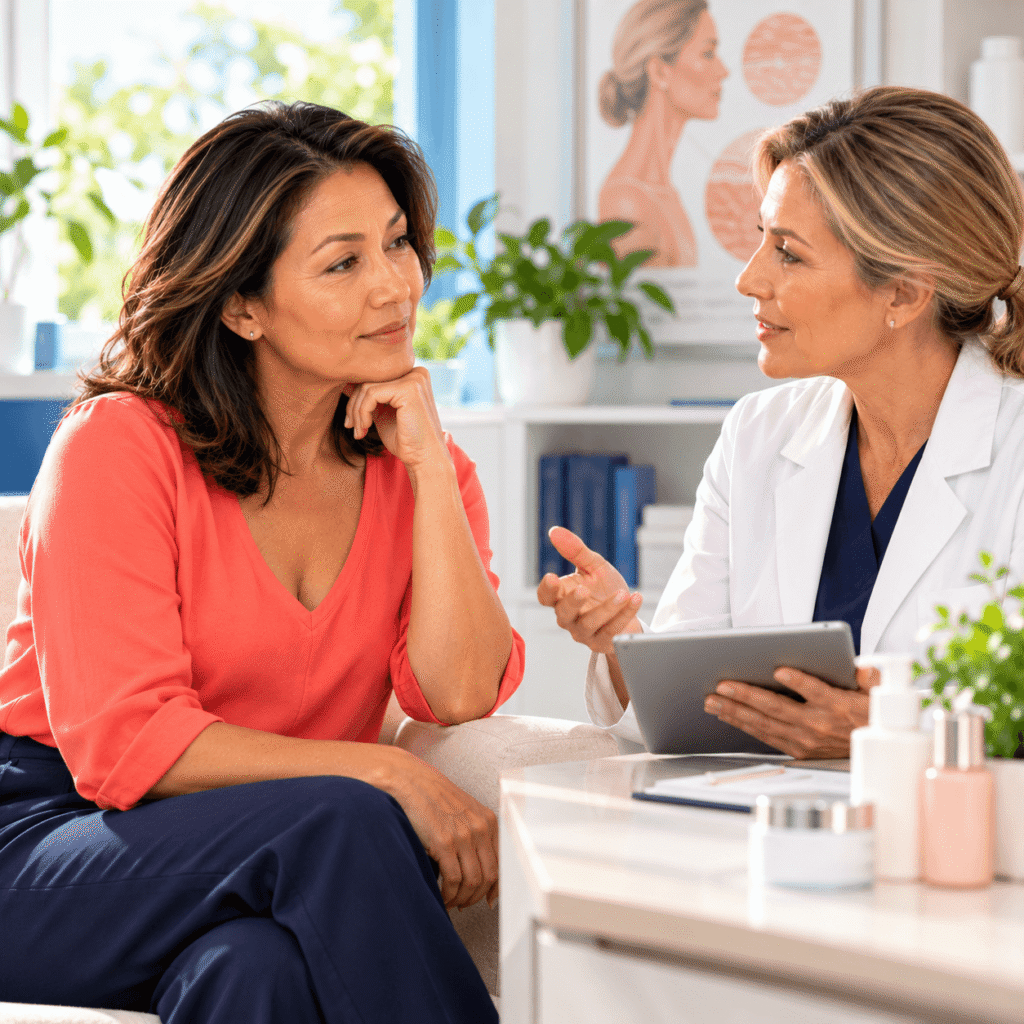
Hormone replacement therapy uses regulated medication with a known dose. Menopausal hormone therapy may relieve approved menopause symptoms, but it should be individualized according to medical history.
Research has examined the effect of estrogen replacement therapy on the skin, including its potential to increase skin collagen, support elasticity, and produce improvement in skin hydration. Some studies have reported enhanced skin structure or increasing skin thickness among women taking estrogen. Evidence concerning skin elasticity in postmenopausal women is encouraging but not sufficient to prescribe systemic hormone therapy as an anti-aging skin treatment.
Topical estrogen also differs from a cosmetic containing a weak endocrine-active ingredient. The use of topical estrogen on facial skin remains an evolving area of research. Cosmeceuticals for estrogen-deficient skin may claim to improve skin or reverse these changes, but marketing claims can exceed clinical evidence.
A selective estrogen receptor modulator acts differently in different tissues. Research into SERMs on the skin remains limited, and these medicines should not be used solely for the treatment of skin aging without clinical guidance.
The risks and benefits of estrogen depend on the formulation, dose, timing, and individual. Findings concerning the benefits of estrogen plus progestin must be considered alongside the health outcomes reported in trials of estrogen plus progestin in healthy postmenopausal women.
A Three-Day Exposure Audit Adds Insight
The HERMOSA intervention study offers a useful expert angle. Participants used personal-care products labeled free from selected parabens, phthalates, triclosan, and oxybenzone for three days. Urinary levels of several chemicals declined significantly.
The study demonstrated that changing products can reduce exposure biomarkers. It did not study menopausal women or show an improvement in skin, hot flashes, breast tenderness, or disease risk. Future research should measure product exposure alongside menopausal symptoms, estrogen levels, skin collagen, skin elasticity, and skin thickness.
A Practical Skin Protection Protocol
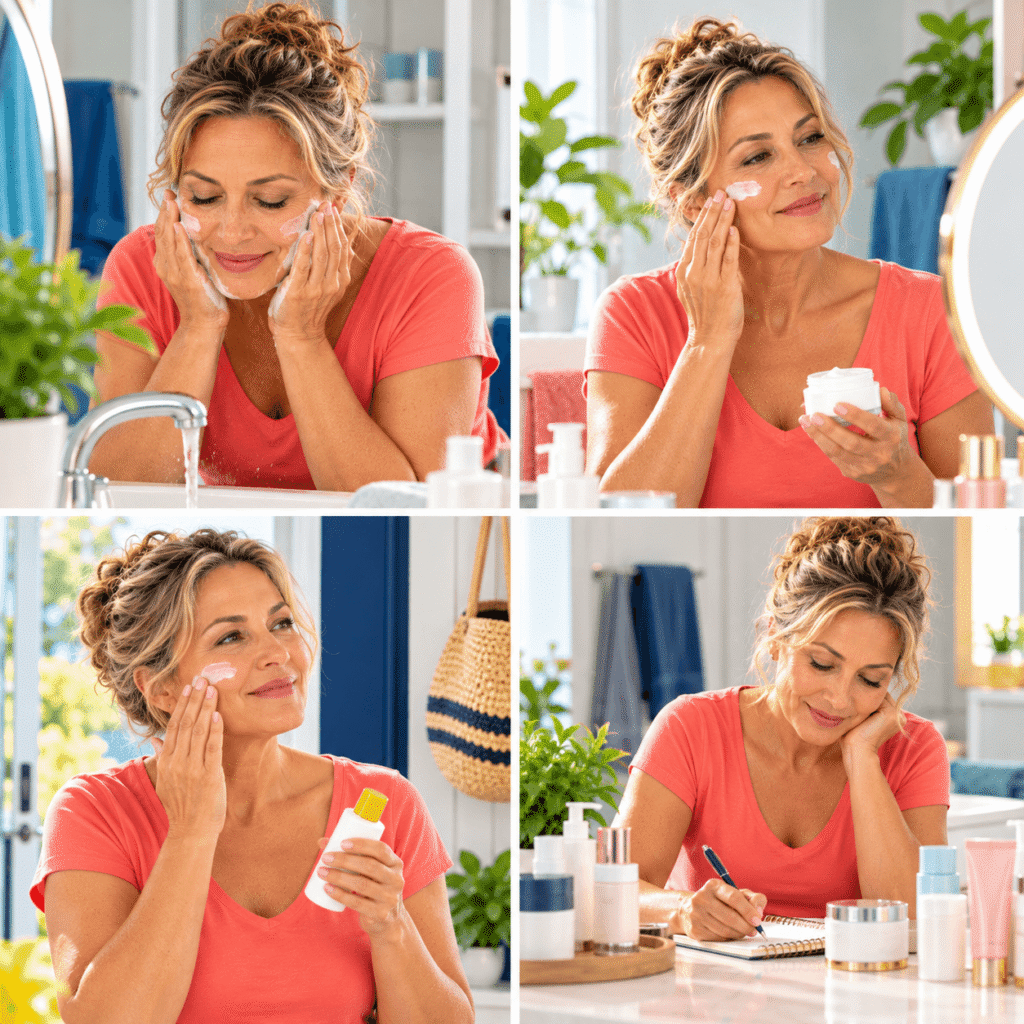
- Record every leave-on product used for seven days, including lotion, perfume, foundation, sunscreen, and hair products.
- Prioritize frequently used products applied over large areas.
- Select fragrance-free options when practical. “Unscented” products may contain masking fragrance.
- Keep routines simple with a gentle cleanser, moisturizer, antioxidant skin product if tolerated, and broad-spectrum SPF 30 or higher.
- Replace one item at a time. Patch-test new products for 48 hours to reduce skin irritation.
- Do not stop prescribed hormone therapy, topical estrogen, or sunscreen because of social media claims.
- Seek medical advice for abnormal bleeding, a new breast change, severe irritation, sudden hair loss, or a suspicious lesion that could represent melanoma or nonmelanoma skin cancer.
This balanced approach protects your Second Spring without making skin care another source of anxiety.
Menopause And Skin FAQs
Can Parabens Cause Menopause Weight Gain?

Some parabens demonstrate weak estrogen-like effects in laboratory research. There is no good evidence that parabens in lotion directly cause menopause weight gain. Changes in age, sleep, muscle mass, activity, and estrogen levels have stronger established roles.
How Do I Find Hormone Disruptors?
Read labels for parabens, oxybenzone, triclosan, PTFE, and ingredients containing “fluoro.” Individual fragrance chemicals may not always be listed, so fragrance-free products can reduce uncertainty. A short ingredient list does not automatically make a product safer.
Can Clean Beauty Ease Breast Tenderness?
No strong clinical evidence shows that switching to clean beauty reduces perimenopause breast tenderness. “Clean” also has no universal medical or regulatory definition. Persistent, worsening, or one-sided breast symptoms require professional assessment.
Do Xenoestrogens Increase Cancer Risk?
Scientists are investigating whether certain endocrine disruptors contribute to hormone-sensitive cancers. Typical skincare use has not been proven to cause estrogen-dependent cancer, and risks differ considerably among chemicals. Continue recommended breast and skin cancer screening.
Which Products Should I Swap First?
Begin with heavily fragranced leave-on products used daily over large areas. Perfume, body lotion, facial moisturizer, and some hair products may be practical priorities. Replace products gradually to control cost, waste, and skin irritation.
Continue Your Journey
Your Wise Woman journey extends beyond the bathroom cabinet. Discover how environmental toxins and endocrine disruptors worsen menopause symptoms and learn which exposures warrant attention, which claims lack evidence, and how practical changes can support your Second Spring without fear.
References
- Bergman Å, et al. State of the Science of Endocrine Disrupting Chemicals 2012. World Health Organization and United Nations Environment Programme. 2013.
- Harley KG, et al. “Reducing Phthalate, Paraben, and Phenol Exposure from Personal Care Products in Adolescent Girls.” Environmental Health Perspectives. 2016;124(10):1600-1607.
- Witorsch RJ, Thomas JA. “Personal Care Products and Endocrine Disruption: A Critical Review.” Critical Reviews in Toxicology. 2010;40(S3):1-30.
- Thornton MJ. “Estrogens and Aging Skin.” Dermato-Endocrinology. 2013;5(2):264-270.
- U.S. Food and Drug Administration. “Parabens in Cosmetics.” Updated November 18, 2025.
- U.S. Food and Drug Administration. “Phthalates in Cosmetics.” Updated May 19, 2022.
- Rossouw JE, et al. “Risks and Benefits of Estrogen Plus Progestin in Healthy Postmenopausal Women.” JAMA. 2002;288(3):321-333.