
The 60-Second Answer
Yes, creatine for menopausal women may support muscle tone, strength, exercise capacity, and cellular energy, especially when combined with resistance training. Creatine monohydrate is the best-studied form. Most healthy women can take 3 to 5 grams daily, but anyone with kidney disease or complex medical needs should consult a clinician first.
How Creatine Works During Menopause

Creatine is a natural compound stored mainly in skeletal muscle, with smaller amounts of creatine in the brain. Your liver, kidneys, and pancreas support endogenous creatine synthesis, while meat and fish provide dietary creatine intake.
Inside muscle cells, creatine combines with phosphate to form phosphocreatine. This system rapidly regenerates adenosine triphosphate, or ATP, which muscles and the brain use for energy. Creatine kinase activity controls much of this energy transfer.
Menopause Changes Creatine Metabolism
Estrogen interacts with hormone receptors throughout muscle, bone, and the nervous system. As estrogen and progesterone fluctuate during perimenopause and menopause, women may experience a metabolic shift involving reduced muscle-building signals, poorer insulin sensitivity, sleep disruption, and changes in nervous system regulation.
Research suggests that women may have lower dietary creatine intake and lower creatine levels than men, partly because women typically eat less meat. Hormonal changes may also influence creatine metabolism, creatine kinase kinetics, and brain creatine concentrations, although menopause-specific mechanisms remain under investigation.
Creatine does not correct low estrogen. Its practical role is to improve cellular energy availability so muscle can perform repeated, demanding contractions more effectively.
Creatine Supports Menopausal Muscle

Muscle mass and strength gradually decline with age, and the loss may accelerate after menopause. Less muscle can reduce daily energy expenditure and make menopause belly fat more noticeable even when food habits have not substantially changed.
Creatine supplementation improves muscular performance most consistently when paired with progressive resistance training. A 2026 systematic review concluded that post-menopausal women taking at least 5 grams per day with resistance training achieved small but meaningful improvements in lean mass and strength without evidence of harm. Evidence for improving bone density remained uncertain.
This is an important distinction: the effect of creatine supplementation is usually greater when muscle receives a training stimulus. Creatine supplements cannot replace lifting, adequate protein, sleep, or an appropriate overall calorie intake.
Creatine Use Supports Training Energy

Creatine monohydrate increases muscle creatine stores, allowing faster ATP regeneration during activities such as squats, presses, rowing, stair climbing, and short intervals. Creatine supplementation has been shown to improve strength and repeated high-intensity performance, although individual responses vary.
This does not feel like a stimulant boost. Creatine contains no caffeine and does not normally produce an immediate surge in alertness. Instead, supplementation with creatine may help you complete an extra repetition, maintain training quality, or recover between demanding efforts.
Creatine on aerobic endurance is less impressive. It may help brief bursts within a workout, but it is not a proven substitute for cardiovascular conditioning.
Creatine Supplementation Does Not Directly Burn Fat
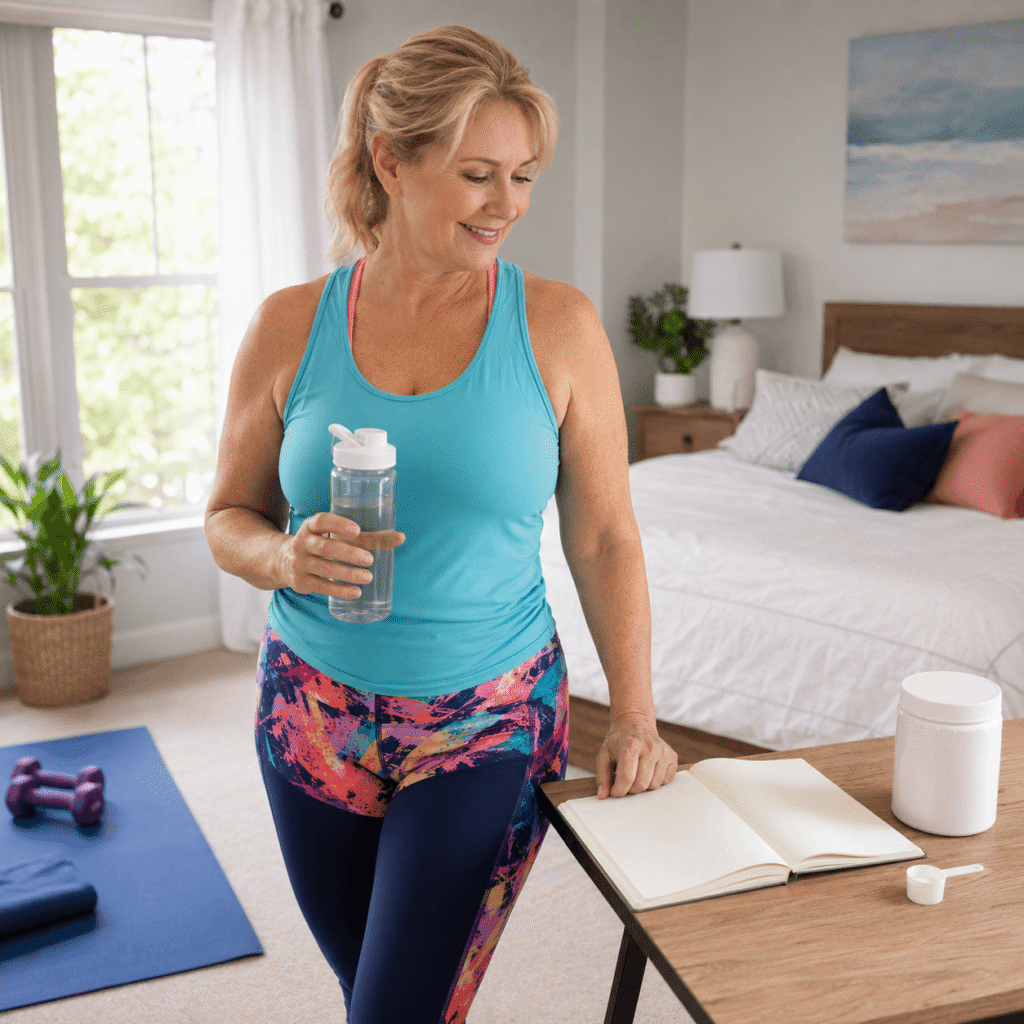
Creatine for menopause weight management works indirectly. By supporting stronger workouts and lean tissue, creatine may help preserve the metabolically active muscle that declining hormones and aging can place at risk.
Creatine supplementation and resistance training have produced modest improvements in body-fat percentage among adults over 50 in some analyses. Still, taking creatine without addressing nutrition, activity, sleep, and stress is unlikely to reduce abdominal fat.
A small rise on the scale can occur following creatine supplementation because water is pulled into muscle cells. This intracellular water is different from gaining fat mass.
Creatine Monohydrate Beats Other Forms
| Supplement Form | Evidence Quality | Typical Dose | Main Consideration |
|---|---|---|---|
| Creatine monohydrate | Highest | 3 to 5 g daily | Most researched, effective, and economical |
| Micronized monohydrate | High | 3 to 5 g daily | Same compound, but may dissolve more easily |
| Creatine hydrochloride | Limited | Product dependent | Claims of better absorption lack sufficient comparative evidence |
| Buffered creatine | Limited | Product dependent | Has not reliably outperformed monohydrate |
| Creatine blends | Variable | Variable | May contain stimulants, sweeteners, or unclear amounts |
The best-supported choice is plain creatine monohydrate from a reputable, third-party-tested manufacturer. More expensive forms have not demonstrated superior effectiveness over standard monohydrate.
Creatine May Support Brain Function

The brain also depends on ATP. Creatine in the brain may become more relevant during sleep deprivation, stress, demanding cognitive work, or lower dietary creatine intake.
Research on creatine supplementation in women’s health reports possible benefits for mood and cognition. Small clinical studies involving women with major depressive disorder have also examined creatine alongside medical treatment, but creatine is not an approved replacement for therapy or antidepressant medication.
Evidence that creatine may help menopause brain fog remains promising but preliminary. Studies have not yet established a specific dose of creatine that reliably treats menopausal fatigue, memory problems, or mood symptoms.
Research on creatine in pregnancy is also insufficient for routine recommendations. Anyone pregnant, breastfeeding, or trying to conceive should discuss creatine supplementation during pregnancy with a qualified clinician rather than self-prescribing a high dose of creatine.
How To Take Creatine Safely

For most healthy menopausal women, a simple protocol is appropriate:
- Choose creatine monohydrate: Select an unflavored product that lists only creatine monohydrate and carries independent quality testing.
- Take 3 to 5 grams daily: Five grams of creatine per day is frequently used in research involving older women. Consistency matters more than exact timing.
- Skip creatine loading if preferred: Creatine loading typically uses about 20 grams daily, divided into four doses, for five to seven days. It raises stores of creatine faster but may increase temporary water weight or stomach discomfort.
- Take it with a meal: Mixing it into water, yogurt, oatmeal, or a protein shake may improve tolerance. It can be taken before or after exercise.
- Lift two or three times weekly: Train the major muscle groups with movements appropriate to your ability. Increase resistance or repetitions gradually.
- Evaluate after 8 to 12 weeks: Track strength, repetitions, energy during training, waist measurement, and how clothing fits, not scale weight alone.
- Support the basics: Consume sufficient protein, stay hydrated, walk regularly, and address poor sleep or persistent menopausal symptoms.
The 2026 Evidence Adds Perspective
A useful expert angle is to distinguish muscle outcomes from bone outcomes. The 2026 review of creatine monohydrate in postmenopausal women found the clearest benefit when at least 5 grams daily was combined with resistance training, while evidence for bone density remained inconclusive.
Similarly, a two-year randomized trial found that 3 grams per day did not improve the primary hip bone-density outcome. This means the benefits of creatine for women should not be stretched into an unsupported osteoporosis claim. Your Wise Woman strategy should combine strength training, adequate protein, appropriate calcium and vitamin D, and clinical bone screening when indicated.
Frequently Asked Questions
Will Creatine Cause Water Retention Or Bloating In Menopause?
Creatine may increase water held inside muscle cells, particularly during creatine loading. This can raise body weight without increasing fat or menopause belly fat. Starting with 3 grams daily and avoiding a loading phase may reduce bloating or stomach discomfort.
Is Creatine Safe For Women Over 50 Who Do Not Lift Heavy Weights?

Creatine is generally safe for healthy older women, but its muscle benefits are strongest when paired with resistance exercise. You do not need to lift extremely heavy weights, since bands, machines, dumbbells, and body-weight exercises can provide progressive resistance. Seek medical guidance if you have kidney disease or take medications affecting kidney function.
Does Creatine Help With Menopause Brain Fog And Fatigue?
Creatine supplementation may support brain function by improving cellular energy availability. Research suggests possible cognitive benefits during stress, sleep loss, or low creatine intake, but evidence specifically treating menopause brain fog is limited. Persistent fatigue should be assessed for sleep disorders, anemia, thyroid disease, depression, medication effects, and other causes.
What Is The Best Creatine For Hormone Health?
Creatine monohydrate is the most thoroughly researched and reliable form of creatine for menopausal women. It does not increase estrogen or progesterone, so its benefits relate to muscle and brain energy rather than hormone replacement. Look for a plain, third-party-tested powder instead of proprietary creatine blends.
Continue Your Journey
Creatine can strengthen one part of your menopause plan, but it does not fully explain changing body composition. Continue with our pillar guide: Why Am I Gaining Menopause Belly Fat Even Though I Haven’t Changed My Diet? to understand the roles of declining estrogen, muscle loss, sleep, stress, insulin sensitivity, and daily movement.
References
- Naddafha S, et al. “Creatine Monohydrate for Lean Mass, Strength, and Bone Outcomes in Postmenopausal Women: A Systematic Review and Meta-Analysis.” Nutrients. 2026. PubMed record.
- Smith-Ryan AE, Cabre HE, Eckerson JM, Candow DG. “Creatine Supplementation in Women’s Health: A Lifespan Perspective.” Nutrients. 2021;13(3):877. doi:10.3390/nu13030877. PubMed.
- Antonio J, et al. “Common Questions and Misconceptions About Creatine Supplementation: What Does the Scientific Evidence Really Show?” Journal of the International Society of Sports Nutrition. 2021;18:13. doi:10.1186/s12970-021-00412-w. Full text.
- Chilibeck PD, Candow DG, Landeryou T, Kaviani M, Paus-Jenssen L. “Effects of Creatine and Resistance Training on Bone Health in Postmenopausal Women.” Medicine & Science in Sports & Exercise. 2015;47(8):1587-1595. doi:10.1249/MSS.0000000000000571. PubMed.
- Chilibeck PD, et al. “A 2-Year Randomized Controlled Trial on Creatine Supplementation and Exercise in Postmenopausal Women.” Medicine & Science in Sports & Exercise. 2023. PubMed.
- Gualano B, et al. “Creatine Supplementation in Vulnerable Older Women: A Randomized Double-Blind Placebo-Controlled Clinical Trial.” Experimental Gerontology. 2014;53:7-15. PubMed.
- National Institutes of Health, Office of Dietary Supplements. “Dietary Supplements for Exercise and Athletic Performance: Health Professional Fact Sheet.” NIH ODS.